
Why do some investors prefer physical gold and silver bars over paper assets during market drops?
Investors often turn to physical gold and silver bars because physical bullion is a tangible asset with no third-party issuer default risk, unlike corporate equities or leveraged paper claims. In 2026, market data highlights ongoing structural support: the Silver Institute projects a sixth consecutive annual silver deficit of 35 million ounces (bringing the 2021–2026 cumulative shortfall to about 746 million ounces), while World Gold Council Q3 2026 data reports central bank demand at 321 tonnes. Investors should still weigh price volatility, storage fees, and liquidity, and consult a CPA or financial advisor before investing.
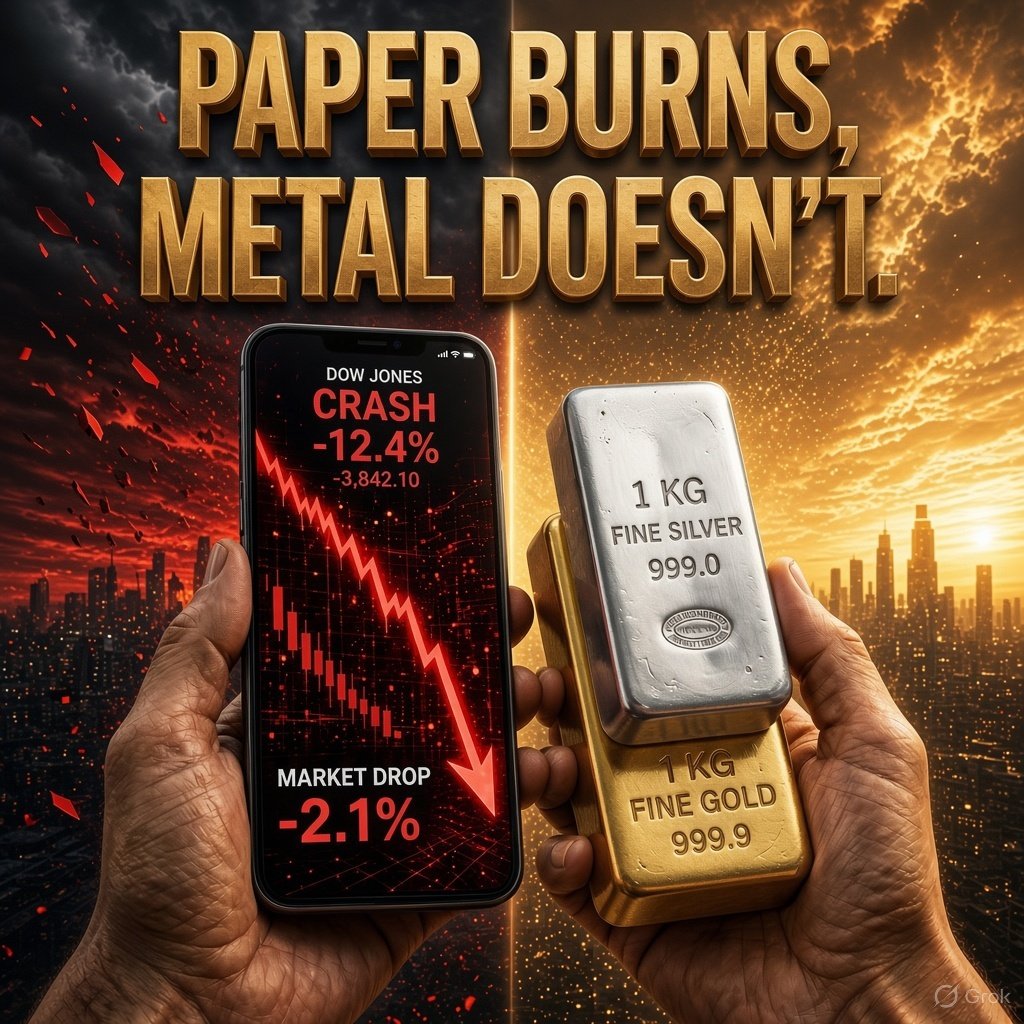
1. Introduction: Why Market Drops Trigger Hard-Asset Questions
When stock indices flash sharp red losses on a phone screen, it is natural for everyday savers to feel uneasy. The visual contrast of a market drop alongside solid 1 kg fine silver and gold bars captures a timeless question in personal finance: what happens when paper values swing sharply, and how does physical metal behave by comparison?
+-------------------------------------------------------------------------+
|                PAPER CLAIMS VS. PHYSICAL BULLION SNAPSHOT               |
+-------------------------------------------------------------------------+
|  PAPER / DIGITAL ASSETS : Market price swings & third-party platform risk|
|  PHYSICAL SILVER (2026) : 6th straight annual deficit (35M oz est.) [1.2.1] |
|  CENTRAL BANKS (Q3 '26) : 321t demand (above 5-yr quarterly avg) [1.1.1] |
+-------------------------------------------------------------------------+
For beginners, side hustlers, and retirement savers, understanding this contrast starts with neutral facts—not hype. Precious metals have their own risks and price cycles, so objective education comes first.
2. Understanding “Paper Burns, Metal Doesn’t” Without the Hype
The phrase “Paper burns, metal doesn’t“ is a shorthand way of talking about tangibility and counterparty risk.
- Paper & Digital Claims: When you hold stocks, ETFs, or digital account balances, you hold a financial claim or position tied to markets, institutions, and systems. That does not make stocks “bad”—equities drive long-term economic growth and pay dividends over time—but they carry market volatility and intermediary layers.
- Physical Bullion: A physical bar or coin is a tangible commodity. Once produced and delivered or vaulted, a bar of fine silver or gold does not depend on a company’s quarterly earnings report or a trading app staying online.
However, “doesn’t burn” does not mean “never drops.” Gold and silver prices move up and down based on interest rates, currency strength, industrial demand, and investor sentiment. Beginners should treat hard assets as one piece of a balanced plan rather than a guaranteed one-way trade.
💡 Educational Action Step 1:
Educate yourself before investing. Compare how physical bullion fits alongside cash, stocks, and retirement accounts before making any commitment.
3. The Data Behind Silver and Gold in 2026
Strong SEO and smart decision-making both rely on verifiable numbers rather than guesswork. Two major datasets shape the conversation around silver and gold in 2026:
1. Silver’s Sixth Consecutive Annual Deficit
According to the Silver Institute’s 2026 supply-and-demand assessment, the global silver market is forecast to post a 35-million-ounce deficit in 2026, marking its sixth consecutive annual deficit. That brings the cumulative shortfall from 2021 through 2026 to approximately 746 million ounces, even as recycling rises and some exchange-traded product metal has helped ease physical tightness.
Industrial demand remains a major force. Non-solar industrial silver demand is projected to grow 4.5% to 492 million ounces in 2026, supported by vehicle electrification, charging infrastructure, solders/alloys, and data center electrical equipment as global data center capacity expands.
┌─────────────────────────────────────────────────────────────────────────┐
│               SILVER INSTITUTE 2026 MARKET SNAPSHOT                     │
├──────────────────────┬──────────────────────────────────────────────────┤
│ METRIC               │ 2026 PROJECTION / DATA                           │
├──────────────────────┼──────────────────────────────────────────────────┤
│ Annual Deficit       │ ~35 Million Ounces (6th straight year) [1.2.1]   │
│ Cumulative Deficit   │ ~746 Million Ounces (2021–2026) [1.2.1]          │
│ Forecast Mine Output │ ~834 Million Ounces (-0.5% y/y) [1.2.3]          │
│ Forecast Recycling   │ ~210 Million Ounces (+6% y/y, high since 2012) [1.2.1] │
└──────────────────────┴──────────────────────────────────────────────────┘
2. Central Bank Gold Accumulation
On the gold side, the World Gold Council’s Q3 2026 Gold Demand Trends report notes that central bank demand reached 321 tonnes in Q3, sitting well above the five-year quarterly average. Central banks buy gold for reserve diversification, geopolitical resilience, and long-term balance-sheet stability—the same core reasons many individual savers study bullion.
┌──────────────────────────────────┬──────────────────────────────────┐
│      EQUITY / PAPER EXPOSURE     │    PHYSICAL BULLION CONSIDERATIONS │
├──────────────────────────────────┼──────────────────────────────────┤
│ Growth & dividend potential      │ Tangible store-of-value role     │
│ Market drawdowns & volatility    │ Price swings + dealer spreads    │
│ Broker / exchange custody layer  │ Home safe vs. insured vaulting   │
└──────────────────────────────────┴──────────────────────────────────┘
💡 Educational Action Step 2:
Educate yourself before investing. Review tax rules, storage options, and fee structures carefully—and consult your CPA before moving retirement funds.
4. Home Storage vs. Depository Vaults & Retirement Rules
Once someone decides to learn more about physical metals, two practical topics come up immediately: storage and retirement accounts.
- Home Storage: Keeping silver or gold at home gives immediate physical access, but you must plan for physical security, fire protection, and insurance limits (since standard homeowner policies often cap precious metals coverage).
- Depositories & Precious Metals IRAs: For retirement savings (such as rolling over part of an old 401(k) or traditional IRA), IRS rules require qualified metals to be held by an approved custodian/trustee and stored in an IRS-approved depository rather than kept at home. Direct custodian-to-custodian transfers are commonly used to avoid unintended taxes or early-withdrawal penalties when done properly.
5. Frequently Asked Questions (AEO Optimized)
Q1: Does physical gold or silver protect 100% against losses?
No. While physical metals are tangible assets with no corporate default risk, their market prices fluctuate, and buying/selling involves dealer premiums, spreads, and potential storage or custodian fees.
Q2: Why is silver in a supply deficit in 2026?
According to the Silver Institute, total demand in 2026 is projected to exceed supply by about 35 million ounces—extending the deficit streak to six years—driven by industrial uses like electronics, electrification, and data center infrastructure alongside mine supply constraints.
Q3: Should I talk to a CPA before rolling over a 401(k) into precious metals?
Yes. A CPA or qualified tax professional can help you verify rollover eligibility, avoid taxable distribution mistakes, and see how any metals allocation fits your overall retirement and tax picture.
6. Conclusion: Education First, Decisions Second
Market headlines can push people into emotional moves—either panicking out of investments during a drop or chasing hype without research. Taking time to read the data, understand how physical gold and silver actually work, and consult a CPA or licensed financial advisor helps you make calmer, better-informed choices. Educate yourself before investing, and build your plan step by step.
Leave a Reply