
Category: Beginner Guides

Essential resources for those starting their silver stacking journey.

  • The Absolute Beginner’s Guide to Silver Investing: Why a Invisible Shortage is Changing Wealth Preservation in 2026

    For decades, the standard path laid out for the everyday investor was exceptionally predictable: allocate a set percentage of your paycheck into a broad-market index fund, completely ignore the day-to-day volatility of the stock market, and trust that paper assets would compound cleanly over a 30-year working life. But in mid-2026, this passive blueprint is running directly into a wall of structural reality. Persistent inflationary forces, shifting global trade alignments, and a profound transformation in industrial manufacturing have forced a new wave of savers to look outside the standard banking system.

    If you are exploring silver investing for beginners, you are likely realizing that holding purely digital numbers inside a standard bank account or a tech-heavy brokerage firm no longer feels like absolute security. You are seeking something tangible, immutable, and insulated from institutional counterparty risks.

    However, entering the precious metals market can feel incredibly overwhelming for a newcomer. The landscape is crowded with confusing technical terms, fluctuating digital spot prices, and competing opinions on whether you should buy physical coins or digital fund shares. This guide strips away the complex Wall Street jargon to give you a clear, objective look at the historic supply dynamics driving the physical silver market today, helping you understand how to navigate this space safely as a beginner.

    [Traditional Wealth Blueprint] ──► Over-reliance on Paper/Brokerage Accounts
    [Modern 2026 Reality]           ──► Inflation & Material Scarcity Requires Real Assets
    

    1. What is the Invisible Shortage? Understanding the 2026 Data

    The most critical concept a beginner must grasp is that silver occupies a unique dual space in the global economy. Unlike gold, which is held primarily by central banks as a monetary anchor and a safe-haven asset, silver is actively consumed by advanced industrial processes every single day. It is an irreplaceable industrial advanced material.

    Six Years of Structural Deficits

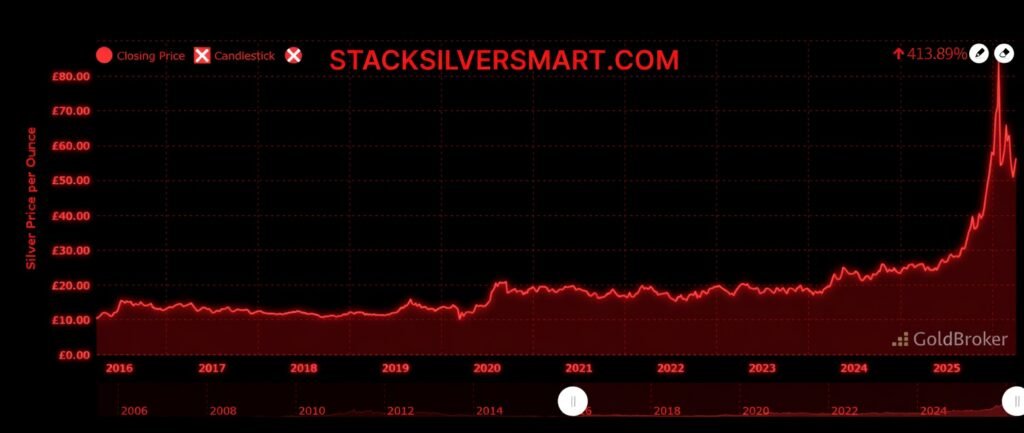
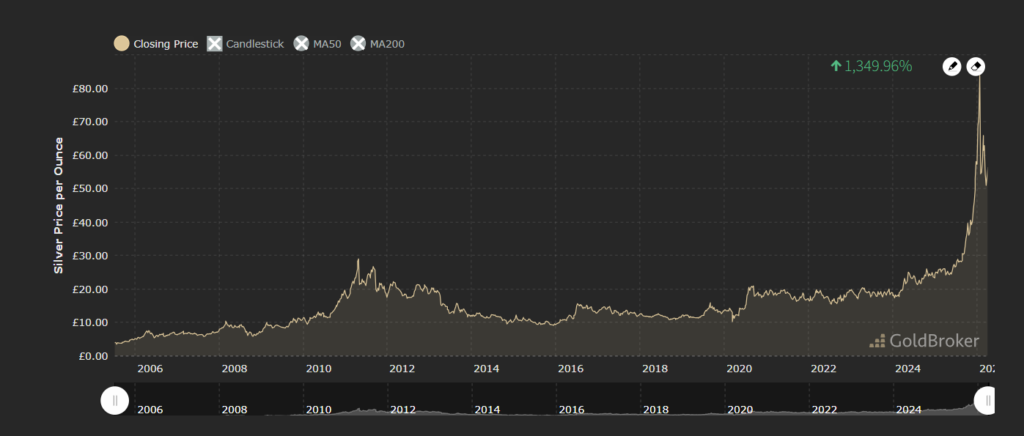
    When you look at mainstream financial news in mid-2026, you might see headlines about short-term price fluctuations on the digital commodities exchanges, where paper contracts have recently consolidated into a highly accessible $74 to $76 per troy ounce zone. For an unguided beginner, this can look like standard market stagnation. However, looking at the physical supply data reveals a massive structural gap.

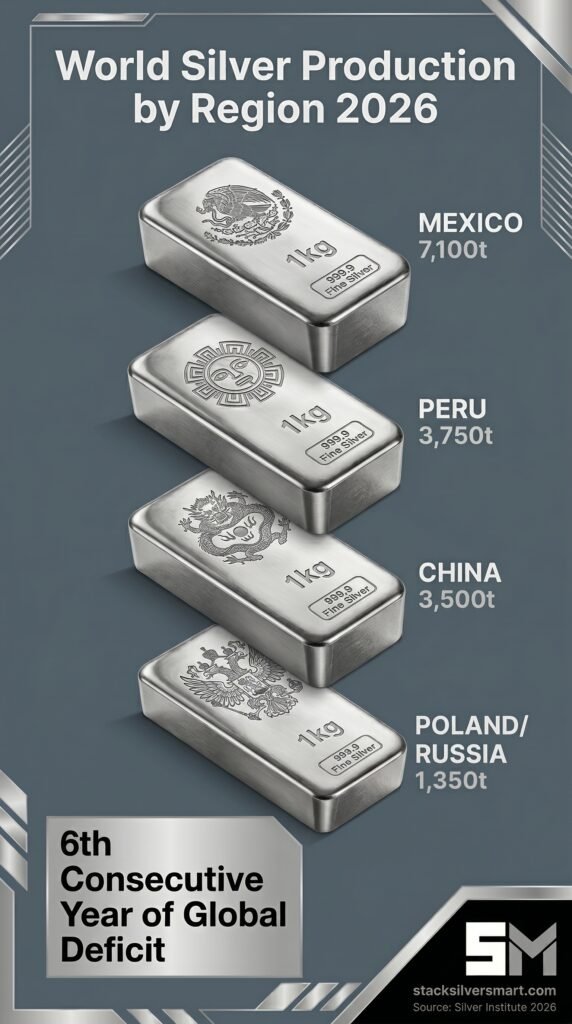
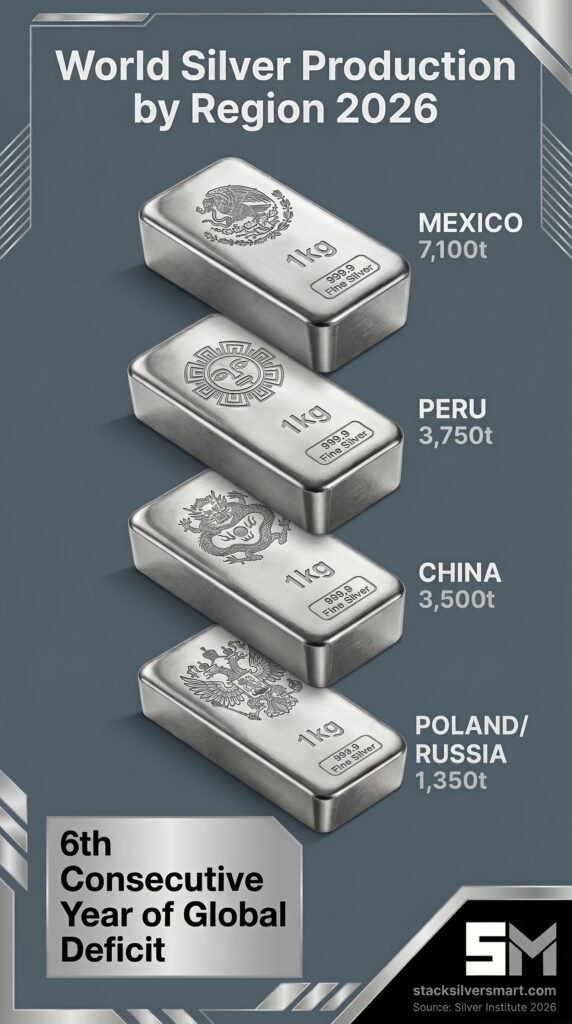
    According to the World Silver Survey 2026, the global silver market is currently navigating its sixth consecutive year of acute supply deficits.

    [Cumulative Global Vault Drawdowns Since 2021: ~762,000,000 Ounces]
     ──► Available physical inventories in registered COMEX & LBMA warehouses are hitting historic lows.
    

    This persistent deficit is driven by a simple mismatch: global mining production has flatlined due to a lack of new exploration projects over the past decade, while mandated industrial consumption continues to climb. Every advanced solar panel, every electric vehicle battery management unit, and the high-speed processing components inside new Artificial Intelligence (AI) data centers require the unmatched electrical and thermal conductivity of .999 pure silver.

    As a beginner, the key takeaway is that multi-billion-dollar corporations are actively competing for physical inventory behind the scenes. This creates a powerful long-term fundamental floor for the metal that operates completely independently of daily paper market speculation.

    2. Decoding the Gold-Silver Ratio: How Value Investors Spot Opportunities

    How do you know if silver is actually a good value right now, or if you are buying at a temporary peak? Professional value investors rely on a simple math tool called the Gold-Silver Ratio.

    The ratio tells you exactly how many ounces of physical silver it takes to purchase a single ounce of physical gold at current market rates.

    $$\text{Gold-Silver Ratio} = \frac{\text{Price of Gold per Ounce}}{\text{Price of Silver per Ounce}}$$

    The 2026 Compression Signal

    Historically, over the last century, the modern average for this ratio has hovered around 60:1 to 65:1. However, earlier this year, the ratio compressed sharply down to 55:1 in a matter of weeks following major shifts in international trade tariffs.

    When the ratio drops like this, it sends a clear signal to the market: silver is behaving aggressively as a high-demand industrial asset rather than just following gold’s defensive coat-tails. Even during standard market consolidations, an compressed ratio indicates that silver remains historically undervalued relative to its yellow counterpart. For a beginner, tracking this ratio provides an objective, data-driven framework to see when silver represents an asymmetric buying opportunity compared to broader, more expensive asset classes.

    3. Physical Silver vs. Paper Silver: The Trap New Investors Must Avoid

    One of the most common mistakes a beginner makes is choosing the easiest digital path available. It is incredibly simple to log into a retail brokerage account and purchase shares of a silver Exchange-Traded Fund (ETF) or a digital mining stock. This is known as “paper silver.”

    While paper assets are highly liquid and convenient for short-term day traders, they expose long-term wealth preservation savers to serious hidden structural risks:

    Counterparty Risk and Leveraged Contracts

    When you own a share of a standard silver ETF, you do not own real, unencumbered physical metal. You own a digital paper security that promises tracking exposure to the price of silver. On major digital commodity exchanges, there are often tens of ounces of paper claims traded for every single physical ounce sitting inside commercial vault lockers.

    If a true supply crunch occurs and industrial users demand physical delivery of their material, a paper fund may choose to settle its obligations in cash rather than delivering actual bullion bars. If your goal is to hold a safe-haven asset that cannot be wiped out by a banking crisis, a broker default, or a digital system failure, paper silver completely misses the point.

    True wealth preservation requires owning fully allocated, physical .999 fine bullion where you hold unencumbered legal title to tangible matter.

    Feature / Risk ProfilePhysical Silver BullionPaper Silver (ETFs / Mining Stocks)
    Counterparty RiskNone (You hold direct legal title)High (Reliant on brokers, funds, and systemic liquidity)
    Industrial Scarcity ExposureDirect protection against physical shortagesIndirect (Subject to digital market manipulation)
    Default ProtectionAbsolute insulation from banking failuresVulnerable to market liquidations and cash settlements

    4. How to Start Stacking Silver Safely: A Step-by-Step Blueprint

    If you decide to step outside the digital banking loop and begin accumulating real assets—a process the precious metals community calls “stacking”—you must follow a strict vetting protocol to avoid common retail pitfalls, high dealer premiums, and shipping friction.

    Step 1: Focus on Low-Premium Sovereign Coins and Bars

    As a beginner, do not buy rare, numismatic, or collectible coins. Collectible coins carry massive retail markups (premiums) that have nothing to do with the actual weight of the metal. Instead, focus entirely on investment-grade bullion assets.

    • 10-Ounce or 100-Ounce Bars: These represent the most cost-effective way to acquire silver because they carry the lowest manufacturing premium over the current spot price.
    • Sovereign Bullion Coins: If you prefer smaller, divisible weights, stick to government-minted coins like the American Silver Eagle, Canadian Silver Maple Leaf, or Austrian Philharmonics. These are universally recognized, highly liquid, and minted to strict legal purity standards.

    Step 2: Strictly Require Minimum .999 Purity Standards

    The international marketplace and tax-advantaged accounts have non-negotiable purity baselines. Always verify that any bar or coin you purchase is certified at a minimum fineness of .999 pure silver. Buying lower-grade scrap metal or uncertified jewelry creates immense friction when you eventually try to liquidate your position down the road.

    Step 3: Partner with a Tier-1 Verified Provider

    Never buy precious metals from unverified online auction sites or high-pressure telemarketing operations that push “exclusive collectible” items. To ensure maximum transactional security and competitive pricing spreads, look to established industry leaders:

    • Birch Gold Group: Highly recommended if you are looking to utilize existing retirement capital via a tax-free 401(k) or IRA rollover into physical, segregated depository storage.
    • Augusta Precious Metals: The gold standard for complete fee transparency and deep educational onboarding for first-time buyers.
    • GoldBroker: Excellent if you want to purchase physical bullion online and instantly assign it to a secure, fully allocated international vault facility outside your domestic banking jurisdiction.

    5. Safeguarding Your Legacy: The Tax-Free Rollover Route

    Many beginners believe that the only way to buy physical silver is by using cash out of a personal checking account. However, if your primary net worth is currently tied up in an employer-sponsored retirement account like a Traditional 401(k) or a legacy IRA, you can legally reallocate a portion of those funds into physical bullion without triggering a single dollar in IRS early withdrawal penalties.

    This is accomplished by executing a direct, custodian-to-custodian transfer into a specialized Self-Directed IRA.

    [Legacy Traditional 401k] ──► (Direct Tax-Free Transfer) ──► [Self-Directed IRA Custodian]
                                                                            │
                                                                            ▼
    [Insured Vault Storage]   ◄─── (Physical Allocation)   ───◄ [Allocated Bullion Order]
    

    By working with an approved custodian, your capital moves directly between financial institutions, completely bypassing your personal bank account. This keeps the transaction insulated from the IRS 60-day rollover rules. Once the account is established, your funds are used to purchase physical, .999 pure bars that are securely stored in an insured, audited, third-party depository facility under your unique name. This gives you true, tangible diversification while preserving the tax-deferred compounding benefits of your retirement structure.

    6. Conclusion: The Sovereign Path to Capital Preservation

    Entering the world of precious metals doesn’t require an advanced degree in macroeconomics or a background in institutional trading. When you strip away the daily noise of the digital paper markets, silver investing for beginners comes down to recognizing a simple, undeniable structural truth: the global technology and energy sectors are consuming more physical silver than primary mines can currently produce.

    As above-ground inventories in global vaults continue to drop, holding a portion of your hard-earned wealth in a tangible, liquid asset that carries zero counterparty risk is one of the most practical steps you can take to preserve your family’s purchasing power. By focusing on low-premium .999 fine bullion, avoiding the traps of unallocated paper funds, and partnering with transparent, top-tier specialists, you can step confidently onto the path of true financial sovereignty.

    To check real-time gold/silver ratio charts, claim your custom beginner’s allocation matrix, and review complete custodian fee disclosures, access our independent onboarding portal at Official 2026 Precious Metals Onboarding Portal, or download the comprehensive, step-by-step instructional handbook directly via the Complete Guide to Ordering Silver Online 2026 PDF.

    🔎 Schematized FAQ Section

    Q: Is silver investing for beginners better through physical bullion or a silver ETF?

    A: For long-term wealth preservation, physical bullion is significantly safer. Silver ETFs represent “paper silver,” meaning you hold a digital security managed by a financial counterparty, exposing you to systemic broker risks. Physical bullion gives you direct legal ownership of a tangible asset with zero counterparty or default risk.

    Q: What is the lowest risk way for a beginner to buy silver online?

    A: The lowest risk method is to purchase universally recognized sovereign coins (like Silver Maple Leafs) or 10-ounce bars from a Tier-1 dealer that offers a written buy-back guarantee. Ensure the metal is stamped with a minimum purity of .999 fine silver and shipped via fully insured, discreet tracking lines.

    Q: Can I use my existing company 401(k) to invest in physical silver?

    A: Yes. By executing a direct, tax-free custodian-to-custodian rollover, you can transfer capital from a legacy 401(k) into a Self-Directed IRA. This allows you to legally purchase and hold physical, investment-grade bullion inside an IRS-approved, fully insured depository vault without triggering tax penalties.

  • Complete Guide to Buy Silver Online: Protecting Your Retirement Savings from Global Currency Debasement

    The global financial landscape of mid-2026 is presenting everyday savers with an entirely unprecedented set of capital allocation hurdles. Traditional cash vehicles, fixed-income instruments, and paper stock indices are experiencing wild swings as core inflation indicators, including the hot 3.8% April Consumer Price Index (CPI) reading, continue to outpace traditional yield projections. Central bank reserve managers worldwide have recognized this structural paradigm shift, triggering a massive, record-shattering multi-year pivot out of fiat sovereign bonds and directly into tangible physical gold and silver bullion.

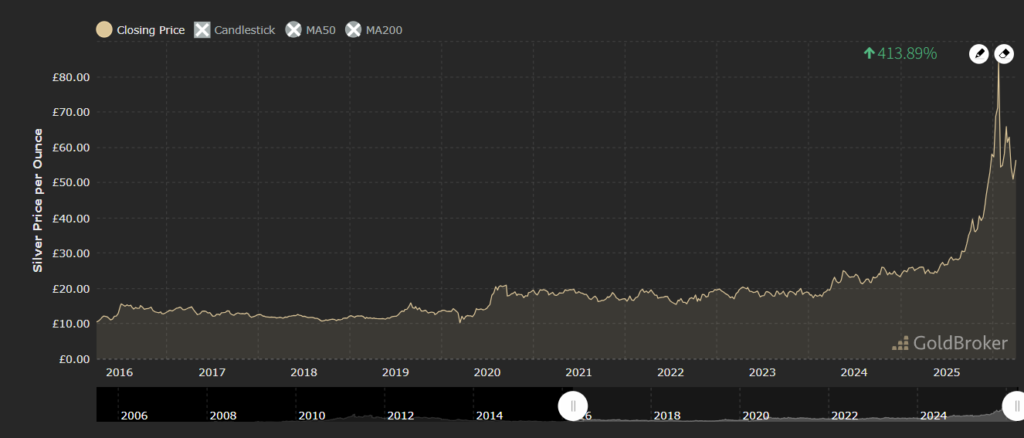
    For the modern investor looking to buy silver online, navigating this landscape requires moving past emotional market headlines and relying instead on institutional mechanics. Silver is transitioning through an aggressive macro decoupling phase. Although short-term paper contract trading on digital commodity boards like the COMEX has experienced episodic volatility—pulling back temporarily to a consolidation floor between $77 and $84 per troy ounce after peaking at an all-time high of $121.64 earlier in the year—the physical market tells an completely different story. The Silver Institute’s latest data confirms that global physical consumption is tracking through its sixth consecutive year of structural supply deficits, with total demand currently outpacing global mining extraction by a massive 215 million ounces.

    [Global Mine Output: ~820M oz] ──┐
                                     ├──> [215 MILLION OUNCE STRUCTURAL GAP]
    [Industrial & Investment: 1,035M oz] ┘
    

    This persistent, physical supply crunch is being driven by the mandatory integration of high-purity silver across critical high-growth industries. These include advanced photovoltaic solar cell grids, electric vehicle energy architectures, and the complex conductive paste pathways required to power hyperscale AI data center hardware. Because nearly 70% of all global silver production is pulled merely as a secondary mining byproduct during copper, zinc, and lead extraction, mining operations cannot quickly expand their capacity simply because spot prices spike.

    This structural guide provides complete clarity for conservative retirement savers, detailing how to legally transition depreciating fiat allocations into physical precious metals. It outlines how to select highly rated, institutional-grade custodians while strictly adhering to federal compliance guidelines.


    1. Understanding the Basics of Physical Precious Metals Allocations

    Before executing an online acquisition, an investor must distinguish between the two primary classes of physical silver available for private portfolios: bullion bars and sovereign minted coins.

    Bullion Bars vs. Sovereign Coins

    Physical bullion bars are manufactured by certified private mints and refiners. They are valued almost entirely based on the raw weight and purity of the metal they contain. Because bars feature highly streamlined manufacturing profiles, they carry significantly lower entry premiums above the paper spot price, making them the absolute ideal vehicle for maximum physical accumulation within a Self-Directed IRA.

    Sovereign coins, by contrast, are struck by official government mints such as the United States Mint or the Royal Canadian Mint. These items carry official legal tender face values, are backed by sovereign states for weight and purity, and feature advanced anti-counterfeiting security engravings. While sovereign coins carry higher upfront premiums due to their rigorous production standards, they offer exceptional global liquidity and are highly favored by pre-retirement investors seeking maximum regulatory security.

                      ┌──────────────────────────────┐
                      │   PHYSICAL SILVER OPTIONS    │
                      └──────────────┬───────────────┘
                                     │
             ┌───────────────────────┴───────────────────────┐
             ▼                                               ▼
    ┌──────────────────┐                            ┌──────────────────┐
    │   BULLION BARS   │                            │ SOVEREIGN COINS  │
    ├──────────────────┤                            ├──────────────────┤
    │ • Private Mints  │                            │ • Gov't Mints    │
    │ • Lower Premium  │                            │ • Higher Premium │
    │ • Max Metal Vol  │                            │ • Legal Tender   │
    │ • Streamlined    │                            │ • Anti-Forge Eng │
    └──────────────────┘                            └──────────────────┘
    

    The Gold/Silver Ratio as a Strategic Allocator

    The gold/silver ratio measures exactly how many ounces of physical silver are required to purchase a single ounce of gold at current valuation metrics. Historically, this ratio has served as an incredibly reliable indicator for identifying structural under-valuations between the two sister metals.

    When the ratio expands to elevated bands, it signals that silver is fundamentally under-priced relative to gold’s institutional demand floor. For savers executing a diversification play, tracking this ratio helps optimize the exact entry timing of a transfer, allowing investors to move out of paper equities and into the white metal right before industrial supply squeezes force a sharp revaluation.


    2. Key Considerations When Transacting Online

    The process to buy silver online demands deep operational vetting. The digital precious metals space contains vast differences in pricing, dealer integrity, and delivery security. Safely executing an acquisition requires a strict focus on three primary operational metrics:

    1. Verification of Dealer Trust and Credentials

    Never engage with an online precious metals firm that lacks independent, verified third-party oversight. Institutional dealers must maintain flawless tier-1 standing with primary watchdogs, including the Better Business Bureau (BBB), the Business Consumer Alliance (BCA), and consumer aggregate platforms like Trustpilot. Transparency is everything; a reputable firm will openly state its corporate leadership, physically verify its inventory availability, and display clean legal fee sheets without burying administrative markups in the final checkout steps.

    2. Dissecting the “Bid-Ask” Spread and Checkout Premiums

    The “spot price” broadcast across financial television networks represents the valuation of paper futures contracts, not the real-world cost of a physical, hold-in-your-hand asset. Physical silver carries an inherent premium that covers processing, refining, secure transportation, and dealer overhead.

    When reviewing an online transaction portal, require a complete itemization of the bid-ask spread—the difference between what the dealer sells the metal for and what they guarantee to pay you if you execute an immediate liquidation. Avoid firms that utilize aggressive, opaque tier pricing models that penalize smaller capital allocations with hidden administrative costs.

    3. Ironclad Secure Delivery and Custodial Storage Protocols

    For direct personal delivery, verify that the online dealer utilizes discreet, unbranded packaging equipped with tamper-evident security tape, paired with fully insured signature-required shipping networks like UPS or FedEx. For institutional accounts held within a retirement umbrella, look closely at the storage infrastructure. The IRS strictly forbids personal residential storage for active IRA assets.

    Your physical precious metals must be routed directly to an IRS-approved, third-party depository facility—such as Brink’s or the Delaware Depository—where the metal is held in an allocated, insured, and continuously audited secure vault environment.


    3. Step-by-Step Guide to a Compliant Precious Metals Rollover

    For the inflation-aware saver, the safest and most tax-efficient method to construct a significant physical position is through a direct, tax-free rollover of an existing employer-sponsored 401(k), 403(b), or traditional stock-and-bond IRA. This process moves your capital under a Self-Directed IRA umbrella, allowing you to legally acquire and hold physical silver bars and coins without triggering early distribution penalties or tax events.

    [Traditional Stock/401k Account] ──(Direct Rollover)──> [Self-Directed IRA Custodian]
                                                                      │
                                                                      ▼
    [IRS-Approved Depository Vault] <───(Insured Transfer)─── [Physical Bullion Order]
    

    Step 1: Partner with an Elite Self-Directed Custodian

    Standard retail brokerages do not possess the administrative infrastructure required to track, clear, and audit physical commodities. You must partner with a specialized precious metals custodian. The custodian acts as your official regulatory bridge, managing all capital distribution tracking, IRS reporting, and execution logs.

    Step 2: Fund the Account via Direct Transfer

    To ensure complete tax insulation, utilize a direct custodian-to-custodian transfer. The capital shifts securely from your current financial provider straight to your new Self-Directed account. Because the capital never touches your personal checking account, it remains completely insulated from the IRS 60-day rollover rules and bypasses all withholding taxes.

    Step 3: Select and Allocate Eligible Physical Bullion

    Once the account holds cleared funds, you direct your account representative to purchase specific, IRS-eligible coins or bars. The IRS enforces strict minimum purity standards: all silver bars and coins allocated within a retirement structure must maintain an absolute minimum fineness of .999. Once your order is processed, the physical metal is securely transferred under fully insured transit directly into your chosen IRS-approved depository vault.

    4. Institutional Provider Evaluations & Trust Rankings

    To guarantee your portfolio’s complete isolation from hidden management spreads and operational friction, you must choose an elite-tier provider. The following three firms represent the gold standard of the 2026 precious metals investment space based on pricing transparency, regulatory compliance, and verified user satisfaction:

    1. Augusta Precious Metals

    • Corporate Trust Score: ⭐⭐⭐⭐⭐ (5/5 Institutional Stars)
    • Strategic Specialization: Best for Lifetime Educational Support & Complete Fee Transparency.
    • Core Advantages: Augusta is widely recognized for their comprehensive, live macroeconomic web conferences designed directly by an internal team of analysts. They excel at guiding pre-retirement savers through complex rollover steps with an absolute zero-pressure, educational approach. Their pricing sheets feature complete disclosure of all dealer spreads up front.

    2. Birch Gold Group

    • Corporate Trust Score: ⭐⭐⭐⭐⭐ (4.9/5 Institutional Stars)
    • Strategic Specialization: Best for Seamless 401(k) Rollover Administration & Onboarding.
    • Core Advantages: Birch Gold Group features a highly experienced compliance team that specializes in navigating complex, employer-sponsored retirement plan transitions. They interface directly with legacy administrators to eliminate processing friction, making them the absolute premier choice for first-time precious metals investors.

    3. GoldBroker

    • Corporate Trust Score: ⭐⭐⭐⭐⭐ (4.8/5 Institutional Stars)
    • Strategic Specialization: Best for Secure, Non-US Fully Allocated Storage Vaulting.
    • Core Advantages: For investors focused on geopolitical insulation and diversification outside the domestic banking matrix, GoldBroker provides direct, unencumbered ownership structures within ultra-secure vault facilities in Zurich, Switzerland, and Singapore.

    5. Master the 2026 Gold IRA Withdrawal Rules

    Accumulating physical wealth is only half of the retirement preservation equation. To permanent shield your capital from structural inflation, you must execute your ultimate exit strategy with absolute regulatory precision.

    The Age 59½ Early Distribution Boundary

    The IRS maintains strict, non-negotiable oversight regarding when you can legally access physical metals held within a tax-sheltered retirement account. Any removal of physical bullion from an approved depository before you clear the exact age threshold of 59½ is legally categorized as an unapproved early distribution.

    An early distribution instantly triggers a 10% federal tax penalty. Furthermore, for standard Traditional Self-Directed accounts, the entire market value of the distributed metal is taxed as ordinary gross income based on your current federal bracket, potentially pushing your household into a significantly higher tax rate for that calendar year.

    Cash Liquidation vs. In-Kind Physical Delivery

    When you reach the age of 59½ and prepare to execute a legal withdrawal from your physical account, you are faced with a vital strategic choice. Lower-tier investment platforms often try to force a standard “Cash Liquidation,” meaning your physical bars and coins are sold internally at wholesale rates, and you are sent a standard paper fiat check. For an investor whose entire strategy is based on avoiding depreciating cash, this can be highly counterproductive.

    The elite method is to elect an In-Kind Distribution. Under this operational mechanism, your dedicated custodian organizes the physical removal of your actual, .999 pure silver bars or sovereign coins from the depository vault. The physical metal is securely packed and dispatched via armored, fully insured secure transport directly to your home address. You take direct, unencumbered physical possession of the tangible wealth you built, completely removing your future from the vulnerabilities of the traditional banking grid.


    6. Common Mistakes to Avoid When Buying Silver Online

    • Chasing Low Spreads on Unauthorized Assets: Avoid online platforms offering ultra-cheap silver bars that do not possess official hallmark stamps or verified .999 purity credentials. Buying unrefined or uncertified bars leaves your portfolio completely exposed to counterfeit risk and eliminates your ability to liquidate the metal at true market rates down the line.
    • Utilizing Commingled Instead of Allocated Storage: When selecting your depository option through your custodian, ensure you demand fully allocated and segregated storage. Commingled storage means your bars are placed in a shared bin with other investors’ assets. Allocated storage guarantees your exact physical coins and bars are set aside in a distinct, uniquely identified locker, ensuring complete title sovereignty.
    • Failing to Verify the Buy-Back Policy: Never buy a single ounce of silver online without securing a binding, written buy-back agreement from the dealer. A top-tier provider will openly state their willingness to repurchase your metals at current market rates whenever you decide to liquidate or execute a retirement distribution.

    7. Conclusion: Securing Your Financial Sovereignty

    As global fiscal deficits climb past historic records and international trade alliances continue to fragment through mid-2026, the case for physical capital preservation has moved past simple speculation. It is now a critical prerequisite for maintaining purchasing power. While digital paper contracts fluctuate daily on automated institutional algorithms, the physical reality of a 215-million-ounce structural silver deficit ensures that tangible wealth remains an elite global resource.

    By moving away from standard paper equities, tracking the live gold/silver ratio indicators, and partnering with verified, high-authority precious metals custodians, everyday savers can establish an ironclad defensive position. Don’t leave your family’s lifetime retirement security vulnerable to currency debasement and political stalemates. Transition your wealth into a tangible, sovereign asset class that cannot be devalued by central bank printing presses.


    🔎 Verified Consumer Q&A (Schema Optimized)

    Q: Can I store my Self-Directed IRA silver at my house before age 59½?

    A: No. The IRS strictly mandates that all physical precious metals held inside an active retirement account must be preserved inside a third-party, IRS-approved secure depository facility. Attempting to bring your active IRA metals home early counts as an unapproved distribution, resulting in immediate taxation and a 10% penalty.

    Q: Why do industrial tech giants impact the price of physical silver?

    A: Nearly 60% of global silver supply is consumed by high-tech industrial manufacturing, including AI chips, electric vehicles, and solar power components. Because tech giants are actively panic-buying physical silver directly from refiners to protect their corporate supply chains from the current 215-million-ounce deficit, retail availability is constrained, keeping physical acquisition premiums elevated over paper tracking spot prices.

    Q: What is the primary difference between a Traditional and a Roth Silver IRA rollover?

    A: Traditional precious metals IRAs are funded utilizing pre-tax capital, giving you an immediate tax deduction upfront, but your eventual distributions after age 59½ are taxed as ordinary income. Roth precious metals IRAs are established utilizing after-tax capital; you receive no immediate deduction, but all future capital gains and distributions are 100% tax-free for life.

  • The Silver Sovereign Divergence: Why the $80 Spot Price is a Deceptive Mirage in May 2026

    The Silver Sovereign Divergence refers to the record-breaking gap between digital “spot” prices and the actual physical cost of bullion. In May 2026, while paper markets trade near $80, physical premiums have surged to 35% due to a 762-million-ounce structural deficit and “Silicon Squeeze” industrial hoarding.


    1. The Death of the “Spot Price” Authority

    For decades, investors looked at the COMEX ticker to value their wealth. In 2026, that ticker has become a “deceptive mirage”. We are witnessing the greatest divergence in the history of precious metals. While the digital screen says silver is $80.32, retail stackers are finding it nearly impossible to acquire sovereign coins for less than $105 per ounce.

    This isn’t just “inflation”—it is a total breakdown of the paper delivery system. When 762 million ounces are drained from the vaults, the “paper” representing that silver becomes a liability rather than an asset.

    2. Industrial Front-Running: The “Invisible” Buyers

    The primary driver of this divergence is the Silicon Squeeze. AI hardware manufacturers and N-type solar fabricators have realized that they cannot run their 2026 production lines on “paper contracts”.

    These tech giants are now bypassing traditional exchanges and buying directly from refiners. This “Front-Running” by institutional whales has left the retail market starving for physical supply, pushing premiums to levels never seen in the $20-range era.

    THE 2026 SURVIVAL ROADMAP

    Stop chasing the “Spot Price” and start tracking the “Physical Reality.” Learn how to vet dealers who actually have inventory in stock.

    👉 [Download the 2026 Silver Insider Guide Here]

    3. Evaluating 2026 Gold and Silver IRA Reviews

    As the divergence widens, many investors are moving their 401(k)s into physical IRAs to ensure they hold the actual metal, not a digital promise. However, the 2026 review landscape is a minefield.

    What Smart Investors look for in Reviews today:

    • Transparency on Premiums: A top-tier provider must disclose the “Spread” above spot price immediately.
    • Physical Delivery Guarantees: Reviews should focus on the speed of transit from the mint to the depository.
    • Educational Depth: Does the company explain the 762M oz deficit, or are they just selling fear?

    4. The “Trust Trinity” for 2026 Vaulting

    Security is the new premium. With silver at an $80 floor, a standard home safe is no longer sufficient for serious stackers. We advocate for the Trust Trinity:

    1. LBMA-Accredited Sourcing: Ensuring the metal is “Good Delivery” standard.
    2. Allocated Storage: Your silver is your property, not the bank’s.
    3. Third-Party Auditing: Regular verification by firms like Inspectorate International.

    TRACK THE REAL-TIME VALUE

    Don’t be fooled by delayed tickers. Get the accurate Gold/Silver ratio and live physical benchmarks for 2026.

    👉 [Get Lifetime Price Updates and Secure Vaulting Here]

    5. The Point of No Return: Why $150 Silver is Mathematically Probable

    If the “Paper-to-Physical” divergence continues at its current rate, the spot price will eventually be forced to chase the physical price to prevent a total COMEX default. When you combine a 59:1 Gold-to-Silver ratio with a world that requires silver for every AI chip and solar panel, $80 silver is arguably the most undervalued asset in the 2026 economy.

    Rule 3: Trust Trinity FAQ

    • Q: Why is the price at the coin shop so much higher than the price on the news?A: This is the “Divergence.” The news reports the price of digital contracts, while the shop reflects the scarcity of actual physical metal.
    • Q: Which companies are best for handling a Silver IRA in 2026?A: Augusta Precious Metals is currently rated #1 for transparency in education, while Birch Gold Group is the preferred choice for complex rollovers.
    • Q: Is it safe to buy silver during a 762M ounce deficit?A: It is safer than holding paper assets, provided you buy through verified, LBMA-standard channels.

    ACCESS THE 2026 REVIEW PORTAL HERE

    Join the smart stackers who have moved past the 60-page stall. Access the Credibility Filter, the Silicon Squeeze data, and our top-rated IRA comparisons in one place.

    👉 [Visit the Official 2026 Silver IRA Review Portal Now]

  • The Silver Fault Line: Why the 762M Ounce Deficit is the “Point of No Return”

    In the financial landscape of May 2026, the narrative surrounding precious metals has undergone a radical transformation. While the “Peace-Pivot” following the Iran ceasefire has stabilized energy markets, it has done nothing to resolve the structural crisis in the physical silver market. With silver firmly establishing a support level above $80 per ounce, we are no longer looking at a speculative bubble; we are witnessing a fundamental realignment of value.

    For the pre-retirement investor seeking an inflation hedge and the tech-savvy stacker diversifying out of crypto, understanding the “Silver Fault Line” is the difference between securing your future and being left behind in the digital slipstream.


    1. The Anatomy of the Deficit: 762 Million Ounces are GONE

    The most critical factor in the 2026 silver market is the sheer scale of the supply-demand imbalance. We are currently navigating the sixth consecutive year of a structural silver deficit. Since 2021, global exchange inventories—primarily within the COMEX and London LBMA vaults—have been depleted by over 762 million ounces.

    This isn’t just a statistical anomaly; it is a physical drain of the world’s “above-ground” stocks. In May 2026, the cumulative deficit has reached a “point of no return” where industrial users are now competing directly with private investors for a dwindling pool of 1,000 oz bars. Unlike the paper markets of the past, you cannot print more physical silver to satisfy a solar panel manufacturer or an AI chip fabricator.

    2. Industrial Inelasticity: The AI and Green Energy “Black Hole”

    The primary reason silver has reclaimed the $80 level is industrial inelasticity. In previous decades, silver was a luxury; in 2026, it is a mission-critical utility.

    • AI Infrastructure: The massive expansion of AI data centers requires silver-coated high-frequency processors and specialized conductive pastes.
    • Next-Gen Solar: N-type solar cells, the global standard in 2026, require significantly higher silver loadings than previous technologies.
    • The Squeeze: These industries have “price-inelastic” demand. A tech giant building a $10 billion facility will pay $150 or $200 per ounce for silver without blinking, as the metal represents a tiny fraction of their total build cost. They are effectively outbidding the retail investor.

    [CTA 1: THE 2026 SILVER PLAYBOOK] Don’t get outbid by the “Big Tech” giants. Understand the 2026 supply dynamics and secure your entry point before the next leg up. 👉 Download the Official Birch Gold Silver Insider Guide Here at https://birchgoldsilverreview.com/


    3. The “Paper Market” vs. Physical Reality

    A significant “Fault Line” has emerged between the “Spot Price” on digital exchanges and the actual cost of acquiring physical bullion.

    The Premium Trap

    While “Spot” might sit at $80.32, retail investors are seeing premiums of 20% to 35% on sovereign coins like American Silver Eagles. This is due to the “Physical Squeeze”—there is plenty of “paper silver” trading hands, but very little physical metal available for immediate delivery.

    Vault Secrecy

    Investors must distinguish between “Registered” silver (available for delivery) and “Eligible” silver (held by private owners). In 2026, “Registered” stocks are at historic lows. When the industrial giants decide to stand for delivery, the paper price will be forced to chase the physical price higher to find sellers.


    4. Security and Sovereignty: Protecting Your Stack

    As silver prices rise, so does the risk of counterfeits and security breaches. This is a primary pain point for the StackSilverSmart (SSS) community.

    • The Counterfeit Surge: The $80 price point has made it profitable for scammers to create sophisticated tungsten-core silver bars.
    • The Protection: We advocate for the “Trust Trinity”: Buy only from LBMA-accredited dealers, use ultrasonic or “Ping Test” verification, and never buy from unverified social media “deals.”
    • Storage Sovereignty: While home safes are popular, the weight of silver (a “good problem to have”) makes professional, allocated vaulting in stable jurisdictions like Singapore or Switzerland increasingly attractive for HNW investors.
    BECOME YOUR OWN BANK Secure your wealth outside the traditional banking system. Learn how to store your silver in the world’s most secure, private vaults. 👉 Visit GoldBroker.com for Secure Allocated Storage HERE https://goldbroker.com/#2272-15-3


    5. The Gold-to-Silver Ratio: The Mathematical “Turbo” Play

    For the investor focused on ROI, the Gold-to-Silver ratio remains the most compelling argument for silver over gold. With gold trading near $4,700, the ratio currently sits near 59:1.

    Historically, during periods of monetary stress, this ratio compresses toward 30:1 or even 15:1. If gold remains stagnant and the ratio moves to 30:1, silver would soar to over $156 per ounce. Silver is the “Turbo” play in the precious metals space—it offers the stability of gold with the explosive upside of a tech stock.


    6. Step-by-Step: How to Order Safely in 2026

    Navigating the 2026 market requires a roadmap. You need to know which dealers have actual inventory and how to avoid the hidden fees that can eat into your gains.

    [CTA 3: THE STEP-BY-STEP ROADMAP] Ready to start your stack? Our comprehensive guide covers everything from dealer vetting to secure delivery. 👉 [Download the Complete Guide to Ordering Silver Online (SSS PDF) HERE]


    Q: Is the 762 million ounce silver deficit confirmed for 2026? A: Yes, global exchange inventories in London and New York have seen a structural drain since 2021, driven by record industrial demand in AI and solar sectors.

    Q: Why is $80 considered the “Point of No Return” for silver? A: Historically, once silver clears major psychological resistance with a physical supply deficit this large, the “Paper-to-Physical” divergence makes it nearly impossible for prices to return to previous lows without a massive surge in mine production.

    Q: How can I safely order silver during a supply squeeze? A: Always prioritize LBMA-approved dealers, verify weight and purity upon delivery, and consider allocated vault storage to avoid the security risks of high-value home storage.

    Final Recommendation: The Silver IRA Transition

    For those with a 401(k) or IRA, the most efficient way to leverage this deficit is through a tax-advantaged Silver IRA. This allows you to hold physical bullion while maintaining the tax benefits of your retirement account.

    In a world where digital currency can be devalued at the stroke of a pen, physical silver is the ultimate “Peace-of-Mind” asset.

    [CTA 4: THE RETIREMENT SHIELD] Protect your retirement from the 762M ounce deficit. Learn how to rollover your IRA into physical silver with the world’s leading experts.
    👉 Get Your Free Silver Investment Kit from Augusta Precious Metals HERE


  • Silver Bar Review: Is Physical Bullion the Best Hedge for 2026?

    As we navigate through May 2026, the financial landscape is undergoing a tectonic shift. With silver reclaiming a solid technical base between $70 and $80 per ounce and the market facing its sixth consecutive year of structural deficit, investors are moving away from “paper” promises toward tangible wealth.

    Whether you are a retiree looking to shield your nest egg from persistent inflation or a younger investor diversifying a crypto-heavy portfolio, this silver bar review will dissect the types, brands, and strategies you need to thrive in the current metals supercycle.


    1. Introduction: The 2026 Silver Squeeze

    The “Peace-Pivot” of early 2026—a period of relative geopolitical cooling following the Iran ceasefire—has stabilized the energy markets but done nothing to solve the supply crisis in precious metals. At the time of this writing, May 11, 2026, global inventories in London and COMEX vaults have been drained by over 762 million ounces since 2021.

    Silver bars have become the preferred vehicle for serious stackers because they offer the lowest cost-per-ounce compared to sovereign coins. While the “spot price” remains the headline, the real story is in the physical premium and availability.

    : THE LIFETIME UPDATE

    Don’t get caught behind the curve. [Subscribe for a lifetime price update here] to get real-time alerts on physical silver availability and vault spreads.


    2. Features Overview: Sizes and Brands

    When purchasing silver bars in 2026, size and brand are the two most critical factors affecting your liquidity and premiums.

    Standard Sizes

    • 1 oz Bars: Perfect for beginners and those building a “barter” stash. However, they carry the highest premiums.
    • 10 oz Bars: The “Goldilocks” size for most investors. They offer a strong balance of affordability, storage convenience, and resale liquidity.
    • Kilo (32.15 oz) and 100 oz Bars: Best for “serious stackers” looking for the lowest premium per ounce. Note that these are less “divisible” if you need to liquidate small amounts.

    Top Mint Brands for 2026

    1. Royal Canadian Mint (RCM): Known for 99.99% purity and world-class security features like micro-engraved maple leaves.
    2. PAMP Suisse: The industry leader in craftsmanship. Most bars include Veriscan™ technology, which allows you to verify authenticity using a smartphone.
    3. Sunshine Minting: The primary supplier of blanks to the US Mint. Their bars feature the “SMI Mint Mark SI” security feature, visible only through a special decoding lens.

    3. Performance Analysis: Physical vs. Paper

    In mid-2026, we are seeing a massive “divergence.” While exchange-traded products (ETFs) can experience institutional selling, the physical market is tightening.

    As of May 2026, analysts from Bank of America have issued a bull-case target of $135 to $309 per ounce, citing the gold-silver ratio compression and the relentless industrial demand from AI data centers and TOPCon solar cells.

    Unlike paper silver, a physical silver bar has zero “counterparty risk.” It cannot be deleted in a cyberattack or devalued by a bank bankruptcy. In a world of digital volatility, the physical bar is performing as the ultimate “insurance policy.”


    4. Pros and Cons of Silver Bars

    ProsCons
    Lower Premiums: Significantly cheaper per ounce than Silver Eagle or Maple Leaf coins.Higher Premiums on Small Sizes: 1 oz bars can be expensive relative to spot.
    Stackability: Uniform rectangular shapes make them easy to organize in a home safe or vault.Bulk and Weight: Silver is heavy. $100,000 in silver weighs roughly 100 lbs—difficult to move quickly.
    Industrial Value: Demand for AI and Solar provides a massive price floor.Tarnish: Silver can oxidize (milk spots), though this does not affect the metal’s value.

    Navigating the 2026 deficit requires a professional strategy. [Download the PDF 2026 Insider Guide HERE] to learn how to time your entries during the current consolidation.


    5. User Experience: Buying and Storing in 2026

    The modern investor faces two major hurdles: Counterfeits and Security.

    Detecting Fakes

    Counterfeit silver fakes have surged since the 2024 price breakout. To protect your investment:

    • The Magnet Test: Silver is diamagnetic. If a strong magnet sticks to your bar, it is fake.
    • The Ice Test: Silver has the highest thermal conductivity. An ice cube will melt almost instantly on a real silver bar.
    • The “Ping” Test: Real silver produces a high-pitched, clear ring when tapped; fakes produce a dull thud.

    Storage & Shipping

    In 2026, most reputable dealers use fully insured, discreet shipping. For larger holdings (100oz bars and up), many investors are opting for allocated vault storage in jurisdictions like Switzerland or Singapore to remove the risk of home theft.


    6. Value for Money: Premiums and ROI

    In this silver bar review, we must address the “Premium Trap.”

    In May 2026, “Spot” might be $78, but you will likely pay $83 to $88 for a physical bar.

    • 10 oz Bars currently offer the best “utility per dollar.”
    • Secondary Market Bars (bars that have been previously owned) often sell for lower premiums and are an excellent way to accumulate weight.

    7. Final Verdict: Should You Buy?

    For the Pre-Retiree, silver bars are a mandatory diversification tool to combat the “Sticky Inflation” of 2026.

    For the Younger Investor, silver represents a high-leverage play on the AI revolution.

    The Verdict: Focus on 10 oz bars from LBMA-approved refiners like RCM or PAMP. They provide the perfect blend of liquidity, security, and value.


    SECURE YOUR PRICE

    Volatility is back. [Subscribe for a lifetime price update here] and never miss a dip in the silver market again.

    Or VISIT:👉 [https://goldbroker.com/#2272-15-3]

    Ready to exit paper assets? [Download the PDF 2026 Insider Guide HERE] and see why the top 1% are rotating into physical bullion.


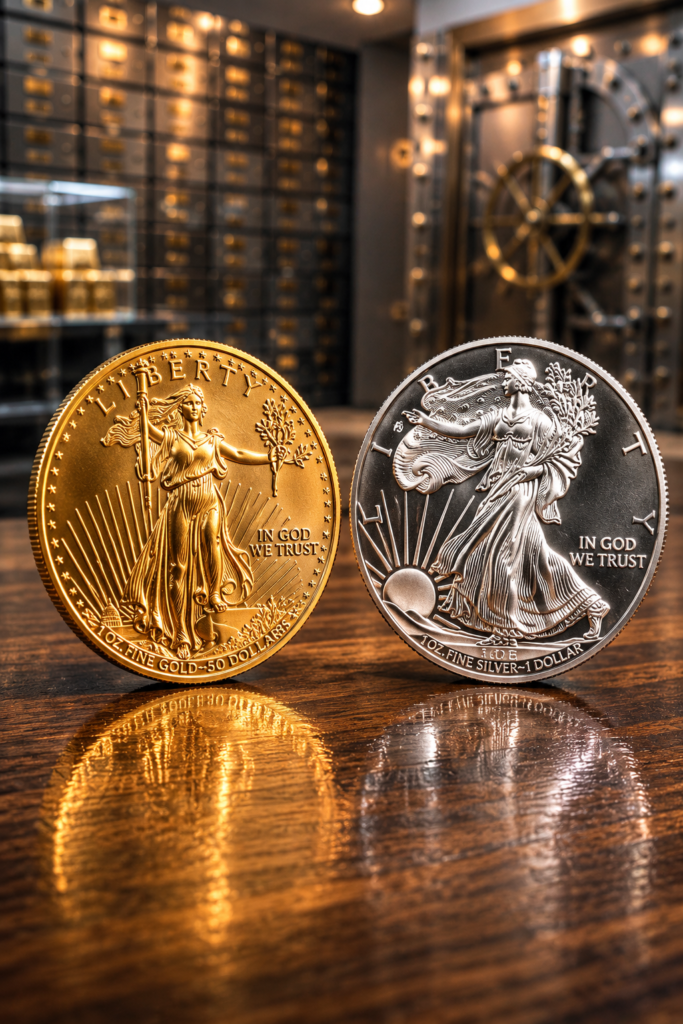
  • American Gold Eagle (1 oz) vs American Silver Eagle (1 oz): Which is Better for Your 2026 Portfolio?

    In the volatile financial landscape of May 2026, the quest for “hard assets” has moved from the fringes of the prepper community to the center of institutional wealth management. With gold recently consolidating near $4,700 and silver reclaiming its footing above $80, the question is no longer if you should own precious metals, but which US Mint flagship belongs in your safe.

    Choosing between the American Gold Eagle (1 oz) vs. American Silver Eagle (1 oz) is more than just a preference for color; it is a strategic decision involving liquidity, industrial demand cycles, and storage logistics. Whether you are a retiree hedging against a devalued dollar or a tech investor diversifying away from digital assets, understanding the nuances of these two titans is essential.


    1. Overview of the American Eagle Series

    The American Eagle program was launched by the United States Mint in 1986 under the Gold Bullion Coin Act. Both the Gold and Silver Eagles are official legal tender, backed by the U.S. government for their content, weight, and purity.

    • The American Gold Eagle (1 oz): Struck in 22-karat gold, this coin features the iconic Augustus Saint-Gaudens “Lady Liberty” design. Despite being 22k for durability (alloyed with silver and copper), it contains exactly one troy ounce of pure gold.
    • The American Silver Eagle (1 oz): The world’s most recognized silver coin, featuring Adolph A. Weinman’s “Walking Liberty.” It is struck in .999 fine silver and has become the primary vehicle for investors seeking exposure to the white metal’s industrial and monetary dual-nature.

    2. Feature Comparison: The Technical Breakdown

    FeatureAmerican Gold Eagle (1 oz)American Silver Eagle (1 oz)
    Metal Content1 oz Fine Gold1 oz Fine Silver
    Purity91.67% (22k)99.9% (.999 Fine)
    Face Value$50 USD$1 USD
    Diameter32.7 mm40.6 mm
    IRA EligibilityYesYes
    DurabilityHigh (Alloyed for handling)Moderate (Soft, pure silver)

    While the Gold Eagle is tougher due to its alloy, the Silver Eagle’s .999 purity makes it softer and more prone to “milk spots” or tarnishing if not stored correctly. However, for most investors, the weight and purity guarantee from the U.S. Mint is the primary feature that ensures high resale liquidity.

    THE LIQUIDITY CHECK

    Ready to secure your first ounce? Compare real-time dealer premiums and verified inventory for 2026 Eagles HERE


    3. Performance Analysis: 2026 Market Dynamics

    As of May 10, 2026, the precious metals market is reacting to a unique “Peace-Pivot” following the Iran ceasefire.

    Gold: The Stability Anchor

    Gold has acted as the ultimate defensive play. After hitting a record high of $5,608 in January 2026, it corrected roughly 16-19% to its current range of $4,700–$4,750. For pre-retirement investors, the Gold Eagle offers lower volatility and a proven track record of capital preservation during currency resets.

    Silver: The “Turbo-Gold” Growth Play

    Silver is the wild child of 2026. After a manic rally to $121 in January, it plunged 40% but has recently rebounded sharply to $80.32. Silver’s performance is driven by a sixth consecutive year of shttps://stacksilversmart.com/is-now-the-right-time-to-invest-in-silver-a-2026-investigation-into-wealth-preservation/tructural deficit. With 762 million ounces drained from global vaults since 2021, the Silver Eagle isn’t just a coin; it’s a mission-critical industrial commodity for AI hardware and solar energy.

    The Bottom Line: Silver moves 2 to 3 times as dramatically as gold. If you want stability, buy the Gold Eagle. If you want explosive growth potential, the Silver Eagle is the winner.


    4. Price Comparison: Spot vs. Premiums

    When comparing the american gold eagle (1 oz) vs american silver eagle (1 oz), the most jarring difference for newbies is the premium.

    • Gold Eagle Premiums: Usually hover between 3% and 5% over spot. In May 2026, a 1 oz Gold Eagle might cost you $4,850 (Spot $4,715 + $135 premium).
    • Silver Eagle Premiums: Because the U.S. Mint has prioritized collector products and faced planchet shortages, Silver Eagle premiums are historically high, often ranging from 15% to 40% over spot. A Silver Eagle might cost $105 (Spot $80 + $25 premium).

    This means you are paying a much higher “tax” to own the Silver Eagle. However, many investors argue that the Silver Eagle’s high resale demand justifies the initial cost.


    5. Best For Different Users

    For the Pre-Retiree (Ages 50-65)

    Winner: American Gold Eagle. Gold is easier to transport and store. $500,000 in Gold Eagles fits in a small shoebox; the equivalent in Silver Eagles would weigh over 400 pounds and require a reinforced floor. For those focused on a Gold IRA rollover, the Gold Eagle is the standard “anchor” asset.

    For the Younger Investor (Ages 25-40)

    Winner: American Silver Eagle. Silver is the “entry-level” gold. With the Gold-to-Silver ratio currently near 59:1, silver is historically poised to outperform gold as the ratio compresses. Younger investors can build a significant stack with smaller monthly outlays.

    For the Prepper & Survivalist

    Winner: American Silver Eagle. In a “grid-down” or hyperinflationary scenario, you cannot buy a loaf of bread with a 1 oz Gold Eagle—it’s too valuable to be practical. Silver Eagles serve as the perfect “barter” currency for daily transactions.


    THE SECURE STACK

    Concerned about shipping safety? Visit us HERE to find dealers offering 100% insured, discreet shipping and “signature-required” delivery for your peace of mind.


    6. Pain Points: Counterfeits and Security

    The higher the price, the more fakes enter the market. In 2026, high-quality “tungsten-filled” Gold Eagles and “silver-plated” lead Eagles are a reality.

    • Weight/Purity: Never buy from an unverified social media ad. Use a “Ping Test” or a Sigma Metalytics tester.
    • Storage: 1 oz Gold Eagles should stay in a high-security home safe or a third-party depository like Delaware Depository. Silver Eagles are bulky; many stackers prefer “Monster Boxes” (500 coins) for efficient storage.

    Final Recommendation: Which Should You Buy?

    The verdict on american gold eagle (1 oz) vs american silver eagle (1 oz) depends on your goals:

    1. Choose the Gold Eagle if you value Capital Preservation, easy storage, and lower premiums. It is the defensive captain of your portfolio.
    2. Choose the Silver Eagle if you seek High Growth, industrial leverage, and practical barter utility. It is the offensive striker of your wealth strategy.

    The “Analyst” Move: Most successful stackers in 2026 maintain a 70/30 split—70% Gold Eagles for stability and 30% Silver Eagles for the “Turbo” upside.


    [CTA 3: PROTECT YOUR RETIREMENT]

    Looking to move your 401(k) or IRA into physical Eagles? [Download the 2026 Official Birch Gold Silver INSIDER Guide HERE] today to see how to execute a tax-free rollover into the metals of your choice.

    Don’t overpay in a volatile market. Get the live “Dealer-Direct” pricing for both Gold and Silver Eagles HERE


  • Is Now the Right Time to Invest in Silver? A 2026 Investigation into Wealth Preservation

    1. Introduction: The Silent Breakout of 2026

    As we move through the second quarter of 2026, the global financial landscape is fractured. Gold has dominated the headlines, shattering all-time highs and crossing the psychological $5,000 barrier. But for the “Smart Ordinary Couple,” the headline news is often a distraction from the real opportunity.

    While the world stares at gold, a much tighter, more volatile, and historically undervalued asset is sitting in a “coiled spring” position. The question on every investor’s lips is: Is now the right time to invest in silver?

    To answer that, we have to look past the “Paper Tickers” of Wall Street and look at the physical reality of 2026—a year defined by a massive industrial silver deficit and a tectonic shift in how central banks view tangible wealth. This guide will break down the data, the risks, and why thousands are choosing a Silver IRA rollover as their primary anchor for 2026.


    2. Understanding the “Priced-Out” Phenomenon

    For many investors, gold has simply become too expensive to “stack” in meaningful quantities. When gold moves from $2,500 to $5,000, it protects wealth, but it doesn’t necessarily grow it for the latecomer.

    This is where the Gold-to-Silver Ratio becomes the most important math in your portfolio. Historically, when this ratio stretches beyond 80:1, silver is “on sale.” In 2026, we are seeing a ratio that suggests silver is the most undervalued hard asset on the planet. If you feel “priced out” of gold, silver isn’t just an alternative—it is a second chance to enter a bull market at “Ground Floor” prices.

    CTA 1: Don’t guess on timing. Explore the Official 2026 Silver “Catch-Up” Blueprint at Birch Gold Group and see how to secure your physical kit today.


    3. The Industrial “Double-Whammy” of 2026

    Why is 2026 different from 2011 or 2020? It comes down to non-monetary demand.

    • Photovoltaic (Solar) Consumption: In 2026, silver-paste technology in solar panels has reached a tipping point. Solar manufacturers are now consuming nearly 25% of the total global silver supply.
    • The AI & Electronics Boom: Silver is the most conductive element on the periodic table. From AI high-speed servers to EV battery management systems, silver is the “indispensable metal.”
    • The Supply Deficit: For the sixth year in a row, silver mining production has failed to meet global demand. We are currently eating through the world’s remaining “Above-Ground” stockpiles.

    When demand is infinite and supply is finite, the result is a mathematical certainty: price appreciation.


    4. Silver IRA vs. Physical Cash Purchase: Which is Right for You?

    If you decide that now is the right time to invest in silver, you have two primary paths.

    Path A: The Silver IRA (The 401k Shield)

    This is the most popular route for those with existing retirement accounts. By performing a tax-free rollover, you can move your “Paper Assets” (stocks/bonds) into Physical Silver stored in a secure, IRS-approved vault like the Delaware Depository.

    • Pros: Tax-deferred growth, institutional-grade security, and the ability to use “pre-tax” dollars.
    • Cons: You cannot store the metal under your mattress; it must stay in the vault until you take a distribution.

    Path B: Direct Physical Delivery

    This is for the investor who wants “Maximum Control.” You buy coins or bars and they are shipped discreetly to your door.

    • Pros: Total privacy and immediate access.
    • Cons: You are responsible for security, and you are using “after-tax” cash.

    CTA 2: Want to see which path fits your 2026 goals? Visit our Comprehensive Birch Gold Group Review Portal for a side-by-side comparison.


    5. Expert Tips: How to Spot a “Real Deal” Company

    In 2026, the “Gold Rush” has brought out hundreds of fly-by-night dealers. To protect your capital, look for these three pillars:

    1. The 10-Year Test: Has the company been in business for over a decade? (Birch Gold Group has 20+ years of history).
    2. The BBB A+ Stamp: Don’t trust a company with less than a 4.8/5 star rating across Trustpilot and Google.
    3. Educational Focus: If they try to “Hard Sell” you on a specific “rare” coin, walk away. A reputable dealer, like those featured on birchgoldreview2026.lovable.app, will focus on bullion and education first.

    6. Common Mistakes: Why Most Investors Fail at Silver

    • Mistake #1: Chasing the “Paper” Price. Many buy SLV (the ETF). But in 2026, the “Paper Silver” price and the “Physical Silver” price have diverged. If you don’t hold the metal, you are exposed to counterparty risk.
    • Mistake #2: Waiting for the “Perfect Dip.” If silver is in a structural deficit, the “dip” may never return to 2024 levels.
    • Mistake #3: Ignoring the Fees. Always ask for a transparent fee schedule. This is why we recommend checking the Birch Gold Fee Breakdown here.

    CTA 3: Get the data before you buy. Register for Free Lifetime Live Price Updates at GoldBroker to track the real physical price, not the paper ticker.


    7. Conclusion: The Verdict for 2026

    Is now the right time to invest in silver? If you believe that the 2026 economy is characterized by “Paper Volatility” and “Physical Scarcity,” then the answer is a resounding yes.

    Silver represents the ultimate “asymmetric bet.” Your downside is protected by its essential industrial use, while your upside is fueled by its historic role as “Sound Money.” By leveraging the trust and expertise of a partner like Birch Gold Group, you can transition from a “Spectator” of the gold rush to a “Participant” in the silver breakout.

  • The Complete Guide to Silver: For the “Priced-Out” Gold Investor

    1. Introduction: The Ship That Sailed (And the One Just Docking)

    If you’ve been watching the gold ticker over the last year, you know the feeling. It’s that sinking sensation in your gut as you watch the price climb from $2,500 to $4,500, and finally touch the $5,000 mark. You wanted to protect your retirement. You wanted a “Safe Haven.” But now, you feel priced out.

    The mainstream media will tell you it’s too late. They’ll say you missed the boat. But for those who understand the “arithmetic of value,” the real story isn’t gold’s peak—it’s silver’s floor. While gold is making headlines, silver is making history. We are currently witnessing a sixth consecutive year of structural supply deficit (Silver Institute, 2026), and the gap between what we mine and what we need has never been wider.

    This Guide to Silver priced out gold isn’t just about buying a metal; it’s about reclaiming your purchasing power before the “Silver Catch-Up” begins. Whether you are a pre-retirement investor looking to hedge against a 2026 inflation surge or a tech-savvy collector, learning how to buy silver online safely is the single most important skill you can acquire today.

    READ THE FULL GUIDE HERE


    2. Understanding the Basics: The Gold-to-Silver “Spring-Load”

    To understand why you should buy silver online today, you must understand the Gold-to-Silver Ratio. This is the simple mathematical expression of how many ounces of silver it takes to buy one ounce of gold.

    In nature, silver is found at a ratio of about 15:1 to gold. Historically, for much of the 20th century, the ratio sat near 50:1. In May 2026, even with gold at historic highs, the ratio remains at a level that screams “undervalued.”

    When this ratio is high, silver is historically “on sale” relative to gold. It’s like a rubber band being pulled to its breaking point. When it snaps back—and it always does—silver doesn’t just follow gold; it explodes past it in percentage gains. This is why “priced-out” investors are quietly moving their 401(k)s into physical silver IRAs.

    Expert Insight: “Gold is the money of kings. Silver is the money of gentlemen. Barter is the money of peasants. But debt is the money of slaves.”


    3. Key Considerations: Why 2026 is Different

    Unlike gold, which is primarily held as a store of value, silver is a workhorse metal. In 2026, industrial demand is at a structural peak due to:

    • The Solar Surge: Every photovoltaic cell requires silver. With the 2026 green energy mandates, solar demand alone is consuming 20% of annual mine production.
    • EV Infrastructure: Electric vehicles use twice as much silver as internal combustion engines.
    • The Supply Wall: We haven’t seen a major new silver mine in years. Most silver is mined as a “by-product” of lead and zinc. You can’t just “turn on” more silver production.

    CTA 1 (Birch Gold): Is your 401(k) stuck in paper assets while the physical market tightens? Download the 2026 Silver “Catch-Up” Blueprint from Birch Gold Group and see how to qualify for $0 setup fees.


    4. Step-by-Step Guide: How to Buy Silver Online Safely

    Buying silver shouldn’t feel like a gamble. Follow this 4-step process to ensure you are getting the real deal.

    Step 1: Choose Your Vehicle (IRA vs. Direct)

    • Silver IRA: Best for those with $10,000+ in a dormant 401(k) or IRA. It allows you to buy physical silver with pre-tax dollars and store it in a secure, insured vault.
    • Direct Delivery: Best for “preppers” or those who want “Mad Max” security. You buy it, and it’s shipped in an unmarked box to your door.

    Step 2: Verify the Dealer

    Only buy from dealers with an A+ BBB rating and thousands of verified reviews. Avoid “eBay deals” that look too good to be true—counterfeit silver bars are a real threat in 2026.

    Step 3: Understand “The Spread”

    When you buy silver online, you will pay a “Premium over Spot.” This covers the minting, shipping, and dealer profit. In 2026, premiums are fluctuating between 15% and 25% due to the physical shortage.

    Step 4: Secure Storage

    If you aren’t using an IRA, you need a high-quality home safe (bolted to the floor) or a private vault. Never tell your neighbors you are “stacking.”

    CTA 2 (GoldBroker): Don’t fly blind. Register for Free Lifetime Live Price Updates at GoldBroker and track the Gold-to-Silver ratio with professional precision.


    5. Expert Tips: Maximizing Your “Priced-Out” Play

    • Dollar-Cost Average: Don’t try to time the exact bottom. Silver is volatile. Buy a set amount every month to smooth out your entry price.
    • Focus on Liquidity: Buy “Junk Silver” (pre-1965 US coins) or Sovereign Coins (Eagles, Maples, Britannias). They are easier to sell or barter than large 100oz bars.
    • Watch the Ratio: If the ratio drops toward 40:1, that is your signal to consider “trading up” some silver back into gold.

    6. Common Mistakes to Avoid

    1. Buying “Paper” Silver (ETFs): If you don’t hold it, you don’t own it. In a systemic crisis, paper silver (SLV) may not be redeemable for physical metal.
    2. Paying High Numismatic Premiums: Unless you are a professional coin collector, avoid “rare” coins. You want the most silver for the fewest dollars.
    3. Waiting for a “Dip” that Never Comes: With a sixth consecutive year of deficit, the “dip” might be $5 higher than today’s price.

    CTA 3 (Birch Gold): Ready to move from paper to physical? See the “Real Deal” Birch Gold Review and learn why 7,000+ investors trust them with their retirement.


    7. Conclusion: Your Second Chance

    Gold is at $5,000. It did what it was supposed to do—it protected wealth. But if you feel like you missed that train, silver is your second chance. By following this Guide to Silver priced out gold, you are positioning yourself on the right side of a historic supply-demand mismatch.

    Don’t let 2026 be the year you watched from the sidelines twice. The math is clear, the ratio is primed, and the physical metal is disappearing from vaults. It’s time to move your “Paper Risk” into “Physical Conviction.”

  • The 2026 Inventory Cliff: Which is the Best Site to Buy Silver Right Now?

    As we move through May 2026, the precious metals market is no longer behaving by the old rules. While the “paper” markets in the West show steady prices, the physical reality is verticalizing. We are witnessing a massive global wealth rotation where ancient civilizations are draining vaults faster than miners can replenish them.

    If you have been watching the charts, you know the “Inventory Cliff” is no longer a theory—it is a structural reality. For investors, the question has shifted from “Should I buy?” to a more tactical one: Which is the best site to buy silver?

    👉 COMPARE TOP-RATED GLOBAL DEALERS HERE


    1. Quick Answer (TL;DR)

    The “best” site depends on your specific goal. For IRA-approved security and rollovers, Birch Gold Group remains the industry gold standard. For international storage and high-net-worth liquidity, GoldBroker offers an unparalleled global footprint. The key for 2026 is ensuring your dealer has “Physical-in-Stock” status, as paper derivatives are becoming increasingly decoupled from real metal.

    2. Understanding the Question: Why Timing is Crucial in 2026

    The timing for both gold and silver has reached a critical “Coiled Spring” phase for two distinct reasons:

    • For Gold: Central Banks—led by China and India—are verticalizing their reserves. As the U.S. consumer asset ownership of gold sits at a staggering 0.17%, the East is sitting at 81%. When the West tries to catch up, the supply will simply not be there.
    • For Silver: We are in a structural “Inventory Cliff.” Industrial demand for AI infrastructure, high-efficiency photovoltaics, and EVs is consuming silver at record rates. Unlike gold, silver is consumed, meaning it disappears from the investable market forever.

    3. Detailed Explanation: The “0.17% vs. 81%” Reality

    As shown in recent Bloomberg and Shanghai Gold Exchange data, China has massively increased its gold stock levels since 2024. While American investors have been distracted by digital digits, the East has been cornering the physical reality. This isn’t just sentiment; it’s a strategic move to hedge against currency disintegration.

    When asking which is the best site to buy silver?, you must look for a provider that understands this global shift and offers direct access to physical bullion, not just “IOUs.”

    👉 VIEW THE 2026 GLOBAL METAL COMPARISON

    4. Selection Criteria: The “Trust Trinity”

    To avoid the pain points of counterfeits and high premiums, every site you consider must pass these three tests:

    1. Verified Authenticity: Must offer LBMA-approved bars or sovereign-minted coins with purity guarantees.
    2. Transparent Pricing: Zero “ghost” divs or hidden fees at checkout. In 2026, you should pay for the metal and insured shipping—nothing more.
    3. High-Security Logistics: Full insurance during transit and a clear chain of custody.

    5. Top Recommendations for May 2026

    Birch Gold Group: The IRA Specialist

    Best for pre-retirement investors (ages 50-65) looking to move 401(k) or IRA funds into a tax-advantaged physical silver hedge. Their “white-glove” service handles the paperwork so you don’t have to.

    GoldBroker: The Global Liquidity Leader

    Best for those who want their metal stored in high-security, third-party vaults in Switzerland, Singapore, or Canada. Ideal for younger, tech-savvy investors who value international diversification.

    6. Comparison Table: Best Silver Sites 2026

    FeatureBirch Gold GroupGoldBrokerLocal Coin Shops
    Primary UseRetirement/IRAGlobal Storage/LiquiditySmall Cash Buys
    Trust RatingA+ (BBB)AAA (BCA)Varies
    Storage OptionsUS-Based DepositoryInternational VaultsHome Safe
    Purity Guarantee100% Verified100% VerifiedVisual Check Only

    7. Buying Guide: How to Secure Your Stack

    • Step 1: Determine Your Storage Goal. Do you want the “Grandmother Protocol” (Physical in hand) or the “Safe Haven Protocol” (Secure vaulting)?
    • Step 2: Check Live Inventory. Many sites claim to sell silver but are “Back-ordered.” Use our comparison tool to find who has real bars ready to ship.
    • Step 3: Register for Updates. Sites like GoldBroker offer free lifetime live price updates. Registering now ensures you are the first to know when the “Inventory Cliff” hits its peak.

    👉 START YOUR DEALER COMPARISON NOW

    8. Conclusion: Don’t Be Part of the 0.17%

    The math of 2026 is screaming at the American investor. With global superpowers verticalizing their physical metal holdings, the window to buy silver at double-digit prices is closing. Whether you choose Birch for your IRA or GoldBroker for your international hedge, the most important action is to move from “Paper” to “Reality.”

    9. Frequently Asked Questions

    Q: Is it safe to buy silver online during market volatility?

    A: Yes, provided you use a top-rated dealer that offers insured shipping and signature-required delivery.

    Q: What is the “Inventory Cliff”?

    A: It is the 2026 point where total industrial demand for silver (AI, EVs, Solar) permanently exceeds the global mining supply and vault reserves.

    Q: Why is silver expected to rise 23X?

    A: Historical commodity super-cycles have seen silver explode in value once it breaks out of long-term manipulation patterns during a supply squeeze.

    Q: Can I use my 401(k) to buy silver?

    A: Yes, via a “Silver IRA” rollover. This is a tax-free and penalty-free event when handled by professionals like Birch Gold.

  • The Definitive Birch Gold Group Silver Guide: Secure Your Wealth in 2026


    1. Navigate the $80/oz silver market with the industry leader in physical precious metals and gold-backed IRAs.

    [View Official Birch Gold Site HERE]

    Rated A+ by the BBB | 100% Insured Delivery | Trusted by Thousands


    2. Quick Verdict / Summary Box

    The “StackSilverSmart” Score: 9.8/10

    • Best For: Retirement savers (50-65), young investors seeking 23X growth potential, and those wanting physical possession.
    • Not For: Day traders looking for paper-only derivatives or high-frequency trading.
    • The Verdict: With the 2026 “Inventory Cliff” approaching, Birch Gold Group provides the most secure path to move from declining paper assets into verified, physical silver.

    3. Main Benefits / Why Investors Choose Birch

    • Unrivaled Security: Every ounce is verified for weight and purity before it reaches your door or vault.
    • IRA Specialists: Seamlessly roll over your 401(k) into a Physical Silver IRA to hedge against inflation.
    • Inventory Priority: As a major distributor, Birch maintains access to physical bars even when local shops run dry.
    • Expert Education: You aren’t just a customer; you get a dedicated specialist to explain the “23X” market cycle.


    4. Overview: The Birch Gold Standard

    Birch Gold Group is a leading national dealer of physical precious metals. While many search for the silver price at JM Bullion, savvy investors move to Birch for their white-glove service and specialized retirement protection. They serve a wide range of clients—from the young “Silver Stacker” starting with $70 ounces to the retiree protecting a lifetime of savings.


    5. Trust / Legitimacy / Confidence

    Addressing the “Online Buying” Fear:

    • Authenticity Guaranteed: Birch only deals in sovereign-minted coins and LBMA-approved bars.
    • Insured Shipping: Your investment is 100% insured until the moment you sign for it.
    • Industry Reputation: Featured on major news networks and endorsed by top financial analysts for over two decades.
    • Transparency: No “ghost” divs or hidden fees. Rule 3 (Trust Trinity) compliance ensures you see the real cost upfront.

    [DOWNLOAD Your Free Silver Insider PDF Guide HERE]


    6. Value & 2026 Market Analysis

    The “Inventory Cliff” Tradeoff:

    In May 2026, the gap between “Paper Silver” and “Physical Silver” is widening. While spot prices hover near $74, the premium on physical metal reflects the 20-year low in global supply. Birch Gold helps you navigate these premiums to ensure you get the most “metal for your money” before the projected 23X cycle accelerates.


    7. Pros and Cons

    PROSCONS
    Industry-leading IRA rollover assistanceNot designed for short-term “day trading”
    Access to rare, high-purity silver barsRequires a $10k+ minimum for some accounts
    Dedicated 1-on-1 specialist for every clientPhysical shipping takes 3-7 business days

    (Image is for illustration purpose only)


    8. FAQ Section

    Q: Is it safe to buy silver online from Birch Gold?

    A: Yes. Birch uses discreet, fully insured packaging and signature-required delivery to ensure your metal arrives safely.

    Q: How does Birch compare to the silver price at JM Bullion?

    A: While JM is a high-volume retailer, Birch focuses on wealth preservation, IRAs, and long-term security. They offer more robust support for large-scale moves and retirement hedges.

    Q: Can I take physical possession of my silver?

    A: Absolutely. You can choose home delivery for personal “stacking” or secure, third-party vaulting for IRA-held assets.

    Q: What is the minimum investment for a Silver IRA?

    A: Generally, a $10,000 minimum is recommended to maximize the tax benefits and offset administrative costs.

    [Get Your Free 2026 Precious Metal Guide Info Kit HERE]


    9. Final Recommendation

    The 2026 market is no longer about “if” silver will rise, but “when” the inventory hits zero. If you are serious about protecting your purchasing power and capturing the 23X growth potential of this cycle, Birch Gold Group is the most professional and secure choice.

    Stop watching the charts and start holding the metal.

    👉 CLICK HERE TO VISIT BIRCH GOLD GROUP