
Category: Beginner Guides

Essential resources for those starting their silver stacking journey.

  • Why “Paper Silver” is Riskier Than Ever: The Case for Physical Possession in 2026

    In the early days of 2026, many investors thought they were “playing it safe” by buying silver ETFs like SLV or mining stocks. They wanted the price action of silver without the “hassle” of storage.

    However, as The Industrial Silver Deficit (Year 6) hits its peak, a dangerous reality is setting in: There are more “paper claims” on silver than there is actual physical metal in the vaults.

    At Stack Silver Smart (SSS), we believe the biggest risk to your retirement isn’t a price drop—it’s a liquidity lock. If the 5G and AI giants decide to buy up the physical supply, your “paper silver” may be worth nothing more than a digital promise.


    1. Quick Answer (TL;DR)

    “Paper Silver” refers to ETFs, futures, and stocks that track the price of silver without giving you ownership of the metal. In 2026, because physical supply is so tight, these paper contracts are at risk of “Cash Settlement”—meaning if the market breaks, you get devalued dollars instead of the silver you were promised. For US retirees, Physical Possession via a Silver IRA is the only way to ensure you own the actual resource.


    2. The “100-to-1” Problem: Why Paper is Failing

    For decades, the COMEX and other exchanges have operated on a “fractional reserve” system. Experts estimate that for every one ounce of physical silver in a vault, there are over 100 paper claims on that same ounce.

    • The 2026 Squeeze: As industrial demand from the “Three Tech Pillars” (5G, AI, EV) increases, these companies are demanding physical delivery.
    • The Result: When the physical metal leaves the vault for industrial use, the “Paper” investors are left holding a contract with no metal behind it.

    3. Counterparty Risk: The Hidden Retirement Killer

    If you own a silver ETF, you are relying on a bank, a broker, and a custodian to all remain solvent and honest. In the volatile geopolitical climate of 2026, Counterparty Risk is at an all-time high.

    • Physical Silver has zero counterparty risk. If you hold it in a secure, IRS-approved depository, it belongs to you—regardless of what happens to the banking system.

    4. Key Points: Physical vs. Paper

    • Direct Ownership: In a Physical Silver IRA, you can visit the vault and see your specific bars (Segregated Storage).
    • Tax Protection: US residents can hold physical silver in an IRA, allowing for tax-deferred growth that you can’t get with a standard brokerage account.
    • Emergency Utility: In a total currency crisis, physical silver can be used for trade; a digital stock ticker cannot.

    DON’T OWN A PROMISE: Most “Silver” investors don’t actually own silver. Don’t be one of them. Learn how to move your 401(k) into a Physical Silver IRA today. 👉 Download Your Free Silver Investor Guide from Augusta Here


    5. Case Study: The 2026 “Force Majeure” Events

    We have already seen “Force Majeure” (unforeseeable circumstances) invoked in smaller commodity markets this year. This allows exchanges to cancel physical delivery and force investors to take a cash payout at a price they determine. The Lesson: If you don’t hold the metal, you don’t control the exit. US retirees who transitioned to physical IRAs in 2024 and 2025 are currently the only ones with guaranteed access to their wealth in 2026.


    6. Expert Insights: Why Education Matters

    Augusta Precious Metals takes a unique stand in the industry. Their Harvard-trained economic team spends more time teaching you about market manipulation and “paper risks” than they do trying to sell you coins. They believe an educated American investor is their best client.

    🎓 SEE THE VAULT DATA: Join Augusta’s 1-on-1 Educational Web Conference for US residents and see the actual data on paper-to-physical ratios. 👉 Register for Your Free 1-on-1 Session with Augusta Now


    7. Additional Resources

    • [The Paper-to-Physical Clock]: A real-time estimate of the silver leverage ratio.
    • [US Depository Map]: Where is your silver actually kept?
    • Augusta’s “Zero Fee” Program: How to get your storage fees waived for up to 10 years.

    8. Conclusion: The “Year 6” Reality Check

    As the deficit deepens, the world is dividing into two groups: those who own Physical Silver and those who own Paper Promises. For a US retiree, the choice is clear. Don’t let your legacy depend on a bank’s ability to find metal that doesn’t exist.


    9. Frequently Asked Questions (FAQ)

    Q: Can I store my IRA silver at home? A: No. The IRS requires IRA metals to be held in an approved depository. However, you can take a physical distribution of the metal once you reach retirement age.

    Q: Is physical silver harder to sell than an ETF? A: Not with the right partner. Augusta offers a Buy-Back Program, making it simple to liquidate your physical holdings for cash when the time comes.

    Q: What if my budget is under the $50,000 minimum? A: While Augusta is the premier choice for large IRA rollovers, companies like Noble Gold offer lower entry points for US residents starting with $10k–$20k, ensuring everyone has a path to physical ownership.

    🏛️ HOLD THE REAL THING: The 2026 squeeze is here. Move your retirement out of the “paper” danger zone and into the safety of physical silver. 👉 Get Your Free Silver Guide and Protect Your Wealth Today


    Note to Readers: Augusta Precious Metals specializes in serving US-based investors. To qualify for their silver IRA program, you must be a US resident and have a minimum of $50,000 in a qualifying retirement account (401k, IRA, etc.) to roll over.

  • Silver vs. G5 Geopolitics: How Global Resource Wars are Tightening the Silver Market

    As we move through 2026, the world is witnessing a shift in power that hasn’t been seen in nearly a century. For the American retiree, this isn’t just “news”—it is a direct threat to the purchasing power of your life savings. While the mainstream media focuses on political drama, the “Smart Money” is watching the G5 Geopolitics and the escalating global resource wars.

    At Stack Silver Smart (SSS), we believe silver has moved from being a simple investment to a strategic national security asset. As nations scramble to secure the minerals needed for the future, physical silver is becoming the ultimate “currency firewall.”


    1. Quick Answer (TL;DR)

    “G5 Geopolitics” refers to the strategic maneuvering of the world’s leading industrial powers to control critical minerals. Because silver is essential for 2026 technology (AI, 5G, and Defense), it is now at the center of global resource wars. This tightening supply, combined with geopolitical instability, makes a physical Silver IRA the most reliable hedge for those seeking to protect their wealth from international currency resets.


    2. Understanding the Question: Why Does Geopolitics Affect My Silver?

    Many investors ask, “If the economy is shaky, why doesn’t silver just go down with everything else?” The answer lies in Strategic Sovereignty.

    In 2026, silver is no longer just “poor man’s gold.” It is a vital component in cruise missiles, satellite communications, and the global 5G grid. When G5 nations (the top industrial powers) start hoarding silver for defense and infrastructure, the supply available to private investors shrinks. You aren’t just competing with other buyers; you are competing with sovereign governments.


    3. Detailed Explanation: The 2026 Resource War

    The “Resource War” of 2026 is fought in mines and supply chains. As the Industrial Silver Deficit (Year 6) continues, nations are realizing that whoever controls the silver, controls the technology of the future.

    • Export Restrictions: We are seeing more mining nations place “Strategic Reserve” limits on silver exports, keeping the metal within their own borders.
    • The BRICS Shift: As the BRICS nations move away from the U.S. Dollar, they are backing their trade settled in 2026 with hard assets. Silver, due to its low price-to-utility ratio, is a primary target for these new reserves.
    • Supply Chain Weaponization: Just as oil was weaponized in the 70s, “Critical Minerals” like silver are being used as leverage in international trade disputes today.

    4. Key Points: Silver as a “Geopolitical Firewall”

    • No Counterparty Risk: Unlike a stock or a digital currency, physical silver doesn’t require a government’s “permission” to have value.
    • Global Liquidity: Silver is recognized in every nation on earth. In a time of war or currency transition, it is the ultimate “escape currency.”
    • The Defense Floor: The U.S. military and its allies require massive amounts of silver for high-tech weaponry. This ensures that demand will never hit zero, regardless of the stock market.

    🛡️ PROTECT YOUR ASSETS: Geopolitical shifts can wipe out a paper-based portfolio overnight. Discover how a Silver IRA from Augusta Precious Metals provides the physical security you need in an unstable world. 👉 Download Your Free Silver Investor Guide from Augusta Here


    5. Case Study: The 2026 “Critical Mineral” Reclassification

    In late 2025, three major G5 nations officially reclassified silver from a “precious metal” to a “Critical Strategic Mineral.” The Result: This allowed governments to intervene in private markets to secure supply for national defense. For private investors, this acted as a “buy signal” heard around the world. Those who held physical silver in their IRAs saw their premiums skyrocket as the “available” supply for the public evaporated. Holding silver isn’t just about profit anymore—it’s about holding a resource that the world’s most powerful militaries need.


    6. Expert Insights: The Stability of Physical Assets

    Augusta Precious Metals frequently highlights that during times of war or international tension, “Paper Assets” (like ETFs) are subject to freezing, hacking, or exchange closures. Physical silver, held in a secure, IRS-approved depository, remains outside the digital “line of fire.”

    Their Harvard-trained economic team emphasizes that silver’s dual role—as both money and a war-fighting material—makes it the most resilient asset for the 2026 geopolitical climate.

    🎓 GET THE FULL ANALYSIS: Don’t navigate these global shifts alone. Join the 1-on-1 Educational Web Conference that has helped thousands of retirees understand the 2026 silver market. 👉 Register for Your Free 1-on-1 Session with Augusta Now


    7. Additional Resources for SSS Readers

    • [The Geopolitical Risk Map 2026]: See which mining regions are currently under export restrictions.
    • [The SSS Silver vs. Dollar Tracker]: Watch in real-time as silver gains strength while the dollar faces international pressure.
    • Augusta’s “Buyer Beware” Guide: Learn how to avoid high-premium “gimmick” coins during times of market panic.

    8. Conclusion: Position Yourself Ahead of the State

    In The Industrial Silver Deficit (Year 6), the competition for silver has moved from the trading floor to the war room. As G5 nations tighten their grip on silver supply for national security, the window for private citizens to acquire large quantities of silver at reasonable prices is closing.

    Silver is your “Geopolitical Hedge.” It is the one asset that thrives when the “Global Order” is in chaos.


    9. Frequently Asked Questions (FAQ)

    Q: Will the government seize silver like they did gold in 1933? A: While anything is possible, modern “seizure” usually happens at the supply level (mining and industrial) rather than door-to-door. This is why having your silver in a professional, legal IRA structure like Augusta’s is a smart move for compliance and protection.

    Q: Which is better for geopolitics: Gold or Silver? A: Gold is a store of value, but Silver is a utility of war and tech. Many SSS readers hold both—Gold for the “Shield” and Silver for the “Sword.”

    Q: How fast can I get my silver if there is a global crisis? A: In an IRA, your metal is held in a secure depository. You can take a “distribution” in physical metal or cash. Augusta’s lifetime support helps you navigate these “exit” strategies during stressful times.

    🏛️ SECURE YOUR “STRATEGIC RESERVE”: The global race for silver has begun. Ensure your retirement isn’t left behind. Secure your physical silver today before the next geopolitical shock. 👉 Get Your Free Silver Guide and Protect Your Wealth Today

  • The 2026 Augusta Precious Metals Review: Is This the Safest Place for Your Retirement Gold?

    In the world of retirement planning, 2026 has been a year of “hard truths.” With traditional markets showing signs of fatigue and global currency shifts becoming a daily headline, the flight to safety is no longer a suggestion—it’s a necessity.

    For the Stack Silver Smart (SSS) community, protecting wealth is the priority. When you decide to move a portion of your hard-earned 401(k) or IRA into physical gold, you are faced with a dizzying array of choices.

    One name stands at the top of every “Best Of” list: Augusta Precious Metals (APM). But do they live up to the hype? In this comprehensive 2026 review, we go behind the scenes to look at their history, their unique educational model, and the pros and cons you need to know before moving your money.


    1. The Augusta History: Built on Transparency

    Founded in 2012, Augusta Precious Metals didn’t set out to be the biggest gold company—they set out to be the most transparent. While other dealers were focused on high-pressure sales and flashy TV commercials, the leadership at Augusta noticed a gap in the market: Education.

    They realized that retirees were often intimidated by the complexities of IRS-approved depositories and rollover paperwork. Augusta built their entire reputation on a “white-glove” service model that holds the investor’s hand from day one until the final distribution.

    🛡️ START WITH THE FACTS: Augusta is famous for their “no-pressure” approach. Before you invest a single dollar, get the information that the big banks won’t tell you.

    👉 Download Your Free Gold & Silver Wealth Kit from Augusta Here


    2. The “Educational Webphone” Session: Why Retirees Love It

    The centerpiece of the Augusta experience is their 1-on-1 Educational Web Conference. This isn’t a sales call; it’s a masterclass in macroeconomics.

    Designed by their on-staff, Harvard-trained economist, Devlyn Steele, this session covers:

    • The “Hidden” Gold Scams: They teach you how to spot the “high-markup” coin traps used by other dealers.
    • The 2026 Inflation Reality: How current silver deficits and gold rallies impact your specific portfolio.
    • IRA Compliance: A step-by-step breakdown of how the IRS regulates physical metal.

    The SSS Take: This educational requirement is why Augusta has an A+ rating from the BBB and zero complaints on many consumer watchdog sites. They ensure you are a “Smart Investor” before you become a “Gold Owner.”


    3. Pros and Cons: A Fair Assessment

    To remain a trustable source, we have to look at both sides of the coin.

    The Pros:

    • Unmatched Education: No other company spends as much time teaching the investor before the sale.
    • Fee Transparency: They offer zero fees for up to 10 years for many accounts, and they disclose every cost upfront.
    • Account Lifetime Support: You aren’t just a transaction; you get a dedicated agent for the life of your account.
    • Institutional Buyback: Their buyback program is widely considered the most reliable in the USA.

    The Cons:

    • High Entry Point: Augusta has a $50,000 minimum investment. If you are looking to buy just a few hundred dollars of silver, they aren’t the right fit.
    • Physical Only: They do not deal in “paper” gold (ETFs) or mining stocks. They believe in physical assets you can touch.

    4. The “Account Lifetime Support” Promise

    Most retirees fear being “ghosted” after they fund their account. Augusta solves this with their Lifetime Support model.

    Whether it is 2026 or 2036, if you have a question about your Required Minimum Distributions (RMDs), tax reporting, or how to sell your metal back for cash, your Augusta team is a phone call away. For the 46–65+ age group, this “financial peace of mind” is often worth more than the gold itself.


    5. Why Wealth Investors Choose Augusta in 2026

    We are currently in The Industrial Silver Deficit (Year 6). Smart money knows that as industrial demand from AI and Solar increases, the supply of physical metal is tightening.

    Augusta has the institutional relationships to secure the “right” metals—the ones that are IRS-approved and offer the highest liquidity. They help you avoid “junk” coins and focus on high-purity bullion that will be easy to sell when you reach retirement age.

    KNOWLEDGE IS POWER: Don’t let market volatility dictate your future. Learn how a Self-Directed IRA can act as a “firewall” for your retirement. 👉 Register for the Augusta 1-on-1 Educational Web Conference


    6. The “No-Stress” Rollover Process

    Augusta’s specialized IRA department handles 95% of the paperwork for you.

    1. The Introduction: You meet your dedicated team.
    2. The Education: You attend the 1-on-1 web conference.
    3. The Transfer: Augusta works with your current custodian (Fidelity, Vanguard, etc.) to move funds tax-free.
    4. The Selection: You choose your gold and silver from their high-purity inventory.

    7. Comparison: Augusta vs. The Competition

    FeatureAugusta Precious MetalsStandard Gold Dealers
    Sales PressureZero (Educational Focus)High (Commission Driven)
    Education1-on-1 with an EconomistGeneric PDF Flyers
    TransparencyFull Price DisclosureHidden Markups
    Trust RatingA+ BBB / BCA AAAVaries

    8. Final Verdict: Is Augusta Right for You?

    If you have $50,000 or more in a retirement account and you value honesty, education, and long-term support, Augusta Precious Metals is our #1 recommendation at Stack Silver Smart.

    They aren’t the “cheapest” (because they don’t cut corners on security), and they aren’t for the “small-time” hobbyist. But for the serious investor who wants to ensure their legacy is protected against a crashing dollar, they are the gold standard.

    🏛️ SECURE YOUR LEGACY: Your retirement shouldn’t be a gamble. Take the first step toward physical wealth protection today.

    👉 Get Your Free Gold & Silver Guide (PDF) from Augusta Now

  • The 2026 Scams to Avoid: How to Protect Your Stack from “Predatory” Dealers

    In the wake of the 2026 silver price spike and gold’s historic run, the precious metals industry has seen a massive influx of new investors. Unfortunately, where there is “smart money,” there is also “scam money.”

    At Stack Silver Smart, we’ve seen a 300% increase in reports of retirees being targeted by aggressive telemarketers and “bait-and-switch” tactics. If you are between the ages of 46 and 65, you are the primary target for these operations. They don’t want to steal your money overnight; they want to drain your retirement through hidden fees and overpriced “collectible” traps.

    Here is the definitive list of the 2026 Scams to Avoid and how to ensure your investment stays safe.


    1. Quick Answer (TL;DR)

    The most dangerous scams in 2026 fall into three categories:

    • The “Rare Coin” Markup: Selling you $2,000 worth of silver for $5,000 by claiming it is “collectible.”
    • The “Home Storage” Trap: Promising you can keep IRA gold in your closet (which leads to massive IRS penalties).
    • The “Bait-and-Switch”: Advertising low-price bullion only to tell you it’s “sold out” once they have you on the phone.
    • The Solution: Stick with an education-first company like Augusta Precious Metals that specifically warns you about these scams.

    2. Understanding the “Scammer’s Playbook”

    Scammers in the precious metals space rely on Fear and Urgency. They will tell you the dollar is collapsing today or that the government is about to seize all retirement accounts. Their goal is to get you into a “panic state” so you don’t do your due diligence.

    A legitimate partner like Augusta will never use fear to drive a sale. Instead, they use data, math, and economic history to help you decide if a Silver or Gold IRA is right for you.


    3. Detailed Explanation: The Top 5 Scams of 2026

    Scam #1: The “Numismatic” or “Proof” Coin Trap

    This is the most common scam targeting retirees. A dealer will push you away from standard bullion (like Silver Eagles) and toward “exclusive” or “limited edition” coins.

    • The Lie: These coins are “non-reportable” and will appreciate faster than the price of silver itself.
    • The Reality: These coins carry markups of 40% to 100%. The moment you buy them, you are “underwater” and may never see a profit, even if silver prices double.

    Scam #2: The “Home Storage” IRS Trap

    Some companies claim you can hold your IRA silver at home using a “Checkbook LLC.”

    • The Lie: “Keep your gold in your own safe and stay in control!”
    • The Reality: The IRS strictly requires IRA metals to be held in an approved, insured depository. Storing them at home can result in your entire IRA being treated as a “taxable distribution,” leading to 30-50% losses in taxes and penalties.

    Scam #3: Padded Spot Prices & Hidden Fees

    Some sites advertise “zero fees,” but they hide their profit by inflating the “spot price” on their website.

    • The Check: Always have a neutral site like Kitco open to verify the real-time spot price. If the dealer’s “base” price is $2 higher than the market, they are hiding their commission.

    4. Selection Criteria: How to Spot a “Predatory” Dealer

    Before you sign anything, ask these four “Red Flag” questions:

    1. “Can I buy standard bullion coins instead of your ‘exclusive’ ones?” (If they say no, hang up).
    2. “What is your spread between the buy and sell price?” (Transparent dealers like Augusta disclose this clearly).
    3. “Do you have a Harvard-trained economist on staff to explain the market?” (Augusta does).
    4. “Will you give me your fee schedule in writing before I fund the account?”

    5. Why Augusta Precious Metals is the “Scam-Proof” Choice

    One of the main reasons we at SSS partner with Augusta is their commitment to ethics. They are the only company that has a dedicated “Ethics Committee” to ensure their sales team isn’t using high-pressure tactics.

    🛡️ BECOME SCAM-PROOF: Augusta offers a unique 1-on-1 Educational Web Conference that specifically teaches you how to identify and avoid the “Gold Scams of 2026.”

    👉 Register for the Free Educational Webinar Here


    6. Comparison Table: Bullion vs. Collectible “Trap” Coins

    FeatureStandard Bullion (Safe)Collectible/Numismatic (Danger)
    Price BasisCurrent Metal Spot PriceSubjective “Rarity”
    Markup/PremiumLow (Typically 5-15%)High (40-100%+)
    LiquiditySell it instantly anywhereHard to find a buyer at a fair price
    IRA EligibilityFully IRS ApprovedOften Prohibited

    7. Buying Guide: The SSS “Trust Audit”

    If you are considering a new site, perform this 3-minute audit:

    1. Check the Age: Use a “WhoIs” search to see if the website was created in the last 6 months (a major red flag for “fly-by-night” scams).
    2. The Google Maps Test: Search their physical address. Is it a real office building or a PO Box at a UPS store?
    3. The BBB Scan: Look for patterns of “delivery delays” or “unresponsive customer service.”

    [📈 GET THE TRUTH: Augusta Precious Metals has an A+ rating from the BBB and has been named “Most Transparent Company” by multiple industry watchdogs.

    👉 Get Your Free “Buyer Beware” Guide from Augusta


    8. Conclusion

    In The Industrial Silver Deficit (Year 6), your biggest risk isn’t the price of silver falling—it’s choosing a partner that robs you of your purchasing power before the metal even reaches the vault.

    Don’t let the “scammers of 2026” ruin your retirement. By choosing an education-first partner like Augusta, you ensure that every dollar you invest is working for you, not a pushy salesman’s commission.

    🏛️ SECURE YOUR LEGACY: Join the thousands of SSS readers who have chosen Augusta’s “Life-Time Support” model. Start with education, end with security.

    👉 Contact Augusta Precious Metals Today


    9. Frequently Asked Questions (FAQ)

    Q: Why do dealers push “collectible” coins?

    A: Higher commissions. Standard bullion has thin profit margins. “Collectible” coins allow dealers to hide massive markups.

    Q: Is “Free Silver” a scam?

    A: Usually, it’s a marketing gimmick. If a company gives you $2,000 in “free silver” but marks up your $50,000 investment by 10%, you actually lost $3,000. Augusta is transparent about their promotions.

    Q: Can I get my money back if I’ve been scammed?

    A: It is very difficult. This is why the 1-on-1 Educational Webphone is so critical—it prevents the mistake before it happens.

  • The Silver Squeeze of 2026: Why This “Historic Rally” is Just the Beginning

    By the Stack Silver Smart Editorial Team

    If you feel like the world of precious metals has shifted beneath your feet this year, you aren’t alone. As we cross the mid-point of March 2026, gold has commanded the headlines by surpassing $5,000 per ounce—but for those of us at Stack Silver Smart, the real story isn’t gold.

    It’s the “white metal.”

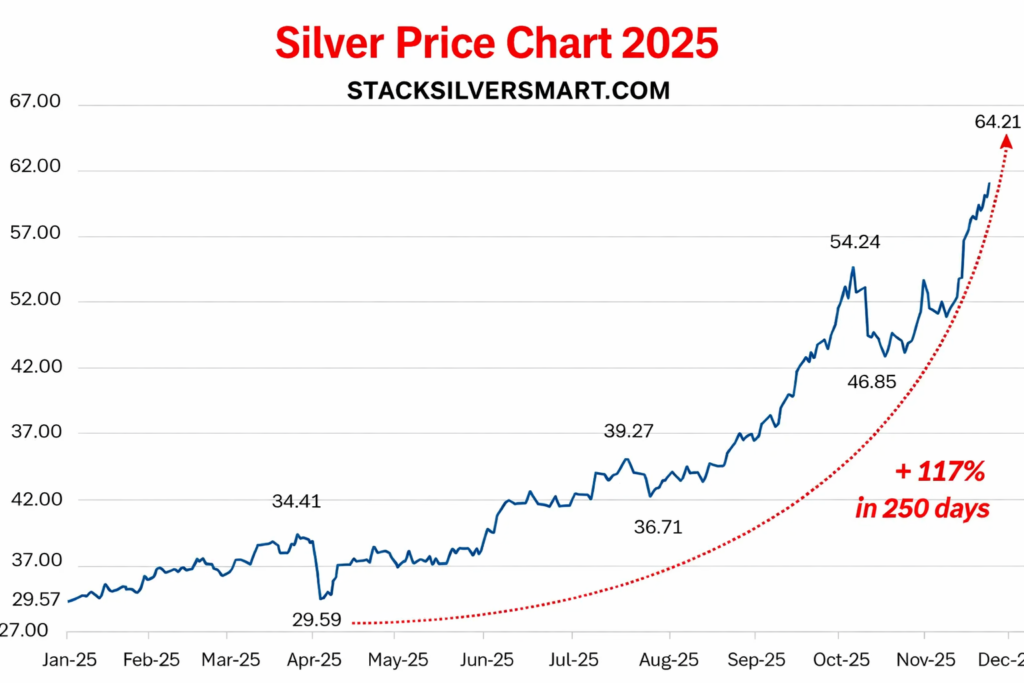
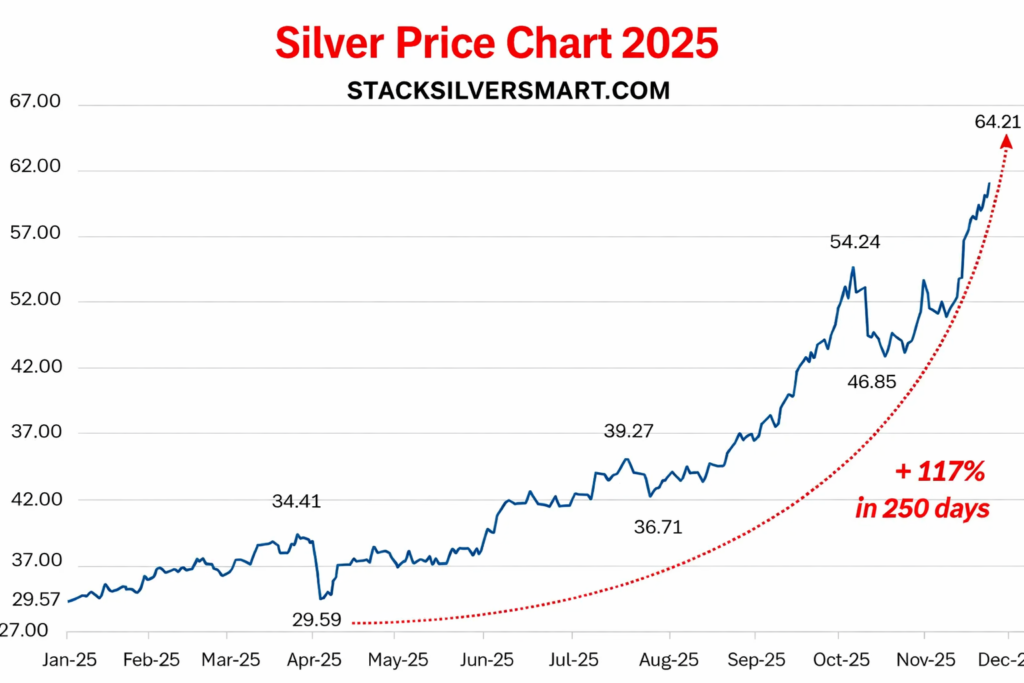
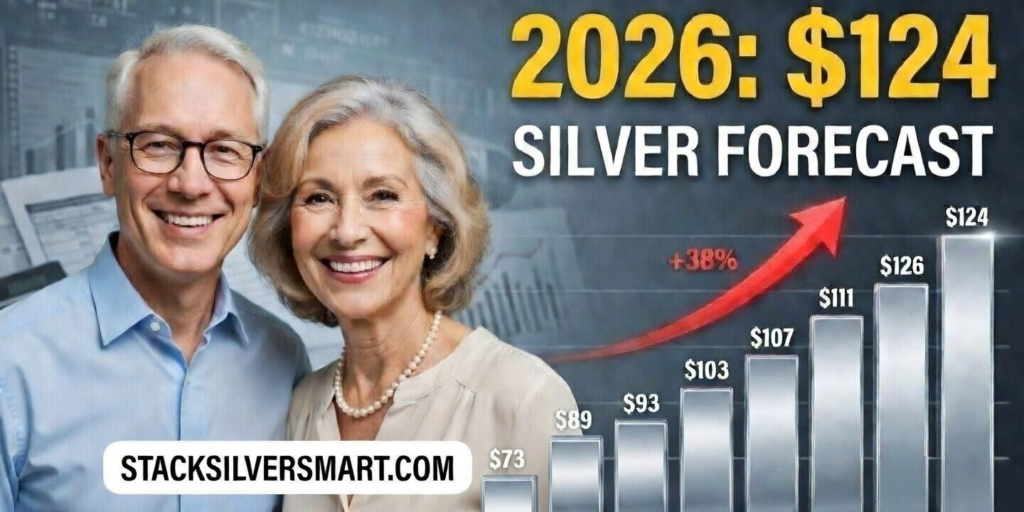
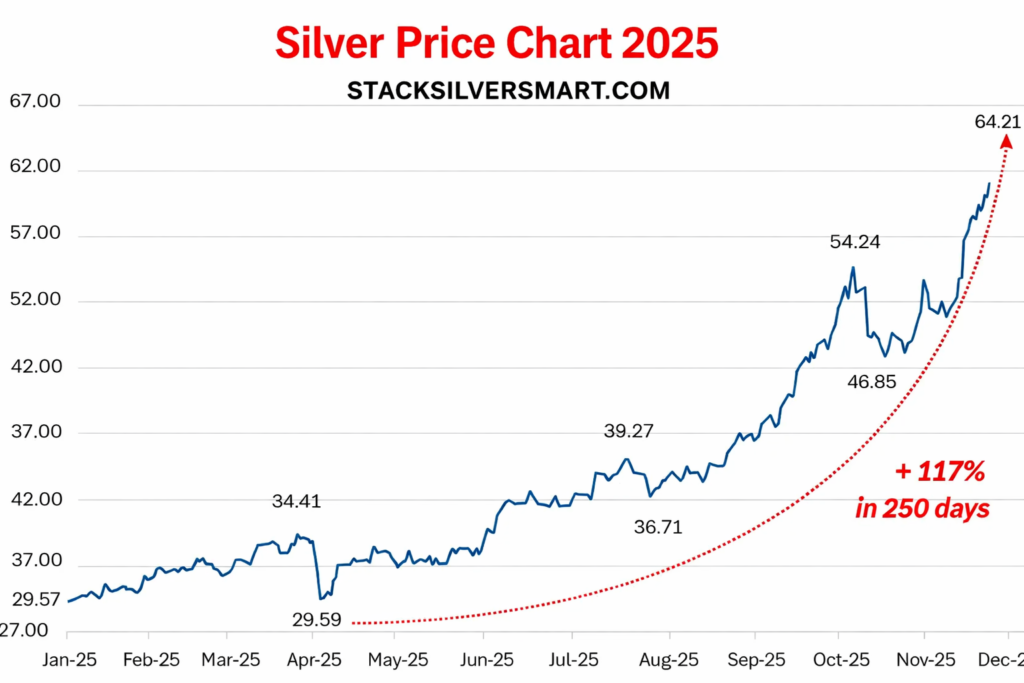
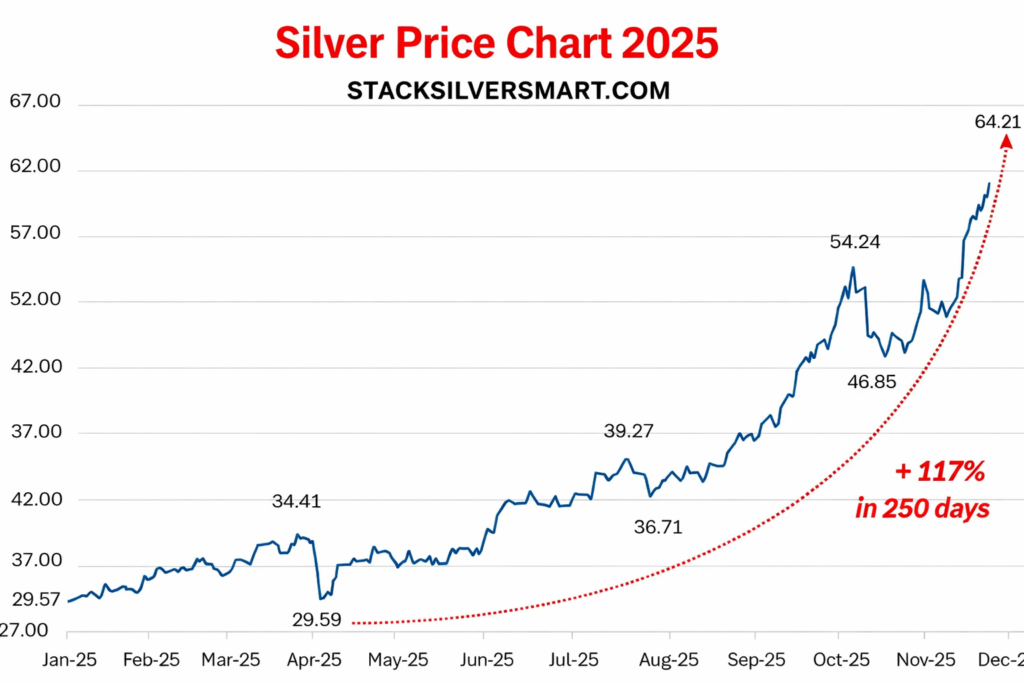
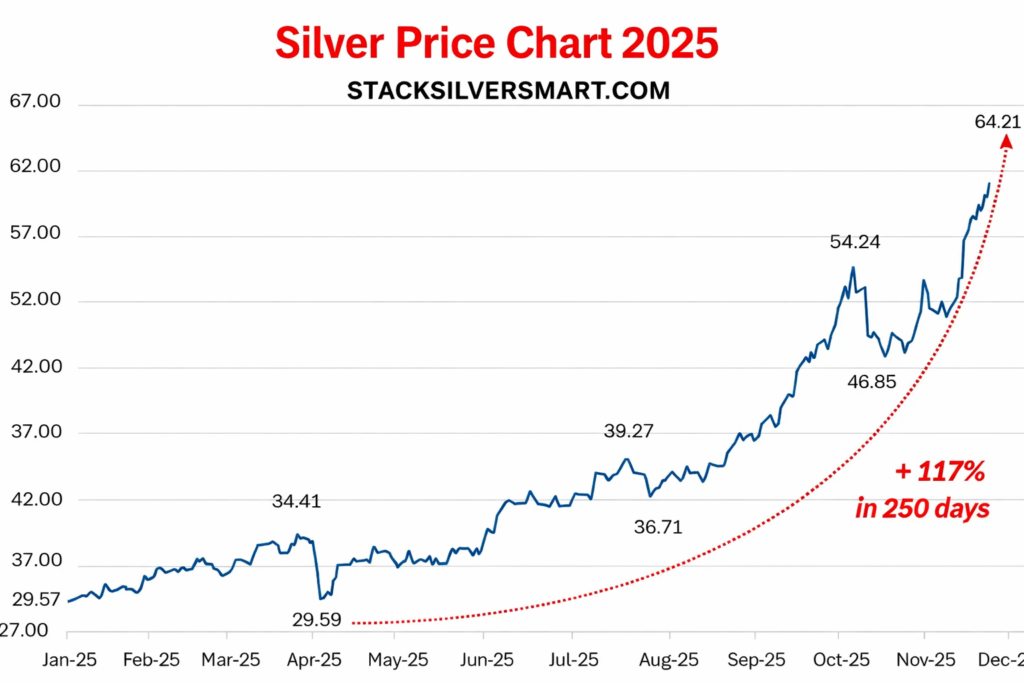
    Silver has just completed a historic rally, surging from its 2025 lows to briefly touch $121 per ounce in late January. While the paper markets have seen some “cooling off” in the last few weeks, the underlying data suggests we aren’t looking at a bubble. We are looking at a structural revaluation.

    If you’ve been waiting for the “right time” to add silver to your retirement portfolio, the window is closing. Here is why silver is the most explosive asset of 2026, and why the current price levels are a “screaming buy” for the savvy investor.

    1. The AI and Solar “Death Grip” on Supply

    For decades, silver was treated as “poor man’s gold.” In 2026, that nickname is officially dead. Silver is now a strategic industrial necessity.

    The 2026 AI revolution has changed the math forever. Every high-end semiconductor and data center cooling system requires silver for its unmatched thermal and electrical conductivity. Unlike jewelry, which can be melted down and recycled, silver used in industrial applications is often “consumed”—meaning it is lost to the world forever.

    • The SSS Insight: In 2025, solar manufacturers alone consumed nearly 30% of the world’s silver supply. As we push deeper into 2026, the industrial deficit is entering its sixth consecutive year. The world is literally running out of “above-ground” silver.

    2. The Gold-to-Silver Ratio: The “Bargain” Indicator

    At Stack Silver Smart, we watch the Gold-to-Silver Ratio like a hawk. Historically, this ratio averaged around 15:1 for centuries. In modern times, it has hovered near 60:1 or 80:1.

    In early 2025, the ratio blew out to over 100:1. This was a mathematical anomaly that told the “Smart Money” one thing: Silver was drastically undervalued compared to gold.

    • The 2026 Reality: Even after silver’s recent run to $100+, the ratio is still hovering in the 50s. If history is our guide, during a true precious metals bull market, that ratio could compress to 30:1 or even 20:1.
    • The Math: If gold stays at $5,000 and the ratio hits 30:1, silver’s price would be $166 per ounce.

    3. The “FOMO” Factor: The Return of the Retail Investor

    For years, the “Average Joe” ignored silver. But as the 2026 banking jitters continue and the U.S. Dollar faces new challenges from the BRICS nations, the retail public is waking up.

    We are seeing “sold out” signs at major mints and delivery delays for physical bars. When the general public starts panicking into silver, the price doesn’t just go up—it goes parabolic. * The Warning: By the time you see silver mentioned on the nightly news as “the best investment of the year,” the biggest gains will already have been made. SSS readers have the advantage of acting before the crowd.

    4. Why 46+ Investors Choose Silver for “Aggressive Preservation”

    Most financial advisors tell retirees to play it safe with bonds. But in 2026, bonds are struggling to keep up with real-world inflation. Silver offers a unique “Dual Identity”:

    1. The Safe Haven: Like gold, it has no counterparty risk. It can’t be “hacked,” and it can’t be deleted by a bank.
    2. The Growth Engine: Because the silver market is so much smaller than the gold market, even a small amount of new money moving into silver sends prices flying.

    For someone in their 50s or 60s, a 10% allocation to silver provides the “insurance” you need with the “upside” that can actually outpace your cost of living.

    5. The “Substitution” Myth

    Critics often say, “If silver gets too expensive, industries will just use something else.” As of 2026, that has proven to be a myth. In high-efficiency solar panels (TopCon and HJT cells) and advanced EV battery terminals, there is no substitute for silver that doesn’t significantly degrade performance. Companies like Tesla and Samsung aren’t going to build inferior products to save a few dollars on silver; they are simply going to pay whatever it takes to secure the metal. This creates a “price floor” that didn’t exist ten years ago.

    6. How to Play the 2026 Silver Rally (The SSS Way)

    Don’t just chase the “Spot Price.” Build a position that lets you sleep at night:

    • Physical First: Always start with physical coins or bars you can touch.
    • The “Dip” Strategy: Use the current volatility. When silver “dips” by 5-10%, that is your entry signal.
    • Use Our Tools: Check our [Gold & Silver IRA Rollover Calculator] to see how even a modest silver position can hedge your total retirement savings against a currency crash.

    The Final Verdict:

    The “Historic Rally” we saw in January wasn’t a fluke—it was a warning shot. As industrial demand continues to collide with a shrinking supply, the “silver squeeze” is going to become a permanent fixture of the 2026 economy.

    Don’t be the investor looking back in 2027 saying, “I wish I’d bought more when it was only $80.” Be the one who stayed Stack Silver Smart.

  • Investing in Silver as Wealth Accumulation in 2026


    1. Introduction: Silver as the “People’s Money”

    In 2026, as traditional savings accounts offer “real” returns that are eaten away by inflation, families are looking for a way to protect their hard-earned labor. While gold gets the headlines, silver is the engine of wealth accumulation for the average investor.

    At StackSilverSmart (SSS), we don’t look at silver as a “get rich quick” trade. We look at it as a long-term vehicle for storing value that the government cannot print away.


    2. Why Silver is the Ultimate Wealth Protector in 2026

    Silver serves a dual purpose that no other asset can match:

    1. An Inflation Hedge: When the cost of eggs, gas, and rent goes up, silver has historically followed.
    2. An Industrial Commodity: Unlike gold, silver is consumed. Once it’s in a cell phone or a solar panel, it is often too expensive to recycle. This “burn rate” makes silver naturally scarcer over time.

    3. The Strategy: Dollar Cost Averaging (DCA)

    The biggest mistake 2026 investors make is trying to “time the bottom.” Because silver is volatile, it’s better to use the DCA Method:

    • The Plan: Commit to buying a fixed dollar amount (e.g., $200) of silver every month, regardless of the price.
    • The Benefit: When prices are low, your $200 buys more ounces. When prices are high, you buy fewer. Over 5 years, this lowers your average cost-per-ounce and removes the “stress” of watching the ticker every day.

    4. Monitoring the Silver-to-Gold Ratio

    In 2026, the Silver-to-Gold ratio remains a key indicator for wealth accumulators.

    • Historic Average: 15:1 or 20:1.
    • Modern Era: Often fluctuates between 60:1 and 90:1.
    • The Strategy: If the ratio is above 80:1, silver is “on sale” compared to gold. This is the time to accumulate silver heavily. If it drops to 40:1, it might be time to trade some silver for gold.

    5. Wealth Accumulation Comparison Table

    Asset Type2026 Risk LevelInflation ProtectionGrowth Potential
    Savings AccountHigh (Due to Inflation)NoneZero
    Stocks (S&P 500)ModerateModerateModerate
    GoldLowHighModerate
    SilverModerate (Volatile)HighHigh (Undervalued)

    6. SSS Expert Tip: Think in Ounces, Not Dollars

    When you check your “net worth,” don’t just look at your bank balance. Start a spreadsheet that tracks your Ounce Count. In 2026, the goal of wealth accumulation isn’t to have “more paper,” it’s to have “more metal.”

    The person with 1,000 ounces of silver is wealthier than the person with $30,000 in a depreciating currency, regardless of what the “spot price” says today.


    7. Conclusion: The Decades-Long View

    Investing in silver for wealth accumulation requires a “time horizon” of at least 5 to 10 years. In 2026, we are in the early stages of a commodities super-cycle. By starting your stack today, you are positioning yourself on the right side of a massive global wealth transfer.

  • The 2026 Silver Supply Deficit: A Ticking Time Bomb


    1. Introduction: Why Silver is Disappearing

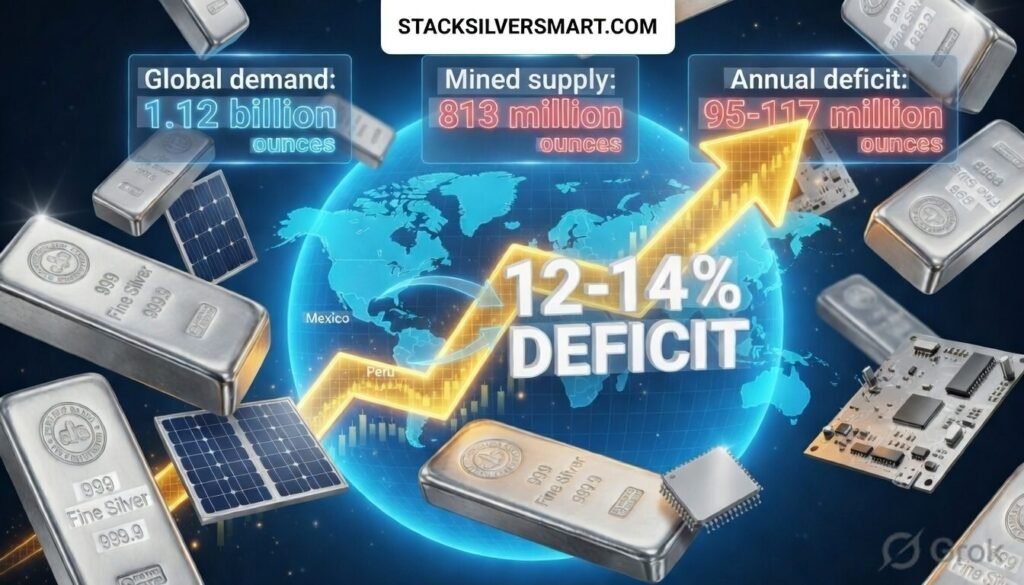
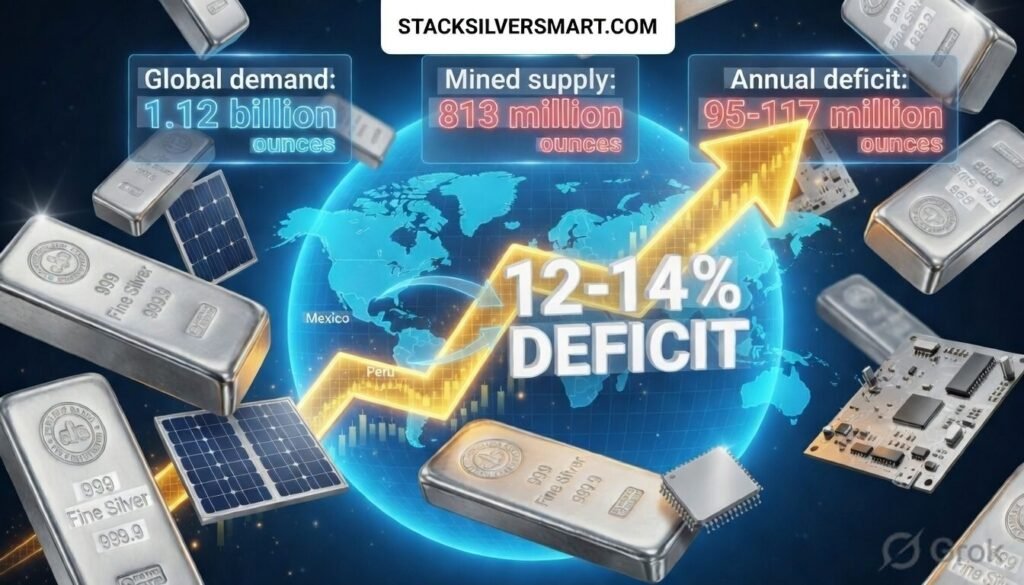
    In early 2026, the silver market hit a breaking point. While the “paper price” on Wall Street remains volatile, the physical reality on the ground is clear: the world is running out of readily available silver.

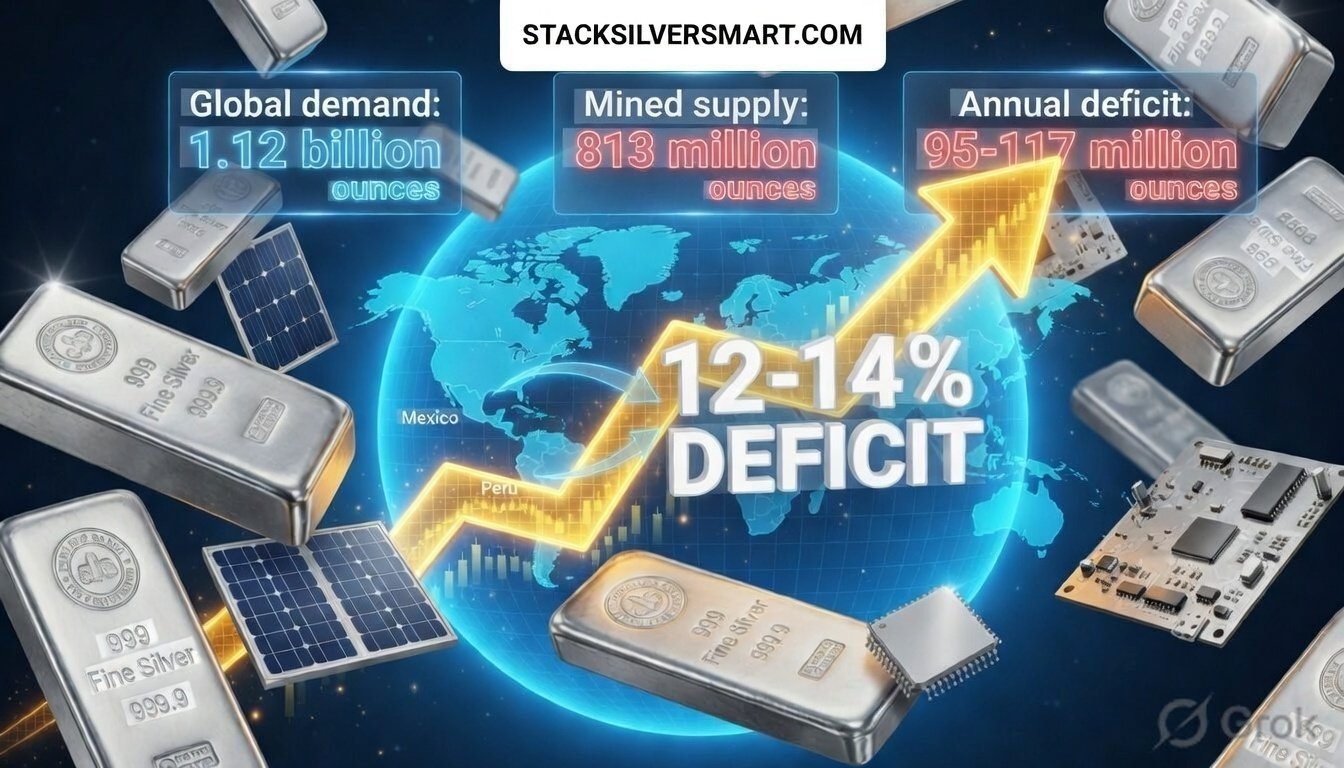
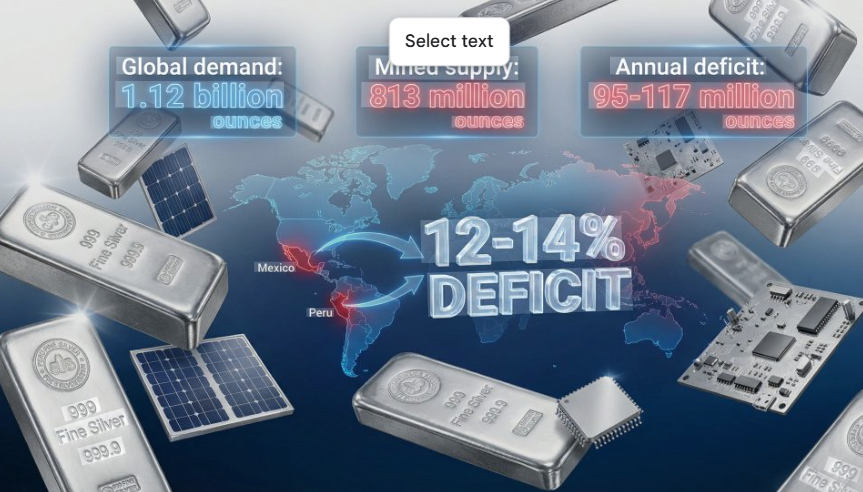
    At StackSilverSmart (SSS), we track the fundamental data. This isn’t just “hype”—it is a structural deficit that has been building for five years. In this article, we examine the data from the Silver Institute and global mining reports to explain why the 2026 silver shortage is the biggest story in precious metals.


    2. The Industrial “Vampire”: Solar and EVs

    The primary reason for the 2026 deficit isn’t investors; it’s the “Green Revolution.”

    Solar Power (The Silver Hog)

    Solar panels require silver paste for their conductive cells. In 2026, as global solar capacity triples, the amount of silver required per panel has increased due to new TOPCon and HJT cell technologies.

    • The Fact: The solar industry now consumes nearly 20% of the entire annual silver supply.

    Electric Vehicles (EVs)

    Every EV contains between 25 and 50 grams of silver (nearly double a standard gasoline car). With 2026 seeing record EV adoption, the automotive sector is competing directly with bullion investors for every available ounce.


    3. The Mining Stagnation: Why We Can’t Just “Dig More”

    You might think a price spike would lead to more mining. In 2026, that isn’t happening.

    1. Jurisdictional Risk: Major silver producers like Mexico and Peru are facing political instability and stricter environmental regulations, leading to mine closures and strikes.
    2. By-Product Reality: Most silver (about 70%) is found as a “by-product” of mining lead, zinc, and copper. If demand for those industrial metals drops, silver production drops with it—even if the silver price is high!
    3. The 10-Year Lead Time: It takes over a decade to bring a new silver mine from discovery to production. There are no “quick fixes” for the 2026 shortage.

    4. The 2026 Deficit by the Numbers

    YearTotal Supply (Million Oz)Total Demand (Million Oz)Annual Deficit
    20231,0101,190-180
    20241,0051,220-215
    2025 (Est)9981,250-252
    2026 (Current)9901,300+-310+

    5. Investor FOMO: The Final Catalyst

    When industrial users (like Samsung, Tesla, and SolarCity) realize there isn’t enough silver, they start “hoarding” to protect their supply chains. When retail investors see the hoarding, FOMO kicks in.

    In 2026, we are seeing “inventory drawdowns” at major exchanges like the COMEX and the LBMA. Silver is moving from the vaults into private hands, and it isn’t coming back.


    6. SSS Expert Verdict: Structural, Not Cyclical

    This isn’t a “pump and dump” scheme. The 2026 deficit is structural. As long as we want clean energy and high-tech electronics, we need silver. If the mines can’t produce it, the only thing that can balance the market is a significantly higher price to discourage “low-value” uses.

  • How to Read Silver Hallmarks and Assay Certificates


    1. Introduction: The Language of Precious Metals

    The most common fear when you buy silver online is: “Is it real?” While reputable dealers test their metal, you should never be a “blind” investor. Genuine silver speaks a specific language through Hallmarks and Assay Certificates.

    At StackSilverSmart (SSS), we believe every investor should be their own first line of defense. Understanding these markings is the difference between a secure retirement and a box of worthless silver-plated copper.


    2. What is a Hallmark?

    A hallmark is an official mark (or series of marks) struck on a piece of precious metal. Historically, these were used to identify the purity, the manufacturer, and sometimes the year of production.

    Key Markings to Look For:

    1. Fineness (Purity): This is the most important mark. Look for numbers like 999 (99.9% pure) or 925 (Sterling silver).
    2. The Maker’s Mark: The logo of the mint (e.g., the Sunshine Minting eagle or the PAMP Suisse Fortuna).
    3. Weight: Clearly stated in Troy Ounces or Grams (e.g., “1 TROY OUNCE”).

    3. Understanding Assay Certificates

    An Assay Certificate is a document (often a small card) that accompanies a silver bar. It is a “birth certificate” for your metal.

    • Serial Numbers: High-quality bars (like Valcambi or PAMP) have a unique serial number laser-etched on the bar that must match the number on the card.
    • Assayer’s Signature: A certified professional “Assayer” signs the card to guarantee the weight and purity.
    • Tamper-Evident Packaging: Most modern 1 oz and 10 oz bars come in “CertiPAMP” or similar sealed plastic. Never open these unless you absolutely have to; the sealed packaging acts as the certificate itself.

    4. Red Flags: How to Spot a “Bad” Hallmark

    • Soft Edges: Real hallmarks are struck with immense pressure. If the numbers look “mushy” or blurry, the bar might be cast from a cheap mold (a common sign of a fake).
    • Misspelled Words: It sounds simple, but many fakes from overseas misspell “Ounce” or “Fineness.”
    • “HGP” or “EPNS”: If you see these marks, it is not solid silver. “HGP” stands for Heavy Gold/Silver Plate, and “EPNS” stands for Electroplated Nickel Silver.
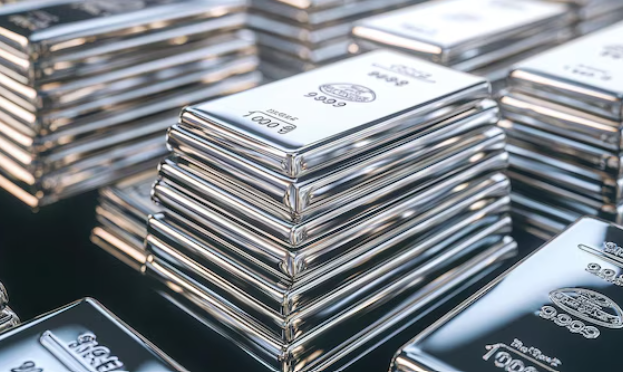
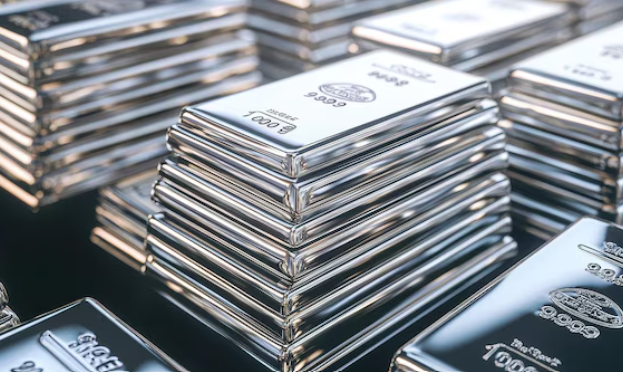
    • Image below is for illustration only

    5. Summary Table: Silver Purity Codes

    MarkMeaningCommon Use
    99999.9% PureInvestment Bullion Bars/Coins
    999999.99% PureUltra-Pure (Royal Canadian Mint)
    92592.5% PureSterling Silver (Jewelry/Silverware)
    90090% Pure“Junk” Silver (Pre-1965 US Coins)
    80080% PureEuropean “Coin Silver”

    6. Conclusion: Trust, but Verify

    Hallmarks and Assay certificates are your “proof of life” for your silver. When you buy silver online, always prioritize products that come in original mint packaging with matching serial numbers. Not only does this give you peace of mind, but it also makes the silver much easier to sell later at a premium price.


  • The Top 5 Best Silver Bars for Long-Term Investors


    1. Introduction: Why Bars Are the “Heavy Lifters” of a Portfolio

    When you decide to buy silver online, you are faced with a choice: beautiful, sovereign-minted coins or industrial, utilitarian bars. For the long-term investor at StackSilverSmart (SSS), bars are often the superior choice. Why? Because you aren’t paying for “art” or “face value”—you are paying for raw metal.

    Silver bars generally carry the lowest premiums over spot price, allowing you to accumulate more ounces for every dollar. In this guide, we break down the top five bar formats that offer the best balance of low cost, high liquidity, and ease of storage.


    2. Top 5 Best Silver Bars for Your Stack

    #1: The 10 oz Silver Bar (The “Sweet Spot”)

    If there is a “perfect” silver investment, this is it. The 10 oz bar is small enough to be highly liquid (easy to sell) but large enough to command a much lower premium than 1 oz rounds.

    • Best For: Everyone. From preppers to retirees.
    • Top Mints: Sunshine Minting, Nadir, or SilverTowne.

    #2: The 1 kg (32.15 oz) Silver Bar

    The Kilo bar has exploded in popularity in 2026. It feels substantial in the hand and fits perfectly in a standard home safe.

    • Best For: Investors looking to move $1,000+ per unit while keeping the stack organized.
    • Top Mints: Valcambi, PAMP Suisse, or Perth Mint.

    #3: The 100 oz Silver Bar (The “Wealth Protector”)

    For high-net-worth investors or those with a 10+ year horizon, the 100 oz bar is the king of low premiums. You are buying in bulk, and the price reflects that.

    • Best For: Large-scale wealth preservation and “Vaulting” strategies.
    • Note: These are heavy (about 6.8 lbs). Make sure your storage solution can handle the weight!

    #4: The 1 oz Silver Bar (The “Fractional” King)

    While 1 oz coins are popular, 1 oz bars often have slightly lower premiums.

    • Best For: Bartering scenarios or “entry-level” stacking.
    • Top Mints: Johnson Matthey (Secondary Market) or Asahi.

    #5: Hand-Poured “Chunky” Bars

    Unlike machine-stamped bars, these are poured into molds. They have a rugged, “pirate treasure” look that many investors find more aesthetically pleasing.

    • Best For: Investors who want a tactile, unique feel to their hoard.
    • Top Mints: Monarch Precious Metals or Scottsdale Mint.

    3. Comparison and Analysis: Which Size Fits You?

    Bar SizePremium LevelLiquidityPortabilityBest Use Case
    1 ozHighVery HighExcellentDaily Barter / Gifts
    10 ozMediumHighGoodCore Wealth Building
    KiloLowMediumFairMid-Tier Diversification
    100 ozLowestModeratePoorLarge Capital Hedge

    4. Final Thoughts: The SSS Verdict

    For 90% of investors, the 10 oz bar is the winner. It is the easiest to sell back to a dealer when you need cash, yet it doesn’t “waste” your capital on high manufacturing markups. If you are just starting, aim for one 10 oz bar per month.


  • How to Safely Store Silver: Home Safes vs. Professional Vaults

    You’ve done the research, watched the markets, and finally pulled the trigger on a significant bullion purchase. But once the delivery truck leaves, a new and more pressing question arises: Where do I put it?

    For many investors, discovering what is the best way to buy silver online? is only half the battle. The other half is ensuring that your tangible wealth remains secure from theft, fire, and environmental damage. Whether you are a prepper who wants your silver within arm’s reach or a pre-retirement investor seeking the “set it and forget it” security of a vault, choosing the right storage method is a critical part of your investment strategy.

    In this guide, we will compare the two primary methods of silver storage: high-security home safes and professional third-party vaults.


    1. Quick Answer (TL;DR)

    For small to medium holdings (under $20,000) or those prioritizing immediate access (preppers/survivalists), a high-quality, bolted-down home safe with a UL fire rating is the standard choice.

    For large holdings (over $20,000) or investors seeking maximum insurance coverage and peace of mind, a professional bullion vault (depository) is the superior option. Vaulting removes the “theft risk” from your home and often simplifies the process of reselling your metal later.


    2. Understanding the Question: Why Storage Matters

    Silver is unique among precious metals because of its bulk. While $50,000 worth of gold can fit in a pocket, $50,000 worth of silver (at current 2026 prices) can weigh hundreds of pounds and take up several cubic feet of space.

    This physical footprint makes silver harder to hide and more expensive to ship. Therefore, your storage choice isn’t just about security; it’s about logistics. You must weigh the “Peace of Mind” of a professional vault against the “Total Control” of a home safe.


    3. Detailed Explanation: Home Safes vs. Professional Vaults

    Option A: The Home Safe (The “Fortress” Approach)

    Storing silver at home is the most traditional method. However, a “document box” from a big-box retailer won’t cut it. To safely store silver at home, you need a safe that addresses three specific threats:

    1. Theft: The safe must be heavy enough or bolted to the floor so it cannot be physically removed. It should have a UL (Underwriters Laboratories) Rating of at least RSC (Robbery Safe Container) or higher.
    2. Fire: Silver melts at $961.8^\circ\text{C}$. While a house fire rarely reaches that temperature, the cooling process and falling debris can damage your bullion. Look for a safe with at least a 1-hour fire rating.
    3. Environment: Silver tarnishes when exposed to moisture and sulfur. Home storage requires a dehumidifier or desiccant packs inside the safe to keep the air dry.

    Option B: Professional Vaults (The “Depository” Approach)

    A depository is a specialized facility (like Brink’s or Delaware Depository) designed specifically to hold precious metals.

    • Segregated Storage: Your specific bars and coins are kept in a separate box or shelf. When you withdraw, you get the exact items you deposited.
    • Unsegregated (Allocated) Storage: Your silver is stored in a communal pile with other investors’ silver of the same type. You own a specific number of ounces, but not a specific bar.

    4. Key Characteristics: Comparison Table

    FeatureHome Safe StorageProfessional Vaulting
    AccessibilityInstant (24/7)Limited (Requires notice/shipping)
    PrivacyHigh (No one knows you have it)Moderate (Third-party records exist)
    InsuranceDifficult/Expensive (Homeowners’ limits)Included (Full replacement value)
    Initial CostHigh (Cost of the safe + installation)Low (No upfront hardware cost)
    Ongoing CostZeroMonthly or Annual storage fees
    Security LevelDependent on safe qualityMilitary-grade / 24-hour armed guard

    5. Real-World Examples

    The “Prepper” Scenario

    A survivalist in a rural area believes that the what is the best way to buy silver online? involves getting the metal into their physical possession as quickly as possible. They invest in a TL-30 rated safe, hide it behind a false wall in their basement, and bolt it into the concrete slab. They have 100% control, but they bear 100% of the risk if they are forced to disclose the safe’s location.

    The “Hands-Off” Investor

    A 60-year-old investor buys $100,000 in silver bars for their retirement portfolio. They don’t want the liability of having that much value in their home. They choose segregated storage at a professional vault. The silver is fully insured, and if they ever want to sell, they can do so with one phone call to the dealer, as the metal never leaves the “chain of integrity.”

    The “Hybrid” Stacker

    Many investors keep 100–200 ounces at home for emergencies (the “go-bag” silver) and send the rest of their bulk 100 oz bars to a professional depository. This balances immediate need with long-term security.


    6. Benefits and Advantages

    Advantages of Professional Vaults:

    1. Chain of Integrity: When you sell silver that has been stored in a professional vault, the buyer knows it is authentic because it never left a secure facility. This often results in a higher buyback price.
    2. Insurance: Most homeowners’ insurance policies limit “money and securities” (including bullion) to $200–$2,500 unless you pay for an expensive “rider.” Vaults include multi-million dollar policies in their storage fees.
    3. Geographic Diversification: You can store silver in a vault in a different state or even a different country (like Singapore or Switzerland) to protect against local economic instability.

    Advantages of Home Safes:

    1. No Counterparty Risk: You don’t have to worry about a storage company going bankrupt or being unable to access your wealth during a “bank holiday.”
    2. No Recurring Fees: Once the safe is paid for, your storage is free for life. Over 20 years, vaulting fees can eat into your silver’s profit.

    7. Related Concepts

    “Midnight Gardening”

    This is a slang term for burying silver on your property. While it offers high privacy, it is highly discouraged by experts due to the risk of the soil shifting, moisture damage, or simply forgetting the exact location (it happens more than you’d think!).

    TL-Rated Safes

    “TL” stands for Tool Latency. A TL-15 safe is tested to withstand 15 minutes of continuous attack by professional burglars using specialized tools. For high-value silver collections, a TL-15 or TL-30 is considered the minimum standard for home security.

    Bailment vs. Creditor Relationship

    When you store silver in a reputable vault, it is a Bailment. This means the silver is your legal property, and the vault is simply holding it. It cannot be seized by the vault’s creditors if the company fails. Always check your storage contract for this distinction.


    8. Conclusion

    Deciding between a home safe and a professional vault comes down to your personal risk tolerance and the size of your “stack.”

    At stacksilversmart.com, we generally recommend that beginners starting with a few tubes of coins invest in a small, high-quality home safe. As your portfolio grows into the “monster box” territory, the insurance and liquidity benefits of professional vaulting become far too valuable to ignore.

    Remember: The best security is silence. Regardless of which method you choose, the first rule of silver storage is to never tell anyone how much you have or where you keep it.


    9. Frequently Asked Questions

    Will my homeowners’ insurance cover silver in a home safe?

    Usually, no. Standard policies have very low limits for precious metals. You will likely need to purchase a “Scheduled Personal Property” endorsement, which requires an appraisal and can be expensive.

    Can I store silver in a bank safe deposit box?

    You can, but it is not recommended. Bank boxes are not insured by the FDIC, and banks have strict rules against storing “cash-like” items. Furthermore, you can only access your box during bank hours.

    How do I stop my silver from turning black at home?

    Use Anti-Tarnish Strips or silica gel packs inside your safe. Avoid storing silver near rubber bands or certain types of wood, as they release sulfur gases that accelerate tarnishing.

    What is the average cost of professional vaulting?

    Most depositories charge based on a percentage of the total value (e.g., 0.50% to 1% per year) or a flat monthly fee per “bin.” For $10,000 worth of silver, expect to pay around $10–$15 per month.

    Is digital silver (tokenized silver) the same as vaulting?

    No. Digital silver represents a claim on silver, but you often cannot take physical delivery easily. Professional vaulting as discussed here involves physical bars that you can choose to have shipped to your door at any time.


    Authored by the stacksilversmart.com Editorial Team