American Gold Eagle (1 oz) vs American Silver Eagle (1 oz): Which is Better for Your 2026 Portfolio?
In the volatile financial landscape of May 2026, the quest for “hard assets” has moved from the fringes of the prepper community to the center of institutional wealth management. With gold recently consolidating near $4,700 and silver reclaiming its footing above $80, the question is no longer if you should own precious metals, but which US Mint flagship belongs in your safe.
Choosing between the American Gold Eagle (1 oz) vs. American Silver Eagle (1 oz) is more than just a preference for color; it is a strategic decision involving liquidity, industrial demand cycles, and storage logistics. Whether you are a retiree hedging against a devalued dollar or a tech investor diversifying away from digital assets, understanding the nuances of these two titans is essential.
1. Overview of the American Eagle Series
The American Eagle program was launched by the United States Mint in 1986 under the Gold Bullion Coin Act. Both the Gold and Silver Eagles are official legal tender, backed by the U.S. government for their content, weight, and purity.
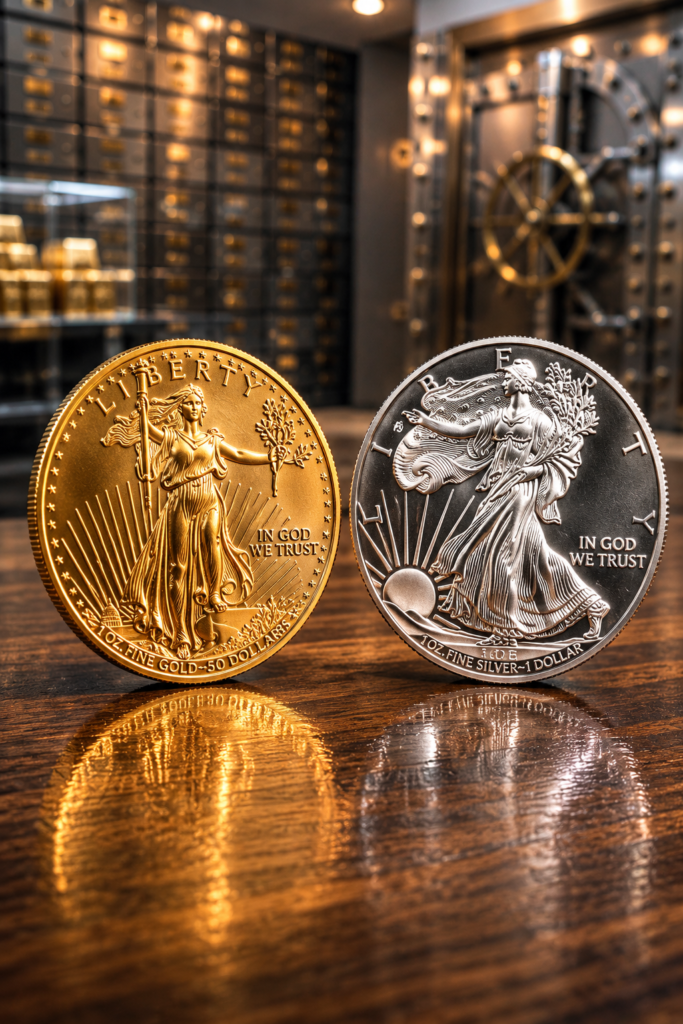
The American Gold Eagle (1 oz): Struck in 22-karat gold, this coin features the iconic Augustus Saint-Gaudens “Lady Liberty” design. Despite being 22k for durability (alloyed with silver and copper), it contains exactly one troy ounce of pure gold.
The American Silver Eagle (1 oz): The world’s most recognized silver coin, featuring Adolph A. Weinman’s “Walking Liberty.” It is struck in .999 fine silver and has become the primary vehicle for investors seeking exposure to the white metal’s industrial and monetary dual-nature.
2. Feature Comparison: The Technical Breakdown
Feature
American Gold Eagle (1 oz)
American Silver Eagle (1 oz)
Metal Content
1 oz Fine Gold
1 oz Fine Silver
Purity
91.67% (22k)
99.9% (.999 Fine)
Face Value
$50 USD
$1 USD
Diameter
32.7 mm
40.6 mm
IRA Eligibility
Yes
Yes
Durability
High (Alloyed for handling)
Moderate (Soft, pure silver)
While the Gold Eagle is tougher due to its alloy, the Silver Eagle’s .999 purity makes it softer and more prone to “milk spots” or tarnishing if not stored correctly. However, for most investors, the weight and purity guarantee from the U.S. Mint is the primary feature that ensures high resale liquidity.
THE LIQUIDITY CHECK
Ready to secure your first ounce? Compare real-time dealer premiums and verified inventory for 2026 Eagles HERE
3. Performance Analysis: 2026 Market Dynamics
As of May 10, 2026, the precious metals market is reacting to a unique “Peace-Pivot” following the Iran ceasefire.
Gold: The Stability Anchor
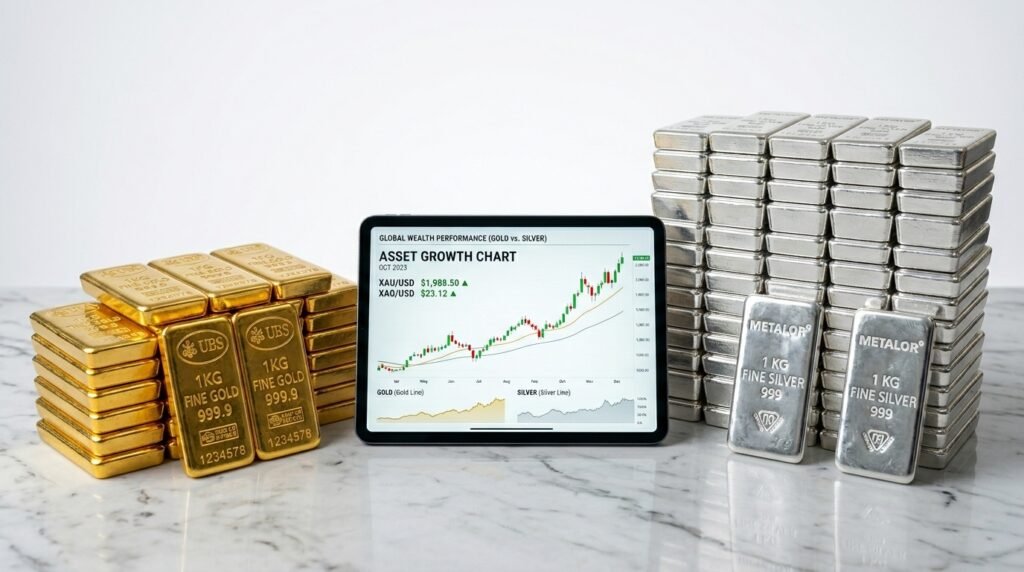
Gold has acted as the ultimate defensive play. After hitting a record high of $5,608 in January 2026, it corrected roughly 16-19% to its current range of$4,700–$4,750. For pre-retirement investors, the Gold Eagle offers lower volatility and a proven track record of capital preservation during currency resets.
Silver: The “Turbo-Gold” Growth Play
Silver is the wild child of 2026. After a manic rally to $121 in January, it plunged 40% but has recently rebounded sharply to $80.32. Silver’s performance is driven by a sixth consecutive year of shttps://stacksilversmart.com/is-now-the-right-time-to-invest-in-silver-a-2026-investigation-into-wealth-preservation/tructural deficit. With 762 million ounces drained from global vaults since 2021, the Silver Eagle isn’t just a coin; it’s a mission-critical industrial commodity for AI hardware and solar energy.
The Bottom Line: Silver moves 2 to 3 times as dramatically as gold. If you want stability, buy the Gold Eagle. If you want explosive growth potential, the Silver Eagle is the winner.
4. Price Comparison: Spot vs. Premiums
When comparing the american gold eagle (1 oz) vs american silver eagle (1 oz), the most jarring difference for newbies is the premium.
Gold Eagle Premiums: Usually hover between 3% and 5% over spot. In May 2026, a 1 oz Gold Eagle might cost you $4,850 (Spot $4,715 + $135 premium).
Silver Eagle Premiums: Because the U.S. Mint has prioritized collector products and faced planchet shortages, Silver Eagle premiums are historically high, often ranging from 15% to 40% over spot. A Silver Eagle might cost $105 (Spot $80 + $25 premium).
This means you are paying a much higher “tax” to own the Silver Eagle. However, many investors argue that the Silver Eagle’s high resale demand justifies the initial cost.
5. Best For Different Users
For the Pre-Retiree (Ages 50-65)
Winner: American Gold Eagle. Gold is easier to transport and store. $500,000 in Gold Eagles fits in a small shoebox; the equivalent in Silver Eagles would weigh over 400 pounds and require a reinforced floor. For those focused on a Gold IRA rollover, the Gold Eagle is the standard “anchor” asset.
For the Younger Investor (Ages 25-40)
Winner: American Silver Eagle. Silver is the “entry-level” gold. With the Gold-to-Silver ratio currently near 59:1, silver is historically poised to outperform gold as the ratio compresses. Younger investors can build a significant stack with smaller monthly outlays.
For the Prepper & Survivalist
Winner: American Silver Eagle. In a “grid-down” or hyperinflationary scenario, you cannot buy a loaf of bread with a 1 oz Gold Eagle—it’s too valuable to be practical. Silver Eagles serve as the perfect “barter” currency for daily transactions.
THE SECURE STACK
Concerned about shipping safety?Visit us HERE to find dealers offering 100% insured, discreet shipping and “signature-required” delivery for your peace of mind.
6. Pain Points: Counterfeits and Security
The higher the price, the more fakes enter the market. In 2026, high-quality “tungsten-filled” Gold Eagles and “silver-plated” lead Eagles are a reality.
Weight/Purity: Never buy from an unverified social media ad. Use a “Ping Test” or a Sigma Metalytics tester.
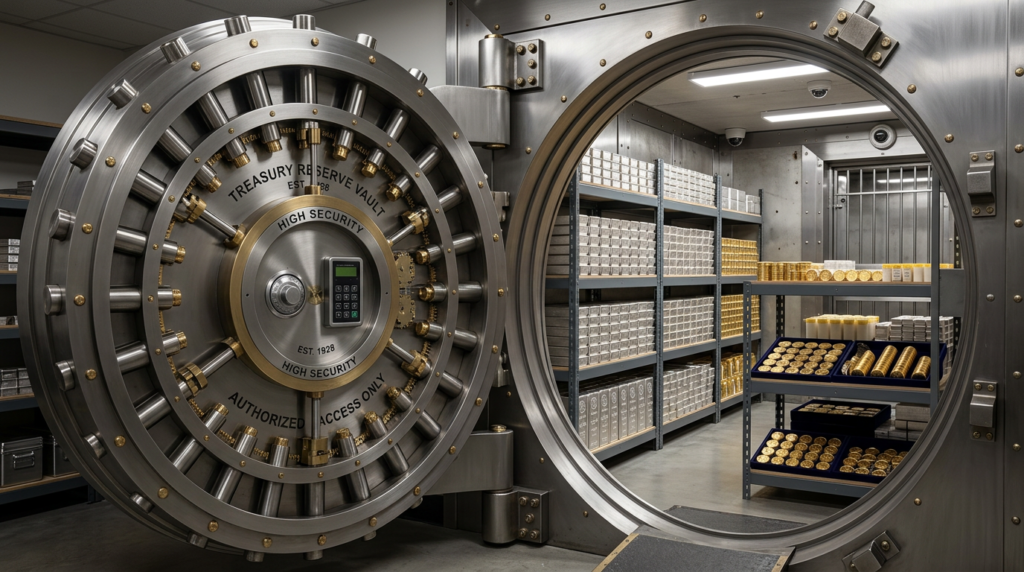
Storage: 1 oz Gold Eagles should stay in a high-security home safe or a third-party depository like Delaware Depository. Silver Eagles are bulky; many stackers prefer “Monster Boxes” (500 coins) for efficient storage.
Final Recommendation: Which Should You Buy?
The verdict on american gold eagle (1 oz) vs american silver eagle (1 oz) depends on your goals:
Choose the Gold Eagle if you value Capital Preservation, easy storage, and lower premiums. It is the defensive captain of your portfolio.
Choose the Silver Eagle if you seek High Growth, industrial leverage, and practical barter utility. It is the offensive striker of your wealth strategy.
The “Analyst” Move: Most successful stackers in 2026 maintain a 70/30 split—70% Gold Eagles for stability and 30% Silver Eagles for the “Turbo” upside.


Leave a Reply