Author: Marcus Sterling

  • Silver Bars vs. Silver Coins: The Ultimate Stacker’s Guide

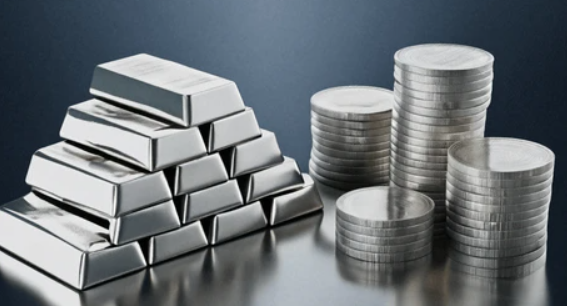
    When building a precious metals portfolio, one of the first crossroads you will encounter is the “form factor” of your investment. Do you buy the sleek, industrial utility of a silver bar, or the storied, government-backed prestige of a silver coin?

    For many, determining what is the best way to buy silver online? starts with understanding these two distinct paths. While both represent ownership of a physical asset, the choice between bars and coins can significantly impact your “all-in” cost, your ease of storage, and your ability to sell quickly when the market peaks.


    1. Quick Answer (TL;DR)

    If your goal is to acquire the maximum amount of silver for the lowest possible price, buy silver bars (specifically 10 oz or 100 oz sizes). Bars offer the lowest premiums over the spot price.

    If your goal is maximum liquidity, government-backed security, and ease of trade in small increments, buy sovereign silver coins (like American Eagles or Canadian Maples). Coins carry higher premiums but are more widely recognized and easier to sell in a pinch.


    2. Understanding the Question: Why Form Factor Matters

    In the precious metals world, you aren’t just paying for the metal; you are paying for the fabrication. Every piece of silver must be refined, minted or cast, assayed for purity, and shipped.

    • Silver Bars are essentially “industrial” silver. They are designed for efficient storage and low-cost production. They are the favorite of high-net-worth investors and “stackers” who prioritize total weight above all else.
    • Silver Coins are “currency” silver. They are minted by government entities, have a face value, and are often treated as legal tender. They appeal to those who value the “trust” that comes with a government stamp.

    Deciding between them requires balancing your need for low entry costs against your need for high resale confidence.


    3. Detailed Explanation: The Core Differences

    Premiums: The Cost of Craftsmanship

    The “premium” is the dollar amount you pay above the current market spot price.

    • Bars: Because bars are easier to produce (especially “cast” bars that are poured into molds), they have lower premiums. You might pay $1.50 to $2.50 over spot per ounce for a large bar.
    • Coins: Minting a coin involves intricate designs and higher security standards. Consequently, you might pay $4.00 to $9.00 over spot per ounce for sovereign coins.

    Liquidity and Resale

    Liquidity refers to how fast you can turn your silver back into cash.

    Sovereign coins are highly liquid. A local coin shop will buy an American Eagle without a second thought. Large bars (like 100 oz or 1000 oz) may require an “assay” or testing by the buyer to prove they aren’t filled with lead, which can slow down the selling process.

    Legal Tender and Taxes

    In many regions, government-issued coins are considered legal tender. This can sometimes offer tax advantages, as they are not always subject to the same capital gains reporting as “bullion bars.” Always consult a tax professional, but for many pre-retirement investors, the legal status of coins offers a layer of regulatory comfort.


    4. Key Characteristics: Comparison Table

    FeatureSilver Bullion BarsSovereign Silver Coins
    Primary GoalLow cost per ounceHigh liquidity & trust
    Typical Sizes1 oz, 10 oz, 100 oz, 1 kg1 oz
    PremiumsLowestHigher to Very High
    Counterfeit RiskModerate (Buy from top refiners)Low (Advanced security features)
    Storage DensityExcellent (Easily stackable)Moderate (Stored in tubes/boxes)
    BackingPrivate Mints (PAMP, Sunshine)Government Mints (US, Canada)

    5. Real-World Examples

    The “Volume Stacker”

    Imagine a 55-year-old investor moving $50,000 from a volatile stock into silver. By choosing 100 oz silver bars, they could potentially walk away with hundreds of additional ounces compared to buying American Eagles. For them, the bar is a “pure play” on the price of silver.

    The “Survivalist/Prepper”

    A prepper concerned about a local currency crisis might buy several tubes of 1 oz Silver Buffalo Rounds or Silver Philharmonics. In a barter economy, it is much easier to trade a 1 oz coin for a week’s worth of groceries than it is to try and “saw off” a piece of a 100 oz bar.

    The “Tech-Savvy Diversifier”

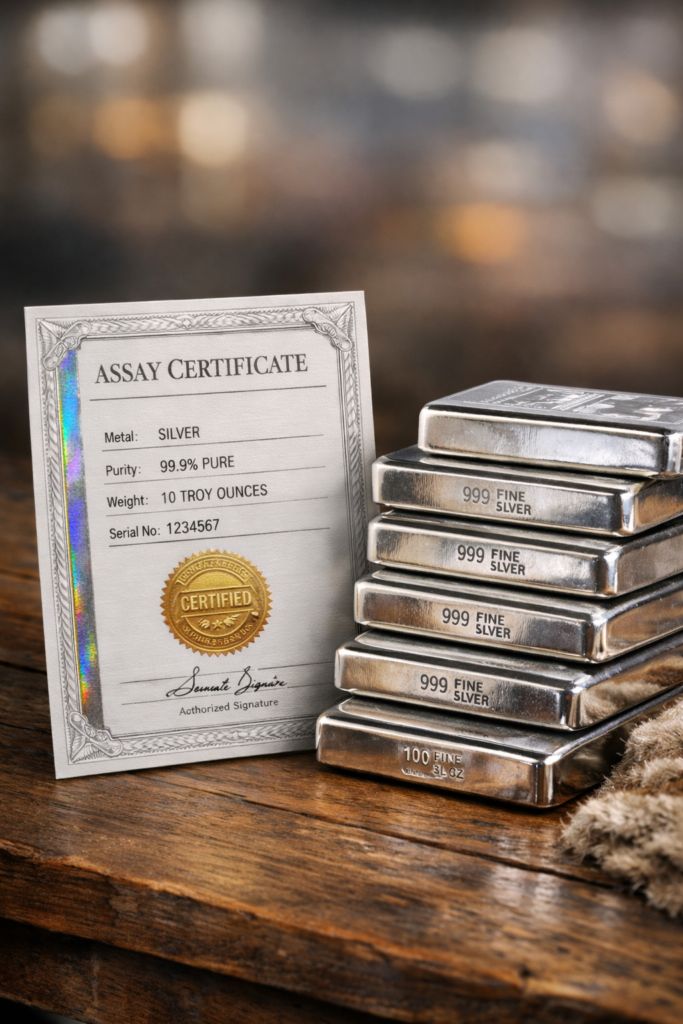
    A younger investor who values aesthetics might opt for 1 oz Silver Bars from high-end refiners like PAMP Suisse. These bars often come in “assay cards” (sealed plastic with serial numbers), combining the low cost of a bar with the security of a coin.


    6. Benefits and Advantages

    Advantages of Silver Bars:

    1. Uniformity: Bars are designed to be stacked. A 100 oz bar is roughly the size of a thick smartphone, making it easy to hide or store in a small safe.
    2. Price Efficiency: When silver prices spike, the person who bought bars at a $1.50 premium will see their “break-even” point much faster than the person who paid a $7.00 premium for coins.

    Advantages of Silver Coins:

    1. Divisibility: You can sell your silver “an ounce at a time.” If you only need $100, you can sell four coins. If you only own a 100 oz bar, you have to sell the whole $2,500+ asset at once.
    2. Counterfeit Deterrence: Modern coins have micro-engravings and radial lines. This gives the buyer peace of mind, which translates to a faster sale for you.

    7. Related Concepts

    “Junk” Silver (Constitutional Silver)

    Before 1965, U.S. dimes, quarters, and half-dollars were 90% silver. Many investors view “junk silver” as a middle ground between bars and coins. It has low premiums (like bars) but is government-minted and highly divisible (like coins).

    Round vs. Coin

    A “Silver Round” looks like a coin but is produced by a private mint. It lacks a face value. Rounds are essentially circular bars. They offer the price benefits of bars with the familiar shape of a coin. For those wondering what is the best way to buy silver online?, rounds are often the “secret weapon” for getting low premiums on 1 oz increments.


    8. Conclusion

    The choice between silver bars vs. silver coins ultimately depends on your “Why.”

    • If you are an investor looking to protect a large amount of wealth from inflation and intend to hold for 10+ years, Silver Bars are your best tool.
    • If you are a beginner looking for an accessible way to start, or a prepper focused on utility, Silver Coins are the gold standard of entry.

    Most successful “stackers” at stacksilversmart.com maintain a mix: 80% bars for the bulk of their wealth and 20% coins for liquidity and emergencies.


    9. Frequently Asked Questions

    Do silver bars tarnish differently than coins?

    No. Silver is silver. Both will oxidize over time if exposed to air. However, because bars are often handled more than coins, they may show “toning” faster. This does not affect the value of the silver.

    Can I include bars in a Silver IRA?

    Yes, but they must meet a minimum fineness of .999 and be produced by a COMEX or ISO 9001 certified refiner. Most reputable 10 oz and 100 oz bars qualify.

    What is the most popular bar size?

    The 10 oz Silver Bar is the “sweet spot” for most investors. It is large enough to keep premiums low but small enough to be easily sold or transported.

    Is it harder to sell a 100 oz bar?

    It isn’t “hard,” but it is more specialized. You usually won’t sell a 100 oz bar to a neighbor or a small jewelry shop. You will sell it to a major bullion dealer who has the equipment to verify its purity.

    Should I buy silver bars with serial numbers?

    Serial numbers provide an extra layer of record-keeping and security. While they don’t necessarily make the silver “worth more,” they make it much easier to track for insurance purposes or in the event of theft.


    Authored by the stacksilversmart.com Editorial Team

  • Silver American Eagles vs. Maple Leafs: What You Need to Know

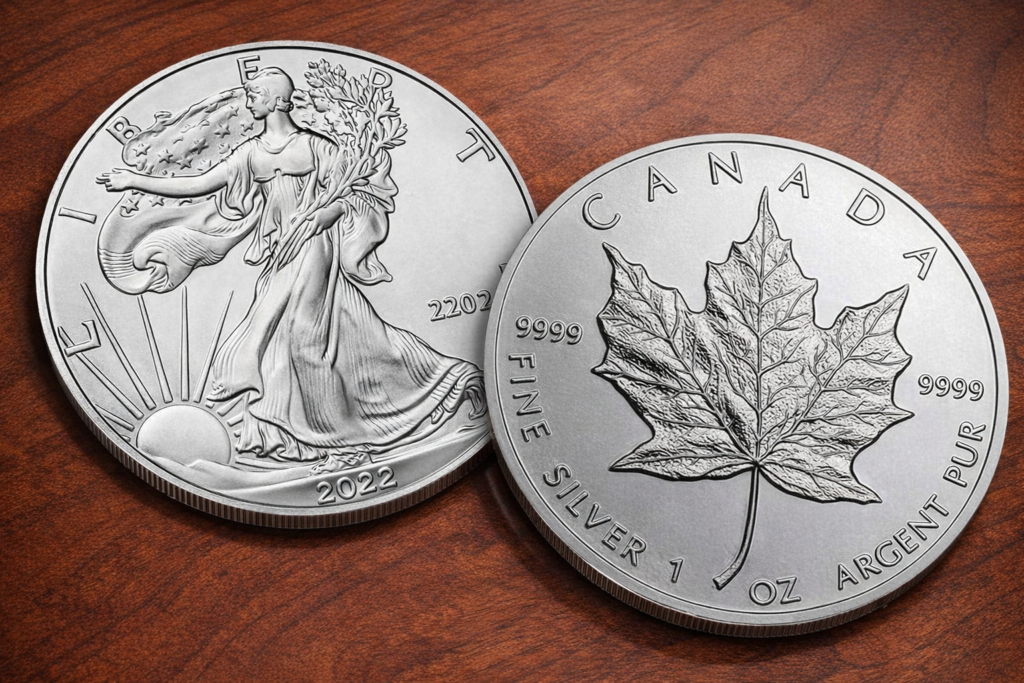
    In the world of precious metals, two titans stand above the rest: the American Silver Eagle and the Canadian Silver Maple Leaf. For anyone asking what is the best way to buy silver online?, these sovereign-minted coins are almost always the first recommendation. They represent the gold standard (pun intended) of liquidity, trust, and physical beauty.

    But for a beginner, the choice isn’t always clear. Should you pay the higher premium for the “Eagle” or opt for the higher purity of the “Maple”? In this guide, we’ll dive deep into the battle of silver American Eagles vs. Maple Leafs to help you decide which belongs in your safe.


    1. Quick Answer (TL;DR)

    If you are looking for the most recognizable coin in the world with the highest resale liquidity in the United States, choose the American Silver Eagle.

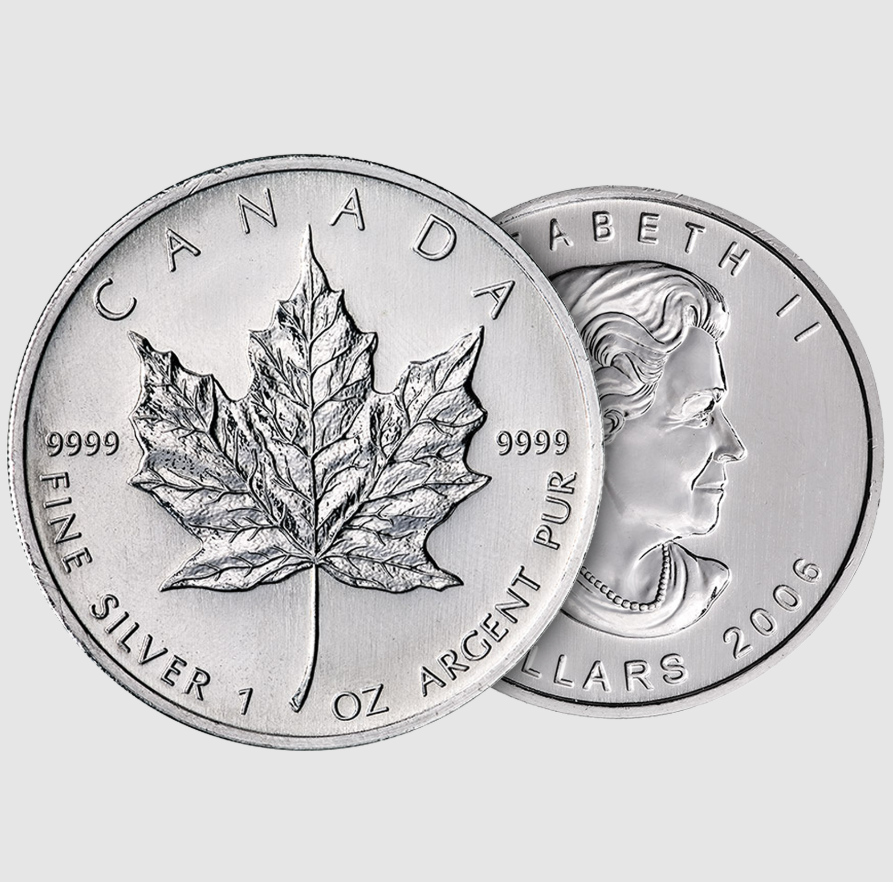
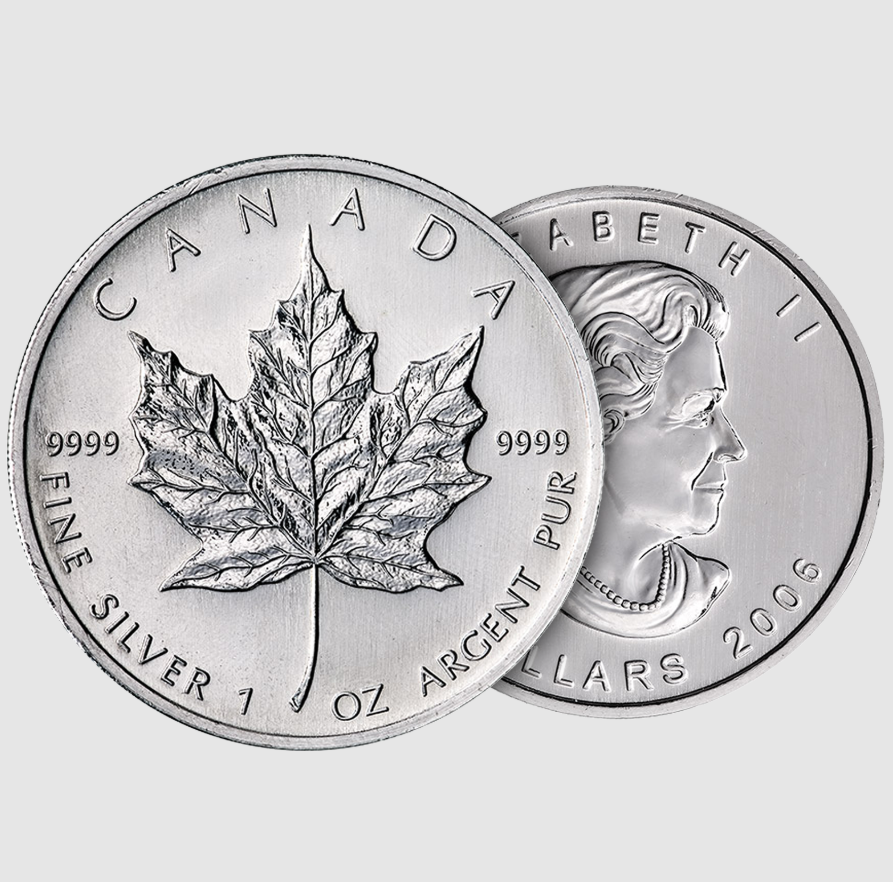
    However, if you prioritize higher silver purity (.9999 fine), advanced anti-counterfeiting technology, and a lower price point (lower premiums), the Canadian Silver Maple Leaf is the objective winner for the value-conscious investor.


    2. Understanding the Question: Why These Two?

    When investors debate silver American Eagles vs. Maple Leafs, they are choosing between government-backed bullion. Unlike private rounds or bars, these coins are legal tender in their respective countries. This government backing provides a level of security that “preppers” and “pre-retirement investors” find essential.

    • The American Eagle: Produced by the U.S. Mint since 1986. It is a symbol of American financial stability.
    • The Maple Leaf: Produced by the Royal Canadian Mint since 1988. It is known for pushing the boundaries of minting technology.

    Both coins contain exactly one troy ounce of silver, yet they trade at different prices and offer different features. Understanding these nuances is the first step in learning what is the best way to buy silver online? without overpaying.


    3. Detailed Explanation: The Deep Dive

    Purity: .999 vs .9999

    While both are “pure” silver, the Canadian Maple Leaf is .9999 fine (four nines). The American Eagle is .999 fine (three nines). To a casual observer, this doesn’t matter. However, to a tech-savvy investor or a high-end refiner, that extra decimal point represents the pinnacle of refining.

    Security Features

    Counterfeiting is a major “pain point” for silver buyers.

    • The Maple Leaf wins on technology. It features “DNA” anti-counterfeiting technology—micro-engraved laser marks that are unique to each coin and recorded in a database. It also uses radial lines that make it nearly impossible to replicate.
    • The American Eagle recently underwent a “Type 2” redesign. It now features a notched reed on the edge (a “security notch”) and higher-detail engraving to deter fakes.

    Premiums and Cost

    Generally, the American Eagle carries a significantly higher “premium” (the cost over the spot price) than the Maple Leaf. This is due to massive demand in the U.S. and periodic supply shortages at the U.S. Mint.


    4. Key Characteristics: Side-by-Side

    FeatureAmerican Silver EagleCanadian Silver Maple Leaf
    MintUnited States MintRoyal Canadian Mint
    Silver Purity.999 Fine.9999 Fine
    Face Value$1 USD$5 CAD
    Diameter40.6 mm38 mm
    Thickness2.98 mm3.29 mm
    SecurityReeded Edge VariationRadial Lines & DNA Technology
    Annual MintageHigh (tens of millions)High (millions)

    5. Real-World Examples: Which Investor Are You?

    The “Survivalist” Scenario

    If you are a prepper concerned about a total currency collapse, the American Silver Eagle is your best bet. In a “barter” situation, every American will recognize a Silver Eagle. Its iconic “Walking Liberty” design is legendary. Even those who know nothing about silver will trust a coin minted by the U.S. Treasury.

    The “ROI” Scenario

    If you are a younger investor looking to maximize your Return on Investment (ROI), the Maple Leaf is superior. Because you pay a lower premium upfront, silver doesn’t have to rise as much for you to “break even” or move into profit. You get more silver for every dollar spent.

    The “Aesthetic” Collector

    Collectors often prefer the Eagle for its size (it is wider and thinner, making the art appear larger) but prefer the Maple for its “MINTSHIELD™” technology.


    6. Benefits and Advantages

    The MINTSHIELD™ Advantage

    One of the biggest frustrations with silver is “milk spots”—white cloudy stains that appear on the surface. The Royal Canadian Mint developed MINTSHIELD™, a proprietary surface treatment that significantly reduces the occurrence of these spots. If you want your stack to stay “pretty” for decades, Maples have a clear edge.

    US Tax Advantages

    In certain jurisdictions, the American Eagle is exempt from specific reporting requirements that apply to bars or foreign coins. For pre-retirement investors (ages 50-65), this “hassle-free” aspect of the Eagle makes it a favorite for physical possession.

    Liquidity

    You will never struggle to sell either coin. Every coin shop from New York to Tokyo will buy an Eagle or a Maple on the spot.


    7. Related Concepts: Expanding Your Knowledge

    The “Monster Box”

    For those with a high budget, both coins are sold in “Monster Boxes.”

    • An Eagle Monster Box contains 500 coins in 25 tubes.
    • A Maple Monster Box contains 500 coins in 20 tubes (25 coins per tube).Buying in bulk like this is often what is the best way to buy silver online? to drive premiums down to their absolute minimum.

    Legal Tender Status

    Why does a $1 face value matter? It means the coin is protected by federal counterfeiting laws. Faking a “silver round” is a local crime; faking an American Eagle is a federal offense investigated by the Secret Service. This provides an invisible layer of security for your investment.


    8. Conclusion

    When choosing between silver American Eagles vs. Maple Leafs, you truly cannot make a “wrong” choice. Both are world-class assets.

    • Choose the American Eagle if you want the “blue chip” of silver, maximum U.S. liquidity, and don’t mind paying an extra $2-$5 per ounce for that prestige.
    • Choose the Maple Leaf if you want the best technical specifications, the highest purity, and more “bang for your buck.”

    For many at stacksilversmart.com, the best strategy is a 50/50 split. Own Eagles for their barterability and Maples for their purity and value.


    9. Frequently Asked Questions

    Why is the American Eagle more expensive if it has less silver purity?

    Price in the silver world isn’t just about metal; it’s about demand. The U.S. Mint often cannot keep up with the demand for Eagles, leading to “premiums” that skyrocket. You are paying for the brand and the guarantee of the U.S. Government.

    Do Maples and Eagles come in different sizes?

    While the 1 oz version is the standard, the Royal Canadian Mint often produces fractional Maples (1/2 oz, 1/4 oz, etc.). The Silver American Eagle, however, is only produced in the 1 oz size.

    Should I buy “Proof” versions of these coins?

    “Proof” coins are for collectors (numismatists). They are shiny, mirror-like, and much more expensive. For investors looking for an inflation hedge, stick to “Brilliant Uncirculated” (BU) coins to keep your costs low.

    Is the Maple Leaf’s $5 face value better than the Eagle’s $1?

    In practice, no. You would never spend these coins for their face value because the silver inside is worth $20-$30+. The face value is purely symbolic and for legal classification.

    How should I store my Eagles and Maples?

    Keep them in their original mint tubes. Do not handle them with bare hands, as the oils from your skin can cause tarnishing. For long-term security, a fireproof home safe or a professional vault is recommended.


    Authored by the stacksilversmart.com Editorial Team

  • What is the Best Way to Buy Silver Online? – The Ultimate 2026 Investor’s Guide

    1. Quick Answer

    The best way to buy silver online is to use a reputable, well-established bullion dealer that offer transparent, real-time “spot” pricing, secure insured shipping, and a buy-back guarantee. For most investors, purchasing physical silver coins or bars through a dealer like Noble Gold or JM Bullion—ensuring they have a high rating with the Better Business Bureau (BBB)—is the safest and most cost-effective method.


    2. Understanding the Question

    When people ask, “what is the best way to buy silver online?”, they aren’t just looking for a website. They are looking for a balance of security, low premiums, and liquidity. Buying silver isn’t like buying a book on Amazon; it involves high-value physical assets that require specialized handling, insurance, and verification of purity.


    3. Detailed Explanation: How the Online Silver Market Works

    Buying silver online has become the industry standard, often offering lower premiums than local “brick and mortar” coin shops because online giants have lower overhead.

    The Process:

    1. Selection: You choose between “bullion” (pure metal valued by weight) or “numismatic” coins (valued by rarity).
    2. Locking the Price: Because silver prices fluctuate every second, dealers “lock” your price for about 10–15 minutes while you check out.
    3. Payment: Most dealers accept credit cards, wire transfers, or even Bitcoin. (Note: Wire transfers often get you a 3-4% discount).
    4. Fulfillment: The metal is picked from a high-security vault and shipped in discreet, insured packaging.

    Pro Tip: Always look for “Discrete Shipping.” You don’t want a box arriving at your door with “GOLD AND SILVER INSIDE” written on the label.


    4. Key Characteristics of a Top-Tier Online Dealer

    To find the best way to buy silver online, you must vet your dealer against these four pillars:

    • Transparent Pricing: The “premium” (the amount you pay over the spot price) should be clearly listed.
    • Security & Insurance: The dealer must take full responsibility for the package until it is signed for at your door.
    • Inventory Variety: A good dealer stocks everything from 1oz American Silver Eagles to 100oz bars.
    • Storage Options: For large investors, the best dealers offer “segregated storage” in IRS-approved depositories.

    5. Real-World Examples: Coins vs. Bars

    • For the Prepper/Survivalist: 1oz Silver Buffalo Rounds or “Junk Silver” (pre-1964 US quarters/dimes) are best because they are easily recognizable and tradable in small increments.
    • For the Pre-Retiree: Silver IRAs allow you to hold physical silver within a tax-advantaged account.
    • For the High-Net-Worth Investor: 100oz or 1,000oz Silver Bars offer the lowest premium per ounce, getting you the most “metal for your money.”

    6. Benefits and Advantages of Buying Silver Online

    • Avoid Local Sales Tax: Depending on your state, buying from an out-of-state online dealer can sometimes save you 5–10% in sales tax.
    • 24/7 Access: You can buy at 2:00 AM if you see a sudden “dip” in the market.
    • Better Buy-Back Rates: Major online dealers are always looking to replenish their stock and often offer better prices when you are ready to sell.

    7. Related Concepts: Paper Silver vs. Physical Silver

    It is important to distinguish between ETF/Paper Silver (like SLV) and Physical Silver.

    • Paper Silver is great for day-trading.
    • Physical Silver is the “best way to buy silver online” if your goal is wealth preservation, inflation hedging, and having an asset that exists outside the digital banking system.

    8. Frequently Asked Questions

    Is it safe to buy silver on eBay?

    While some reputable dealers have eBay storefronts, it is generally riskier for beginners due to the high volume of counterfeit “silver-plated” bars from overseas. Stick to direct dealer websites.

    What is a “Good” Premium for Silver?

    Typically, anything between $2.00 and $5.00 over spot for a 1oz coin is considered fair. If the premium is $10+, you are likely buying a “collector” coin that may be harder to resell for its full value.

    Can I put silver in my IRA?

    Yes! This is called a Self-Directed IRA. It allows you to buy physical silver with your retirement funds.


    9. Conclusion

    Finding the best way to buy silver online comes down to choosing a partner that prioritizes your security. For the 50-65 demographic, silver provides a “tangible” peace of mind that a digital bank statement cannot match. For the younger investor, it is the ultimate “hard asset” to balance a crypto-heavy portfolio.

  • Strategic Silver: The 2026 Competitive Advantage for Smart Investors


    1. Quick Answer

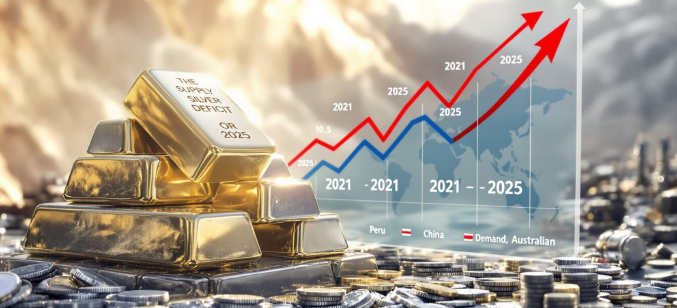
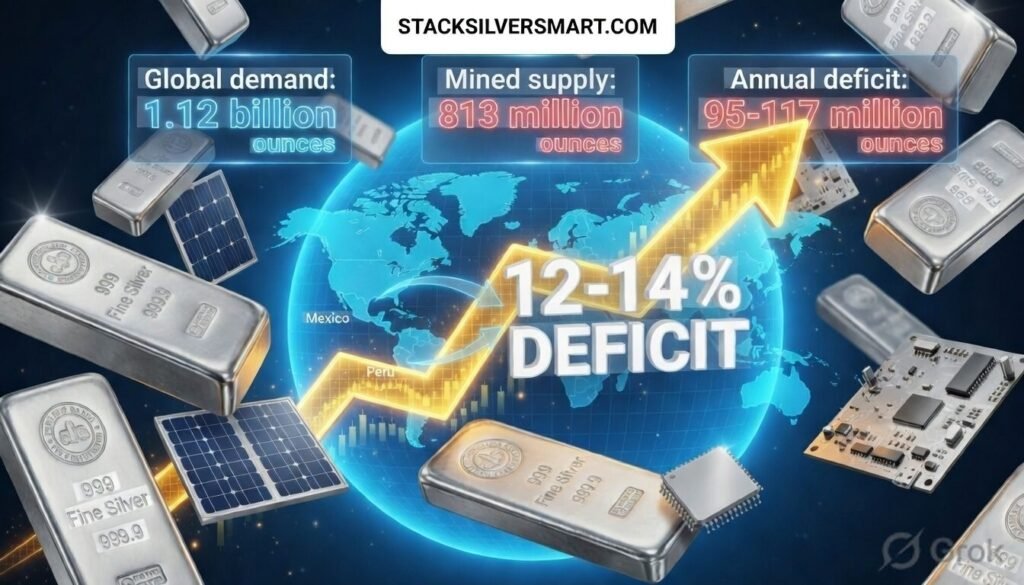
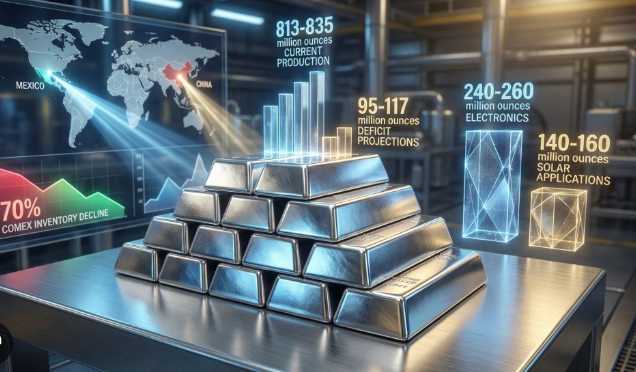
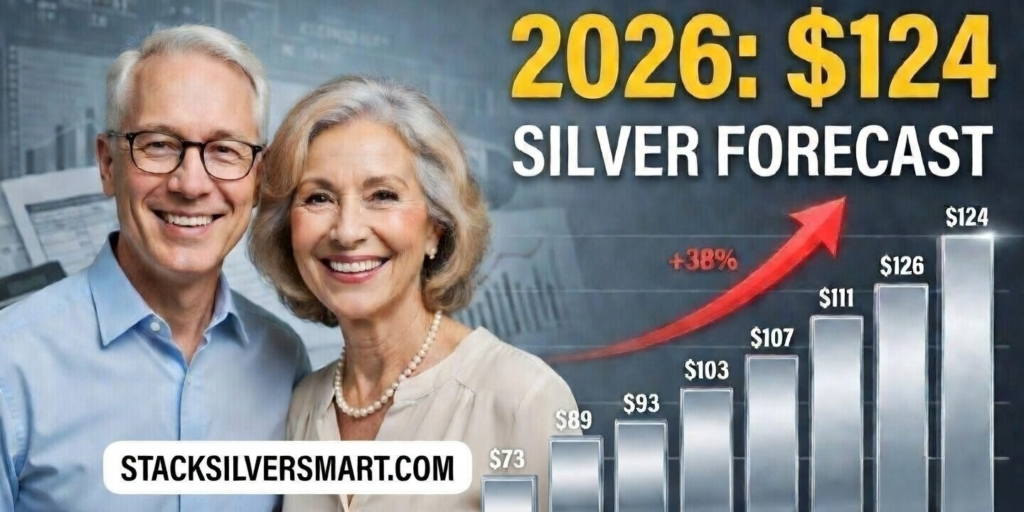
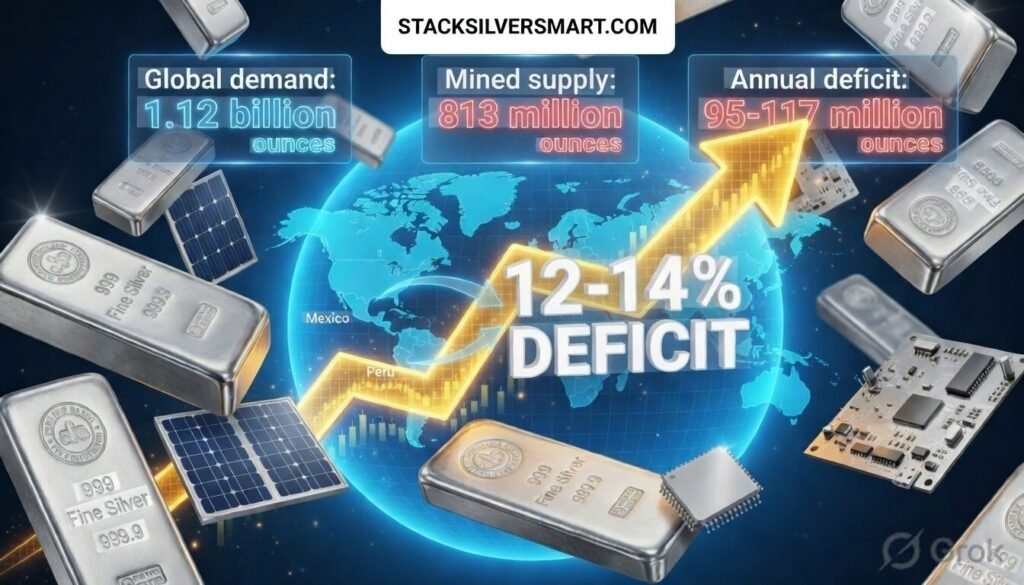
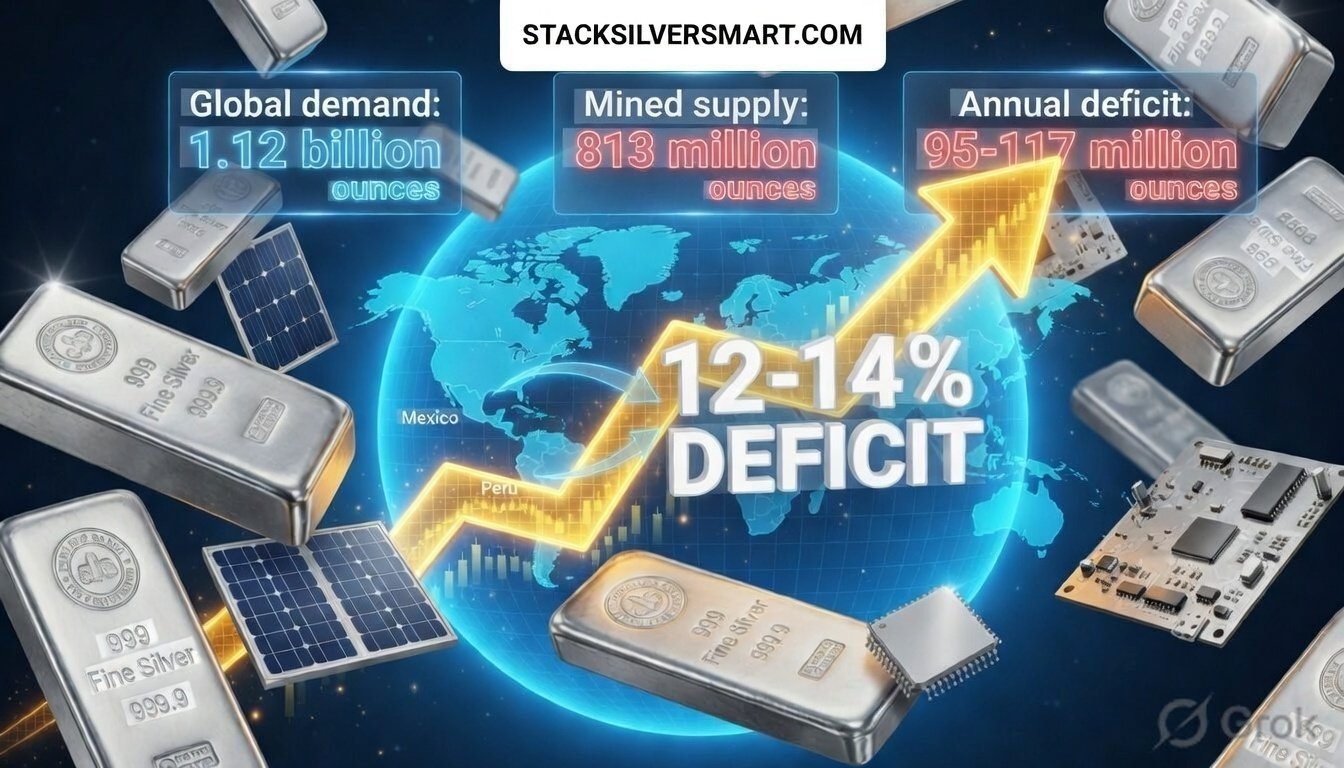
    In 2026, silver’s “strategic positioning” comes from its dual identity as a critical industrial fuel for the AI revolution and a Tier-1 monetary hedge. With seven consecutive years of supply deficits and a projected 120-million-ounce shortage, the “competitive advantage” of silver lies in its massive undervaluation compared to gold and equities. For the smart investor, silver isn’t just a commodity; it’s a high-velocity play on the future of energy and money.


    2. The 2026 Macro Landscape: Why Silver, Why Now?

    As we navigate 2026, the global economy has hit a “perfect storm.” While traditional stock markets trade at eye-watering valuations, precious metals—specifically silver—occupy an entirely different risk-reward spectrum.

    For our community of pre-retirement investors (ages 50–65) and younger tech-savvy stackers, the “Paper vs. Physical” divide has never been more obvious. Silver has suffered through decades of institutional underperformance, but 2026 marks the year where fundamental value finally breaks the chains of market manipulation.


    3. The Industrial “Squeeze”: Silver is the New Oil

    Unlike gold, which is mostly held in vaults, silver is consumed. In 2026, industrial applications represent a staggering 59% of total silver consumption.

    A. The AI and Data Center Explosion

    Artificial Intelligence isn’t just software; it’s hardware. Every server, every semi-conductor, and every data center cooling system built in 2026 requires silver’s superior conductivity. This demand is “price-inelastic”—tech giants will buy silver at $30, $50, or $100 because their multi-billion-dollar infrastructures literally cannot function without it.

    B. The Solar Mandate

    Photovoltaic (solar) manufacturing remains a structural driver. By 2026, global solar installations have expanded at a compound annual growth rate exceeding 20%. Each panel requires roughly 20 grams of silver paste. As governments push for carbon neutrality, they are effectively mandating a massive, non-negotiable silver drain.


    4. Supply Constraints: The Byproduct Trap

    A critical “competitive advantage” for silver holders is the structural limitation of silver mining. Approximately 70% of silver is produced as a byproduct of lead, zinc, and copper mining.

    • The Trap: If the price of silver doubles tomorrow, miners cannot simply “turn on more silver.” They have to mine more copper or lead first.
    • The Result: Silver supply is “inelastic.” It cannot react quickly to price spikes, leading to the explosive “vertical moves” we see in silver bull markets.

    5. Market Psychology: From “Hated” to “Holy Grail”

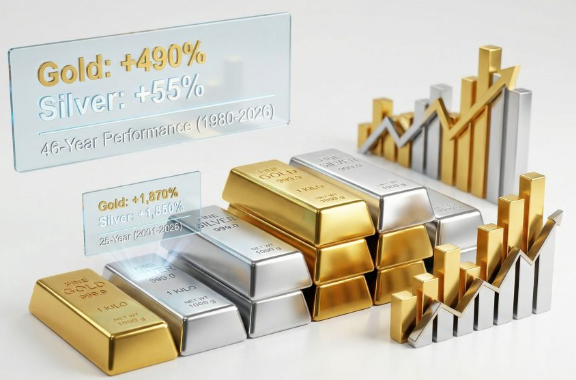
    Historical analysis shows that silver endured two brutal bear markets: 1980–2001 (a 90% drop) and 2011–2020 (a 70% drop). These decades of pain created a deeply embedded “negative sentiment”.

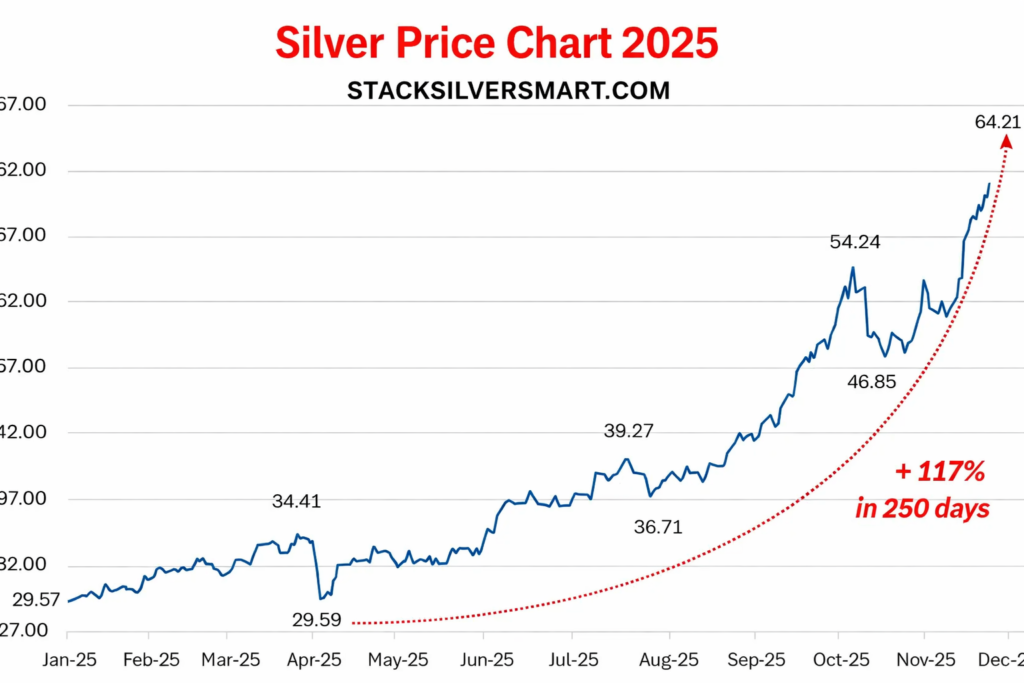
    In early 2026, we are seeing the “Hated Investment” transition into the “Must-Have Asset.” While retail investors are just now waking up, institutional “smart money” has been quietly accumulating physical silver since late 2025, when the metal advanced 50% with almost zero media coverage.


    6. Volatility: Your Secret Weapon

    Many beginners fear silver’s volatility. At StackSilverSmart, we teach you to embrace it.

    • Gold is the Shield: It provides steady, low-volatility appreciation (avg. 4.81% annually).
    • Silver is the Sword: It has higher volatility but historically offers superior gains during precious metals bull markets.

    In 2026, silver’s higher “beta” means that when gold moves 10%, silver often moves 20% or 30%. For growth-oriented portfolios, this is an asymmetric opportunity you cannot find in traditional bonds or savings accounts.


    7. Strategic Allocation Framework

    How much silver should you actually own in 2026? Based on market cycle analysis, we recommend three distinct frameworks:

    1. Conservative (The Wealth Protector): 70% Gold / 30% Silver.
    2. Balanced (The 2026 Standard): 50% Gold / 50% Silver.
    3. Growth-Oriented (The Silver Squeezer): 30% Gold / 70% Silver.

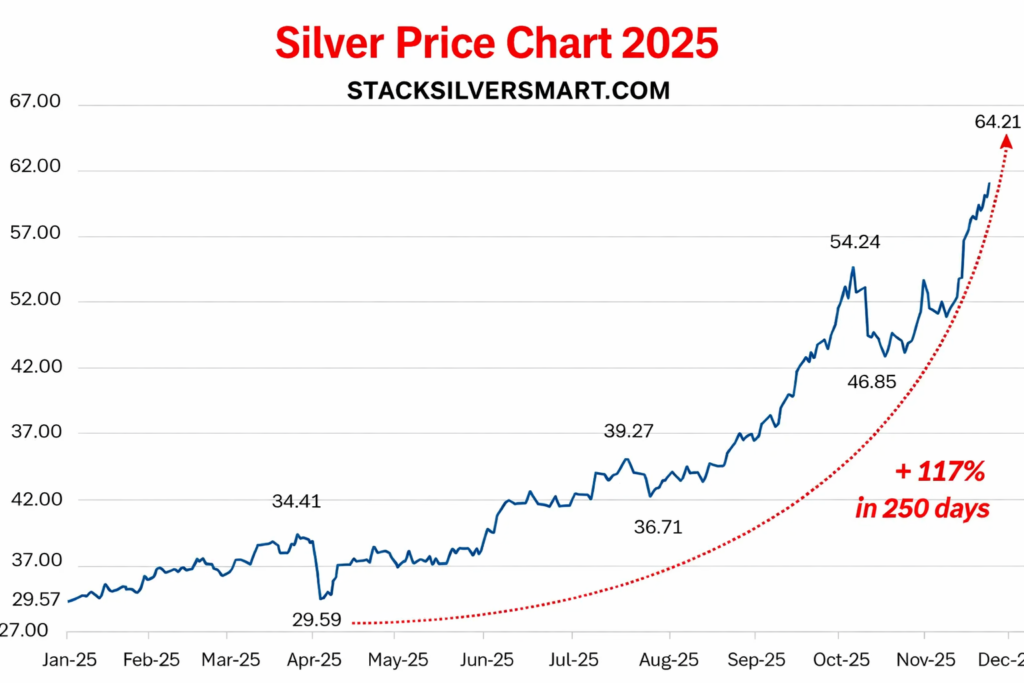
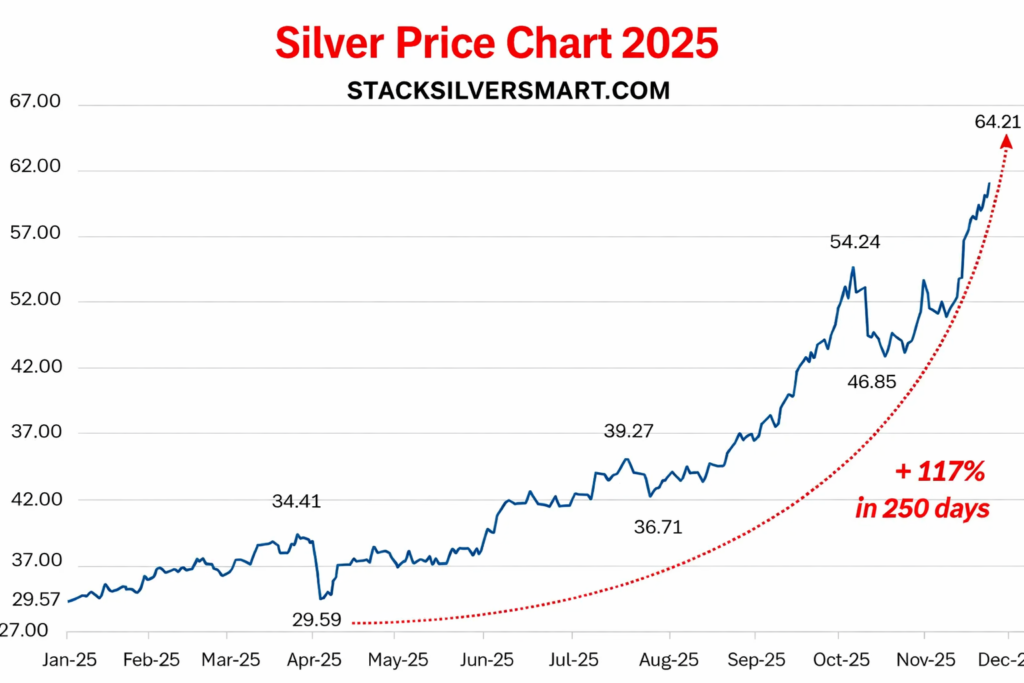
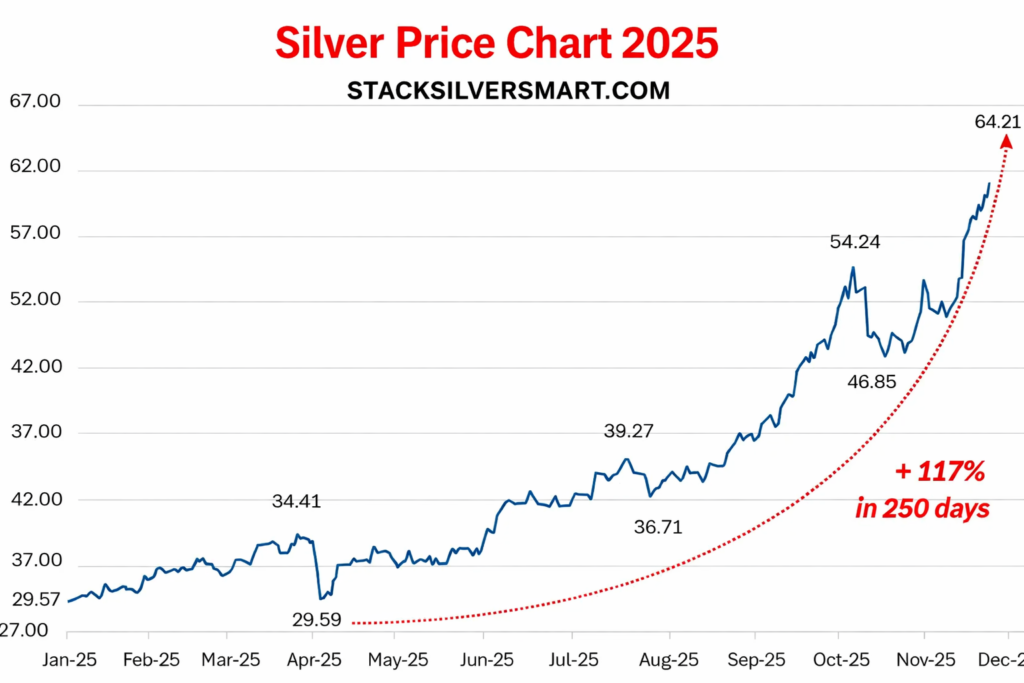
    Silver’s current pricing ($35–$64 range) compared to gold’s $4,000+ levels allows for much more “granular” position management. You can Dollar-Cost Average (DCA) into silver with $500 a month, whereas gold requires a much larger “buy-in”.


    8. Price Targets: Parity and The $200 Moonshot

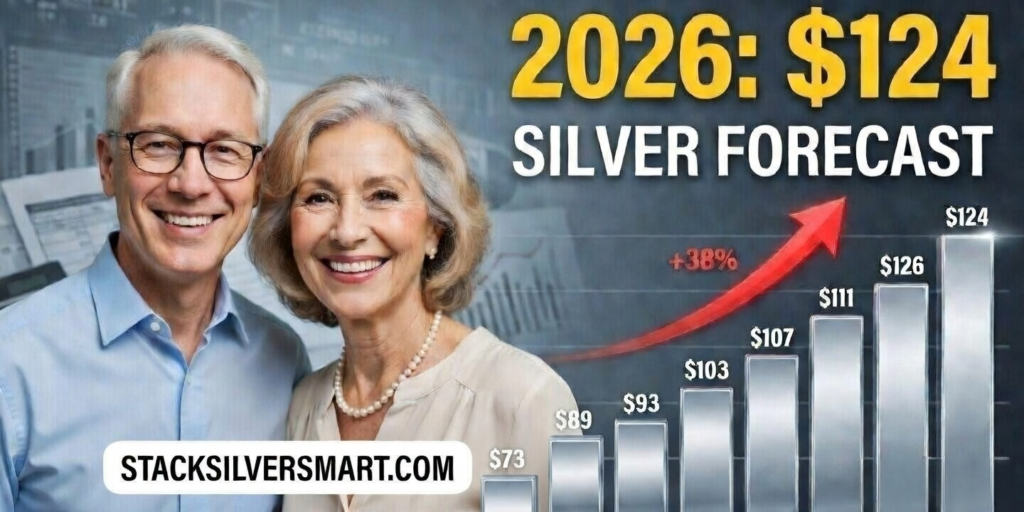
    Where is this going? Professional 2026 forecasting suggests three tiers of appreciation:

    • Conservative Target ($42–$47): A simple recovery based on current inflation and industrial demand.
    • Historical Parity ($185): Where silver should be if it matched gold’s performance since the 1971 dollar decoupling.
    • Speculative Target ($200+): The result of an “industrial panic” where tech companies scramble to secure silver at any price to keep their AI factories running.

    9. Conclusion: The Final Word for 2026

    Silver is no longer just a “hobby” for collectors; it is a strategic requirement for the modern investor. The competitive advantage of silver in 2026 is its unique position at the intersection of monetary fear and technological necessity.

    By securing physical silver today, you are not just buying a metal—you are buying a seat at the table for the most significant industrial and monetary shift of our lifetime.


    10. Frequently Asked Questions (FAQ)

    Q: Why is silver better than crypto in 2026?

    A: While crypto is digital scarcity, silver is physical scarcity with utility. You cannot build a solar panel out of Bitcoin. In a 2026 world where energy and hardware matter most, tangible assets provide a floor that digital assets simply don’t have.

    Q: What is the best way to buy silver for my retirement?

    A: For most Americans, a Silver IRA is the most tax-efficient method. It allows you to hold physical bullion in a secure, IRS-approved vault while keeping your tax-deferred status.

    Q: How do I handle the storage and insurance of silver?

    A: If you buy through a reputable dealer like Noble Gold, they can arrange for segregated storage in high-security vaults (like the ones in Texas), which includes full insurance and regular auditing.

  • Will Silver Hit $200 an Ounce? The 2026 Price Forecast Guide


    Quick Answer

    While a move to $200 an ounce represents a significant increase from current 2026 levels, many analysts believe it is mathematically possible under a “perfect storm” of hyperinflation, extreme industrial shortages in the AI/Green energy sectors, and a breakdown in the gold-to-silver ratio. However, for most investors, the focus should not be on the “moonshot” price, but on silver’s proven ability to preserve purchasing power when fiat currencies fail.


    Understanding the Question: Speculation vs. Reality

    The question “will silver hit $200 an ounce?” is more than just a price target; it’s a reflection of the current economic anxiety felt by pre-retirement investors (ages 50–65) and tech-savvy collectors alike.

    In 2026, we are seeing a massive shift in how silver is perceived. It is no longer just “poor man’s gold.” It is a critical industrial component. At StackSilverSmart, we analyze these trends to help you move from speculation to a secure, asset-backed financial strategy.


    Detailed Explanation: The Path to $200

    For silver to reach the $200 milestone, three specific economic levers would likely need to be pulled simultaneously:

    A. The Industrial Deficit (The AI Factor)

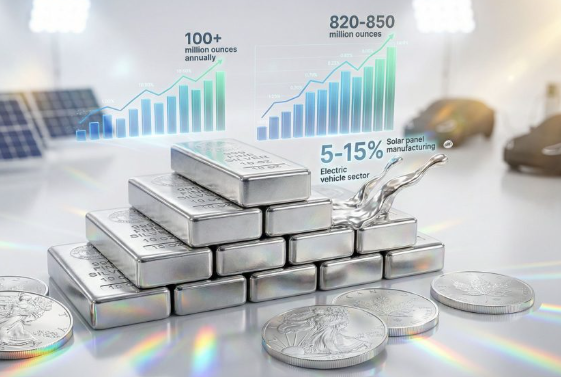
    Silver is the most conductive metal on Earth. In 2026, the demand for silver in photovoltaic (solar) panels, electric vehicle (EV) batteries, and AI data center cooling systems has reached an all-time high. Unlike gold, which is mostly stored in vaults, silver is “consumed” in industry, meaning the world’s above-ground supply is constantly shrinking.+2
    B. Monetary Debasement
    If the US Dollar continues to lose purchasing power at the rates seen in the mid-2020s, a $200 silver price may not mean silver has become “more expensive,” but rather that the dollar has become significantly weaker. For preppers and survivalists, this is the primary reason to hold physical metal—it is a currency that cannot be printed.

    C. The Gold-to-Silver Ratio Collapse

    Historically, the ratio has averaged around 15:1 or 16:1. In 2026, the ratio remains much higher. If gold stays at current levels and the ratio returns to its historical mean, silver would naturally catapult toward the triple digits.


    Key Points: Obstacles to the $200 Target

    It is important to remain grounded. While the upside is massive, several factors act as “gravity” on the silver price:

    • Paper Market Suppression: The COMEX “paper” market often trades 100x more silver than physically exists, which can artificially depress prices.
    • Recessionary Pressure: While silver is an investment, it is also an industrial metal. A global manufacturing slowdown could temporarily dampen demand.
    • Mining Supply: High prices often lead to new mining technology, which can increase supply and stabilize costs.

    Examples and Case Studies: Historical Precedents

    The 1980 Hunt Brothers Surge

    In 1980, silver hit nearly $50 an ounce (which is over $180 in today’s inflation-adjusted dollars). This was driven by a cornering of the market. While $200 sounds high, we have technically been close to that “value” before when adjusted for inflation.

    The 2011 Debt Ceiling Crisis

    Silver again touched $50 as faith in the US Dollar wavered. In 2026, with the national debt at record highs, the “fear trade” that drove the 2011 surge is stronger than ever.


    Expert Insights: The “Smart Money” View

    Most institutional experts in 2026 agree that silver is undervalued compared to every other asset class (stocks, real estate, and gold).

    Younger tech-savvy investors (ages 25–40) are increasingly viewing silver as “the Bitcoin of metals”—an asset with a fixed supply but massive utility in the digital age. As these investors move away from purely digital assets toward “Phygital” (Physical + Digital) security, the demand for 1 oz silver coins and bars is expected to create a supply squeeze.


    Additional Resources

    • The Silver Institute 2026 World Silver Survey: For data on the industrial supply deficit.
    • StackSilverSmart Beginner Guides: For learning how to spot counterfeit 1 oz coins.
    • Sigma Metalytics: Tools for verifying your silver at home.

    8. Conclusion

    Will silver hit $200 an ounce? While no one has a crystal ball, the mathematical and industrial arguments for a triple-digit silver price are stronger in 2026 than at any other time in history.

    However, at StackSilverSmart, we recommend focusing on the “Ounce Count,” not the “Dollar Amount.” If you own the physical metal, you own a piece of the earth that is essential to the future of technology and human commerce. Whether it trades at $30 or $200, its value as a protector of your family’s wealth remains absolute.


    Frequently Asked Questions (FAQ)

    Q1: If silver hits $200, will I be able to sell it easily?

    A: Yes. Silver is one of the most liquid assets in the world. High prices typically bring more buyers into the market. Reputable dealers like Noble Gold offer “no-quibble” buyback programs to ensure you can exit your position when you’re ready.

    Q2: Should I buy “Junk Silver” or Bullion if I’m betting on $200?

    A: “Junk silver” (pre-1965 US coins) is excellent for divisibility and bartering. Bullion (pure .999 bars) is better for pure price appreciation. For most investors, a mix of both is ideal.

    Q3: How do I store silver safely if the price skyrockets?

    A: As the value increases, home storage becomes a security risk. We recommend using segregated, insured vault storage in locations like Texas or Delaware, which can be arranged through your silver IRA provider.

  • What is 1 oz of Silver Selling for Right Now? The 2026 Investor’s Guide


    Quick Answer

    The price you pay for 1 oz of silver is composed of two parts: the Spot Price (the global paper trading price) plus the Dealer Premium (the markup for minting, shipping, and profit). In 2026, while the spot price fluctuates by the minute, a physical 1 oz silver coin typically sells for $3.00 to $6.00 above the spot price, depending on the mint and the quantity purchased.


    Understanding the Question: Why Prices Vary

    When investors ask, “what is 1 oz of silver selling for right now?”, they are often frustrated by the discrepancy between the price they see on the news and the price they see at a dealer’s checkout.

    For our target audience—ranging from pre-retirement investors (ages 50-65) to tech-savvy crypto enthusiasts—understanding this “spread” is the difference between a profitable investment and an expensive mistake. At StackSilverSmart, we believe transparency is the first step toward true wealth preservation.


    Detailed Explanation: Spot vs. Physical

    To understand the current selling price, we must break down the “Paper vs. Physical” divide that has defined the 2026 silver market.

    The Spot Price

    This is the price of silver “contracts” traded on global exchanges like the COMEX. It represents silver that hasn’t been minted into a coin yet. It changes every few seconds during market hours.

    The Physical Premium

    This is the “real world” cost. It covers:

    • Minting Costs: Turning raw silver into a beautiful, recognizable coin.
    • Distribution: Shipping heavy metal securely and discretely.
    • Insurance: Protecting the asset from the mint to your door.
    • Dealer Margin: The small profit the dealer makes to stay in business.

    Key Characteristics of Silver Pricing

    In 2026, several unique factors influence what you pay at checkout:

    Industrial Demand vs. Monetary Value

    Silver is unique because it is both “money” and a “critical industrial metal.” With the massive 5G and AI infrastructure build-outs of 2026, industrial users are often competing with investors for the same ounces, driving premiums higher.

    Purity Standards

    1 oz of silver is almost always “Three Nines Fine” (.999) or “Four Nines Fine” (.9999). This purity is stamped directly onto the coin or bar. If it isn’t stamped, don’t buy it.

    Liquidity

    Government-minted coins (like the American Silver Eagle) sell for more than generic “rounds” because they are easier to resell later. You pay more now to get more back later.


    Real-World Examples: 2026 Price Comparison

    To see how this works in practice, let’s look at three different “1 oz” items and what they might be selling for right now:

    1. Generic 1 oz Silver Round: Typically sells for Spot + $2.50. Best for pure weight accumulation.
    2. American Silver Eagle (1 oz): Typically sells for Spot + $5.00 – $7.00. Best for high trust and easy resale.
    3. 1 oz Silver Bar: Often the cheapest way to buy 1 oz, frequently selling for Spot + $2.00 if bought in bulk.

    Benefits and Advantages of Online Buying

    For the prepper or the pre-retirement investor, buying online is almost always superior to a local coin shop (LCS) for these reasons:

    • Lower Premiums: Online dealers don’t have the high rent costs of a physical storefront.
    • Selection: You aren’t limited to whatever the local guy has in his safe.
    • Security: Packages are shipped in discreet boxes and are 100% insured until you sign for them.

    Related Concepts: The Gold-to-Silver Ratio

    In 2026, savvy investors don’t just ask about the silver price; they look at the Gold-to-Silver Ratio. If the ratio is 85:1, it means it takes 85 ounces of silver to buy 1 ounce of gold. Historically, when this ratio is high, silver is “on sale” compared to gold. Many of our younger tech-savvy investors use this ratio to “swing trade” between the two metals.


    Conclusion

    So, what is 1 oz of silver selling for right now? It is selling for the global spot price plus a physical premium that reflects the reality of 2026’s supply-demand crunch.

    Whether you are a survivalist stocking up on “junk silver” for barter or a collector looking for the latest mintage, the goal remains the same: Minimize your premium and maximize your ounces. By using trusted, high-volume dealers, you ensure that your wealth is protected by real, tangible assets that have survived every financial crisis in history.


    Frequently Asked Questions (FAQ)

    Q: Is there a “hidden fee” when buying silver online?

    A: Reputable dealers are transparent. However, watch out for shipping costs on small orders. Many dealers offer Free Shipping on orders over $199. Also, be aware that paying with a credit card usually adds a 3-4% processing fee; paying by E-Check or Wire Transfer is the cheapest way to buy.+1

    Q: Why is the price of a Silver Eagle so much higher than a generic round?

    A: Silver Eagles are legal tender and backed by the US Mint. This “sovereign guarantee” makes them more liquid (easier to sell) globally. You are paying a premium for that peace of mind.

    Q: Should I buy 1 oz coins or 10 oz bars?

    A: If you want the lowest price per ounce, 10 oz bars are usually better. However, 1 oz coins are better for “divisibility”—if you need to sell just a little bit of silver to cover a small expense, you can do that with coins.

  • Is It Safe to Buy Silver Online? The Ultimate 2026 Security Guide


    Quick Answer

    Yes, it is safe to buy silver online, provided you follow three golden rules: only buy from established dealers with A+ BBB ratings, use insured shipping methods, and verify your products upon arrival. For most investors in 2026, online buying is actually safer and cheaper than local coin shops due to better transparency and lower overhead costs.


    Understanding the Question: The Digital Shift in Bullion

    In the early days of the internet, buying precious metals online felt like a gamble. Today, the industry has matured into a high-security ecosystem. However, for pre-retirement investors (ages 50–65) and younger tech-savvy stackers, the core concern remains: How do I know the metal is real, and how do I know it will actually arrive at my door?

    At StackSilverSmart, we believe that physical silver is the ultimate hedge against inflation. But that hedge only works if the silver you buy is authentic and safely in your possession.


    Detailed Explanation: The Layers of Online Safety

    When you ask, “is it safe to buy silver online?”, you are really asking about three different types of security:

    A. Transactional Security

    Reputable online dealers use 256-bit SSL encryption to protect your financial data. Furthermore, many now accept diverse payment methods, from traditional wire transfers to crypto, allowing tech-savvy investors to move fluidly between digital and physical assets.

    B. Product Authenticity

    The fear of “fake” silver from overseas is real. However, major online dealers use X-ray fluorescence (XRF) scanners and Sigma Metalytics testers to verify every ounce before it enters their inventory.

    C. Logistics and Shipping

    This is where most beginners worry. “What if the mailman steals it?” Professional dealers ship in discreet, unbranded packaging. The return address will never say “Gold and Silver Exchange.” Furthermore, every shipment is 100% insured until the moment you sign for it.


    Key Points: How to Spot a Safe Dealer

    To ensure your experience is secure, look for these “Trust Signals” before hitting the checkout button:

    • BBB Accreditation: Look for an A+ rating from the Better Business Bureau.
    • Physical Address: Never buy from a dealer that doesn’t list a physical headquarters.
    • Buyback Policy: A safe dealer will always offer to buy back the metal they sold you.
    • Transparent Premiums: If the price is “below spot,” it is a scam. Period.

    Examples and Case Studies

    Case Study: The “Social Media” Trap

    In 2025, many investors were lured by “limited time” silver sales on Facebook and Instagram. These ads featured professional-looking photos of Silver Eagles at 20% off.

    • The Result: Those who bought received silver-plated lead bars or nothing at all.
    • The Lesson: Real silver has a “market price” (Spot). If a dealer is selling significantly below that price, they are not a dealer; they are a scammer.

    Case Study: The “Noble” Path

    Compare this to a standard transaction through a company like Noble Gold. An investor moves $20,000 from a declining 401(k) into a Silver IRA. The silver is shipped directly to a high-security vault in Texas, fully insured and audited. The investor never has to worry about home security or shipping mishaps.


    Expert Insights: Why 2026 Demands Physical Ownership

    Economic experts at StackSilverSmart note that as we move toward more centralized digital currencies, the “anonymity” of physical silver becomes more valuable.

    Buying online allows you to “Dollar Cost Average” (DCA) your way into a position without driving to a local shop every month. This consistency is the hallmark of a successful long-term investor.


    Additional Resources for Safe Buying

    • Sigma Metalytics: The industry standard for testing silver at home.
    • The Silver Institute: For tracking 2026 supply/demand deficits.
    • StackSilverSmart Beginner Guides: Our internal library for new stackers.

    Conclusion

    Is it safe to buy silver online? Absolutely—if you treat it like a business transaction rather than a bargain hunt. By sticking to reputable dealers, verifying the “Spot Price” daily, and utilizing insured shipping, you can build a massive silver hoard from the comfort of your home.

    Physical silver remains the “Devil’s Metal” because of its price action, but in your portfolio, it acts as a “Guardian Angel” against currency devaluation.


    9. Frequently Asked Questions (FAQ)

    Q1: What happens if my silver shipment is lost in the mail?

    Answer: If you buy from a reputable dealer, the package is 100% insured. You are entitled to either a full refund or a replacement shipment. Just ensure you do not sign for a package that looks tampered with or opened.

    Q2: How do I test my silver at home?

    Answer: The easiest tests are the “Magnet Test” (silver is not magnetic) and the “Ping Test” (silver has a specific high-pitched ring). For larger investments, we recommend a Sigma Precious Metals Verifier.

    Q3: Why are online premiums lower than local shops?

    Answer: Online dealers move massive volume and have lower “rent” costs than a physical storefront. They pass these savings on to you in the form of lower premiums.

  • Silver Stacking 101: The Ultimate 2026 Guide to Protecting Your Wealth with Physical Silver

    Introduction: Why Silver, Why Now?

    As we navigate the economic landscape of 2026, the traditional financial system is facing unprecedented “headwinds.” With central banks across the globe grappling with digital currency transitions and persistent fiscal deficits, private individuals are returning to the oldest form of financial insurance: Physical Silver.

    At StackSilverSmart, we define “Silver Stacking” as the systematic accumulation of physical silver bullion—coins, bars, and rounds—to preserve purchasing power over long periods. In this 1,500-word deep dive, we will break down exactly how to start, what to buy, and why 2026 is the “perfect storm” for silver investors.


    What is Silver Stacking?

    Unlike “trading” silver on a screen (paper silver), stacking is about physical ownership. When you stack, you are your own central bank. You hold a tangible asset that has zero counterparty risk—meaning it doesn’t rely on a bank, a CEO, or a government to keep its value.

    In 2026, the “Digital Age” has made silver more than just money; it has made it a strategic resource. Stacking is the process of slowly building your “personal vault” to ensure that no matter what happens to the dollar or the euro, you have a hard asset that the world desperately needs.


    The 2026 Supply-Demand “Inflection Point”

    Why is everyone talking about silver in 2026? It comes down to a simple math problem: Demand is crushing supply.

    • Sixth Consecutive Deficit: 2026 marks the sixth year in a row where the world consumed more silver than it mined.
    • Green Energy & AI: Silver is the most conductive element on Earth. It is essential for the solar panels and AI data centers that are currently being built at a record pace.
    • Mining Struggles: Most silver is a byproduct of copper or zinc mining. Even with silver prices hitting new highs, miners cannot simply “turn on” more production.

    The Stacker’s Toolkit: What to Buy First

    For a beginner, the choices can be overwhelming. Here is the StackSilverSmart breakdown of the three main categories of physical silver:

    A. Government-Minted Coins

    These are legal tender and recognized worldwide.

    • Examples: American Silver Eagles, Canadian Maple Leafs, Australian Kookaburras.
    • Pro: Highly liquid and easy to sell anywhere.
    • Con: They carry the highest “premiums” (the price above the spot price).

    B. Silver Bars

    Bars are for the “weight-focused” stacker.

    • Sizes: 1oz, 10oz, and 100oz.
    • Pro: Lower premiums than coins. You get more silver for your dollar.
    • Con: Harder to “spend” in a small trade or barter situation.

    C. Constitutional (Junk) Silver

    This refers to 90% silver coins (dimes, quarters, halves) minted before 1965.

    • Pro: Perfect for “barter” scenarios. Small denominations make them easy to trade.
    • Con: They look like regular “pocket change” and can be confusing for new stackers.

    How to Avoid “Stacker Traps”

    The silver market attracts scammers. To stay safe in 2026, follow these rules:

    1. Avoid “Numismatics” (Collectibles): As a beginner, do not buy “rare” coins or graded “MS-70” coins. You are buying silver for its weight, not its rarity.
    2. Verify Your Dealer: Only buy from established, reputable bullion dealers.
    3. Beware of “Too Good to Be True” Prices: If someone is selling silver below the “Spot Price,” it is almost certainly a counterfeit.

    Storage and Security: Keeping Your Stack Safe

    “If you don’t hold it, you don’t own it.” But holding it comes with responsibility.

    • The “Secret” Rule: Never tell anyone outside your immediate household that you have silver.
    • Home Safes: Invest in a high-quality, fireproof safe that is bolted to the floor.
    • Off-Site Storage: If your stack grows beyond a few thousand ounces, consider a private, non-bank bullion vault.

    Your 2026 Stacking Strategy

    Success in silver stacking isn’t about “timing the market”; it’s about “time in the market.”

    • Dollar Cost Averaging (DCA): Set a monthly budget (e.g., $200/month) and buy no matter what the price is. This “smooths out” the volatility.
    • The “Gold-to-Silver” Ratio Check: In 2026, when the ratio is high (over 80:1), buy silver. When it drops (below 40:1), consider swapping some silver for gold.

    Conclusion: Joining the “Silver Elite”

    Silver stacking is more than a financial move; it is a mindset shift. By converting your “paper” wealth into “physical” wealth, you are joining a global community of individuals who value truth, tangibility, and transparency.

    At StackSilverSmart, we are here to guide you through every ounce of this journey. Welcome to the world of real money.

  • Silver vs. Gold in 2026: Why the “Devil’s Metal” is Outperforming the Yellow King

    The Great Precious Metals Debate of 2026

    For centuries, gold has been the undisputed king of safe-haven assets. However, as we cross into the second quarter of 2026, a massive shift is occurring in the global markets. At StackSilverSmart, we are witnessing a phenomenon where silver—often nicknamed “The Devil’s Metal” due to its volatile price swings—is beginning to decouple from gold’s shadow.

    While gold remains a vital store of value, silver is increasingly viewed as a dual-purpose asset: a monetary hedge and a critical industrial commodity essential for the green energy transition.


    The Gold-to-Silver Ratio: A Historical Opportunity

    To understand why silver is the “smarter” stack in 2026, we must look at the Gold-to-Silver Ratio. Historically, this ratio has averaged around 15:1 to 20:1. In the modern era, it often fluctuates between 60:1 and 80:1.

    In 2026, the ratio remains stretched. This means that for the price of one ounce of gold, you can acquire a massive physical hoard of silver. At StackSilverSmart, our mission is to highlight these imbalances. When the ratio eventually contracts, silver owners typically see much higher percentage gains than gold holders.


    Industrial Utility: Gold is Hoarded, Silver is Consumed

    One of the most significant differences between these two metals is their “burn rate.”

    • Gold is indestructible: Almost every ounce of gold ever mined still exists in a vault or a piece of jewelry.
    • Silver is essential: From 5G base stations to photovoltaic solar panels and electric vehicle (EV) batteries, silver is used and often “lost” to landfills because recycling it in small quantities is expensive.

    As global demand for clean energy peaks in 2026, the industrial “drain” on silver supplies is creating a physical shortage that gold simply does not face.


    Volatility: The Stacker’s Secret Weapon

    Many investors fear silver because its price moves faster and more violently than gold. However, for a disciplined stacker, volatility is a feature, not a bug.

    • Gold moves like a luxury cruise ship—slow and steady.
    • Silver moves like a rocket ship—it stays grounded for a long time, then explodes upward.

    By utilizing “Dollar Cost Averaging,” members of the StackSilverSmart community can turn these price dips into buying opportunities.


    Portability and Barter-Ability

    If we look at a “worst-case” economic scenario in 2026, silver holds a distinct advantage in daily utility.

    • Trying to buy a week’s worth of groceries with a 1-ounce gold coin is nearly impossible without losing value in the “change.”
    • A 1-ounce silver round or “Junk Silver” (90% silver coins) provides the perfect denomination for small-scale trade and barter.

    The 2026 Market Outlook

    As central banks continue to grapple with fiat currency devaluation, the flight to hard assets is intensifying. While gold will always have a place in a diversified portfolio, silver’s unique position at the heart of the “Digital Age” makes it the high-growth play for 2026.

    Final Thoughts for the Smart Stacker

    At StackSilverSmart, we don’t just track prices; we track the future of sound money. Whether you are a seasoned veteran or just starting your first stack, understanding the relationship between silver and gold is the key to protecting your wealth in an uncertain decade.

  • The 2026 Silver Squeeze: Why 5G and Semiconductors are the New “Vaults” for Silver Stacking.


    The 2026 Silver Market: A New Frontier As we move through 2026, the narrative around silver has shifted from a simple “inflation hedge” to an indispensable industrial powerhouse. At StackSilverSmart, we believe physical silver is the ultimate insurance for the digital age. While traditional “stacking” focuses on sovereign coins, the real price driver is currently happening inside our smartphones and 5G base stations.

    5G Infrastructure: The Silver Hungry Giant The global rollout of 5G technology has created an unprecedented demand for silver due to its unmatched electrical conductivity. Each 5G base station requires significantly more silver than previous 4G hardware. As the world transitions toward 5G telecommunications, the industrial demand for silver has reached a critical inflection point. This isn’t just about faster internet; it’s about a massive, physical consumption of the very metal we collect.

    Semiconductors and the 2026 Supply Inflection The semiconductor industry is another massive player in the “Silver Squeeze.” Silver is the DNA of the modern digital age, found in everything from advanced sensors to power management chips. Because mining production hasn’t kept pace with this rapid high-tech shift, we are seeing a 2026 supply squeeze that is forcing industrial manufacturers to compete directly with private investors for every available ounce.

    Why This Matters to Smart Stackers For those of us holding physical silver, this industrial “floor” is incredibly bullish. Unlike gold, which sits in vaults, industrial silver is consumed and often never recycled. This constant depletion of supply protects physical holders during economic volatility.

    If you are new to the world of precious metals, our mission is to empower you with data-driven insights. We focus on the intersection of silver’s historical role as sound money and its future as a critical industrial commodity.