
You’ve done the research, watched the markets, and finally pulled the trigger on a significant bullion purchase. But once the delivery truck leaves, a new and more pressing question arises: Where do I put it?
For many investors, discovering what is the best way to buy silver online? is only half the battle. The other half is ensuring that your tangible wealth remains secure from theft, fire, and environmental damage. Whether you are a prepper who wants your silver within arm’s reach or a pre-retirement investor seeking the “set it and forget it” security of a vault, choosing the right storage method is a critical part of your investment strategy.
In this guide, we will compare the two primary methods of silver storage: high-security home safes and professional third-party vaults.
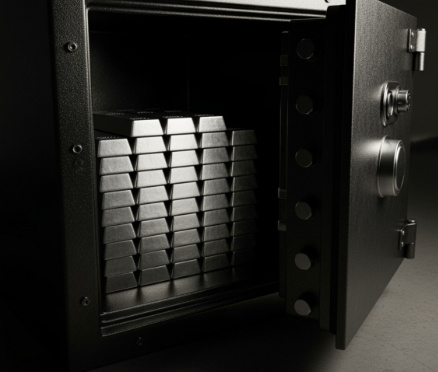
1. Quick Answer (TL;DR)
For small to medium holdings (under $20,000) or those prioritizing immediate access (preppers/survivalists), a high-quality, bolted-down home safe with a UL fire rating is the standard choice.
For large holdings (over $20,000) or investors seeking maximum insurance coverage and peace of mind, a professional bullion vault (depository) is the superior option. Vaulting removes the “theft risk” from your home and often simplifies the process of reselling your metal later.
2. Understanding the Question: Why Storage Matters
Silver is unique among precious metals because of its bulk. While $50,000 worth of gold can fit in a pocket, $50,000 worth of silver (at current 2026 prices) can weigh hundreds of pounds and take up several cubic feet of space.
This physical footprint makes silver harder to hide and more expensive to ship. Therefore, your storage choice isn’t just about security; it’s about logistics. You must weigh the “Peace of Mind” of a professional vault against the “Total Control” of a home safe.
3. Detailed Explanation: Home Safes vs. Professional Vaults
Option A: The Home Safe (The “Fortress” Approach)
Storing silver at home is the most traditional method. However, a “document box” from a big-box retailer won’t cut it. To safely store silver at home, you need a safe that addresses three specific threats:
- Theft: The safe must be heavy enough or bolted to the floor so it cannot be physically removed. It should have a UL (Underwriters Laboratories) Rating of at least RSC (Robbery Safe Container) or higher.
- Fire: Silver melts at $961.8^\circ\text{C}$. While a house fire rarely reaches that temperature, the cooling process and falling debris can damage your bullion. Look for a safe with at least a 1-hour fire rating.
- Environment: Silver tarnishes when exposed to moisture and sulfur. Home storage requires a dehumidifier or desiccant packs inside the safe to keep the air dry.
Option B: Professional Vaults (The “Depository” Approach)
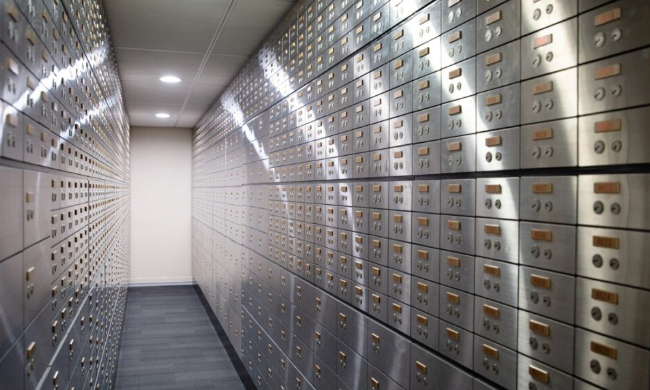
A depository is a specialized facility (like Brink’s or Delaware Depository) designed specifically to hold precious metals.
- Segregated Storage: Your specific bars and coins are kept in a separate box or shelf. When you withdraw, you get the exact items you deposited.
- Unsegregated (Allocated) Storage: Your silver is stored in a communal pile with other investors’ silver of the same type. You own a specific number of ounces, but not a specific bar.
4. Key Characteristics: Comparison Table
| Feature | Home Safe Storage | Professional Vaulting |
| Accessibility | Instant (24/7) | Limited (Requires notice/shipping) |
| Privacy | High (No one knows you have it) | Moderate (Third-party records exist) |
| Insurance | Difficult/Expensive (Homeowners’ limits) | Included (Full replacement value) |
| Initial Cost | High (Cost of the safe + installation) | Low (No upfront hardware cost) |
| Ongoing Cost | Zero | Monthly or Annual storage fees |
| Security Level | Dependent on safe quality | Military-grade / 24-hour armed guard |
5. Real-World Examples
The “Prepper” Scenario
A survivalist in a rural area believes that the what is the best way to buy silver online? involves getting the metal into their physical possession as quickly as possible. They invest in a TL-30 rated safe, hide it behind a false wall in their basement, and bolt it into the concrete slab. They have 100% control, but they bear 100% of the risk if they are forced to disclose the safe’s location.
The “Hands-Off” Investor
A 60-year-old investor buys $100,000 in silver bars for their retirement portfolio. They don’t want the liability of having that much value in their home. They choose segregated storage at a professional vault. The silver is fully insured, and if they ever want to sell, they can do so with one phone call to the dealer, as the metal never leaves the “chain of integrity.”
The “Hybrid” Stacker
Many investors keep 100–200 ounces at home for emergencies (the “go-bag” silver) and send the rest of their bulk 100 oz bars to a professional depository. This balances immediate need with long-term security.
6. Benefits and Advantages
Advantages of Professional Vaults:
- Chain of Integrity: When you sell silver that has been stored in a professional vault, the buyer knows it is authentic because it never left a secure facility. This often results in a higher buyback price.
- Insurance: Most homeowners’ insurance policies limit “money and securities” (including bullion) to $200–$2,500 unless you pay for an expensive “rider.” Vaults include multi-million dollar policies in their storage fees.
- Geographic Diversification: You can store silver in a vault in a different state or even a different country (like Singapore or Switzerland) to protect against local economic instability.
Advantages of Home Safes:
- No Counterparty Risk: You don’t have to worry about a storage company going bankrupt or being unable to access your wealth during a “bank holiday.”
- No Recurring Fees: Once the safe is paid for, your storage is free for life. Over 20 years, vaulting fees can eat into your silver’s profit.

7. Related Concepts
“Midnight Gardening”
This is a slang term for burying silver on your property. While it offers high privacy, it is highly discouraged by experts due to the risk of the soil shifting, moisture damage, or simply forgetting the exact location (it happens more than you’d think!).
TL-Rated Safes
“TL” stands for Tool Latency. A TL-15 safe is tested to withstand 15 minutes of continuous attack by professional burglars using specialized tools. For high-value silver collections, a TL-15 or TL-30 is considered the minimum standard for home security.
Bailment vs. Creditor Relationship
When you store silver in a reputable vault, it is a Bailment. This means the silver is your legal property, and the vault is simply holding it. It cannot be seized by the vault’s creditors if the company fails. Always check your storage contract for this distinction.
8. Conclusion
Deciding between a home safe and a professional vault comes down to your personal risk tolerance and the size of your “stack.”
At stacksilversmart.com, we generally recommend that beginners starting with a few tubes of coins invest in a small, high-quality home safe. As your portfolio grows into the “monster box” territory, the insurance and liquidity benefits of professional vaulting become far too valuable to ignore.
Remember: The best security is silence. Regardless of which method you choose, the first rule of silver storage is to never tell anyone how much you have or where you keep it.
9. Frequently Asked Questions
Will my homeowners’ insurance cover silver in a home safe?
Usually, no. Standard policies have very low limits for precious metals. You will likely need to purchase a “Scheduled Personal Property” endorsement, which requires an appraisal and can be expensive.
Can I store silver in a bank safe deposit box?
You can, but it is not recommended. Bank boxes are not insured by the FDIC, and banks have strict rules against storing “cash-like” items. Furthermore, you can only access your box during bank hours.
How do I stop my silver from turning black at home?
Use Anti-Tarnish Strips or silica gel packs inside your safe. Avoid storing silver near rubber bands or certain types of wood, as they release sulfur gases that accelerate tarnishing.
What is the average cost of professional vaulting?
Most depositories charge based on a percentage of the total value (e.g., 0.50% to 1% per year) or a flat monthly fee per “bin.” For $10,000 worth of silver, expect to pay around $10–$15 per month.
Is digital silver (tokenized silver) the same as vaulting?
No. Digital silver represents a claim on silver, but you often cannot take physical delivery easily. Professional vaulting as discussed here involves physical bars that you can choose to have shipped to your door at any time.
Authored by the stacksilversmart.com Editorial Team
Leave a Reply